Budget Friendly Kids Room Ideas
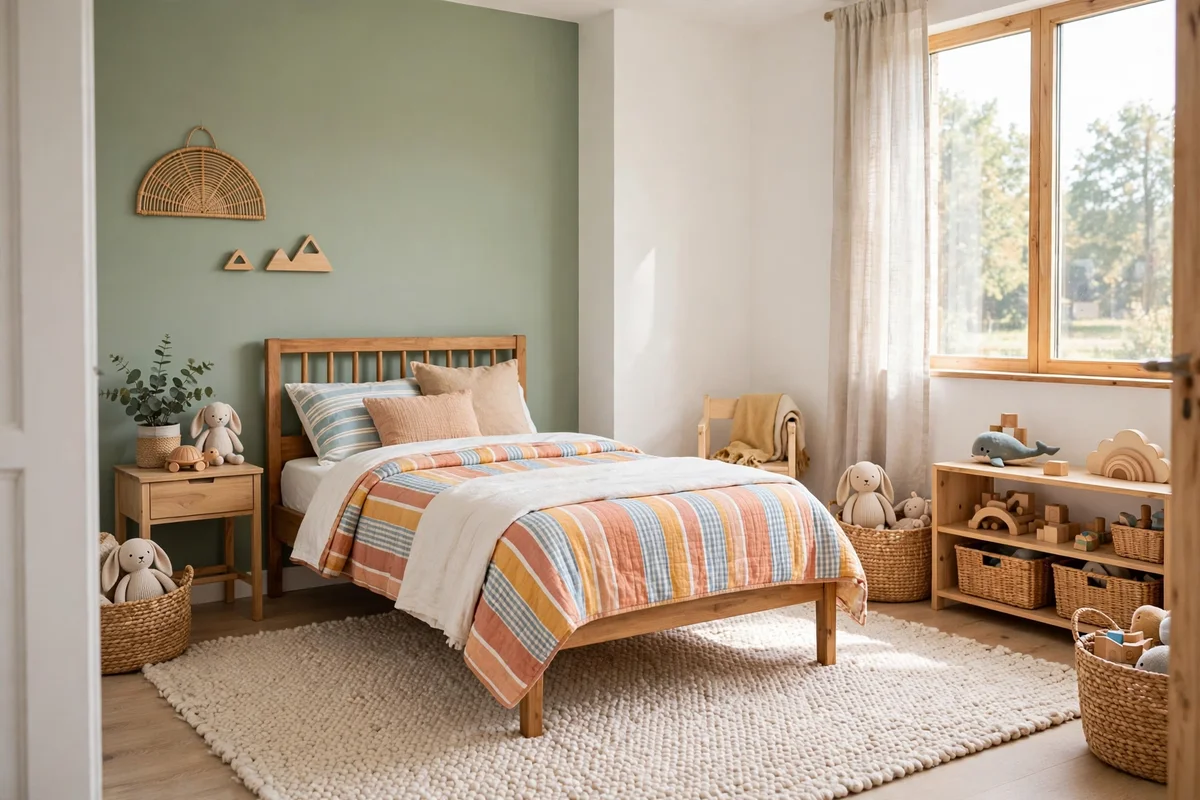
A kids room does not need a big budget to look like someone thought about it. It needs a plan, a colour, and a place for everything — and most of the time those three things cost very little. A tin of paint, a rearranged bed, a set of matching baskets and a rug can do more than a whole catalogue of new furniture, because what makes a room look expensive is rarely the price of what is in it. It is that everything in it looks like it belongs there, and that nothing is fighting for attention.
The short version: spend your money where it shows and where it lasts — paint, the bed, and storage. Save everywhere else by reusing, repainting, and buying secondhand. Pick one colour family, one focal point, and one weekend, and do the room in that order. The ideas below are arranged the way most parents actually use them: plan first, then the free changes, then walls, furniture, storage, and soft touches, then the practical parts — small rooms, shared rooms, ages, budgets, and the mistakes that waste money.
How to Plan a Budget Kids Room First
A budget room fails when the money goes out before the plan exists. A cushion here, a poster there, a toy bin that does not match anything else — each purchase is small, and together they add up to a room that still looks unfinished. The fix is to decide the whole room on paper before you buy anything, even if the whole room only costs a little.
Start with three piles, and sort every idea into one of them before you spend anything. Spend: the things that have to be safe, sturdy, and long-lasting — the mattress, a solid bed frame, a dresser that will not tip, and washable paint. Swap: the things you can get secondhand, repaint, or bring in from another room — shelves, chairs, baskets, lamps, and art frames. Skip: the things your child will outgrow in a year — themed furniture sets, trendy decorations, and anything bought because it was on sale rather than because the room needs it. If an idea does not fit one of the three piles, it does not belong in this weekend's plan.
Then set the budget as a single number for the whole room, not a number per item. Write it down, and write down what it has to cover: paint, storage, bedding, and one soft touch like a rug or curtains. When the number is written down, it is much easier to say no to the extra cushion that would push you over it. A room done for very little still needs a number, because "as cheap as possible" is not a budget — it is a wish, and wishes do not stop you at the checkout.
Measure the room before you buy anything. Write down the width and height of each wall, the size of the bed, and where the door, window, radiator, and sockets sit. Measure the closet too, and the space under the bed. These numbers decide everything: how much paint to buy, whether a secondhand dresser will fit through the door, and whether that rug you like will leave enough bare floor for play. Ten minutes with a tape measure saves the most common budget-room mistake, which is buying something the right colour in the wrong size.
Pick the colour family next, and pick it from something that is already staying in the room — the bedding, a favourite blanket, a rug, or a toy your child loves. A room with one colour family and a neutral base always looks more planned than a room with five colours that never meet. Warm white, cream, or pale grey walls suit almost every colour family, and they make the room look bigger, which matters in a small kids room. Then choose one main colour and one supporting colour, and repeat both in at least two places each — the bedding and a cushion, the rug and a storage bin, the wall and a lampshade. If a colour appears only once, it looks like an accident. If it appears twice, it looks like a plan.
Where to Spend and Where to Save
Not every part of a kids room deserves the same money. The table below is the rule of thumb for the whole article: spend on the things that get touched every day and have to last, save on the things that are decoration, and never spend on a theme that will be outgrown before the paint dries.
| Area | Spend on | Save on | Why |
|---|---|---|---|
| Walls | Washable, low-odour paint; one good roller | Decals, stencils, a painted arch instead of wallpaper | Paint is the cheapest transformation there is, and it has to survive sticky hands |
| Bed | A good mattress and solid frame | Bedding, cushions, throws | The mattress lasts years; the bedding can change with the seasons |
| Furniture | One sturdy dresser or wardrobe, anchored to the wall | Everything else secondhand or repainted | A solid dresser holds the room together; a secondhand shelf does the same job as a new one |
| Storage | Matching bins and baskets in one material | Labels, dividers, closet extras | Matching storage looks custom; mismatched bins look like clutter even when they are tidy |
| Soft touches | One large rug | Curtains, cushions, throws | A rug defines the room; cushions are cheap to swap when tastes change |
| Theme | Nothing permanent | Accessories only — bedding, art, bins | A theme carried by accessories can change in an afternoon; a themed bed cannot |
| Lighting | One good ceiling light or lamp | String lights, a shade swap | Good light makes cheap paint look expensive; fairy lights cost almost nothing and do the magic |
22 Budget Friendly Kids Room Ideas
Free first: spend nothing, change everything
1. Declutter and reset the room first

The cheapest room makeover costs nothing at all, and it is the one most rooms need most. Before you buy a single thing, take everything out of the room that does not belong there: broken toys, outgrown clothes, dried-out pens, the board game with half its pieces missing, and the pile of things that migrated in from other rooms. Sort what is left into three groups with your child — keep in the room, keep somewhere else, and let go — and be honest about the third group. Children often find it easier to let go of things when they can see the empty shelf the toy will leave behind, and when they know the space is for something they actually use.
Once the room is empty, clean it properly: dust the shelves, wipe the skirting boards, wash the window, and vacuum under the bed. A clean room with clear surfaces already looks more expensive than a cluttered room with new decorations in it, because the eye can finally see the room itself. Put back only what your child uses every week, and give everything that stays a home — a shelf, a bin, a hook — before you put it back. The things without a home are the things that end up on the floor by Tuesday, and they are usually the things that should not have come back at all.
2. Rearrange the furniture for a better layout
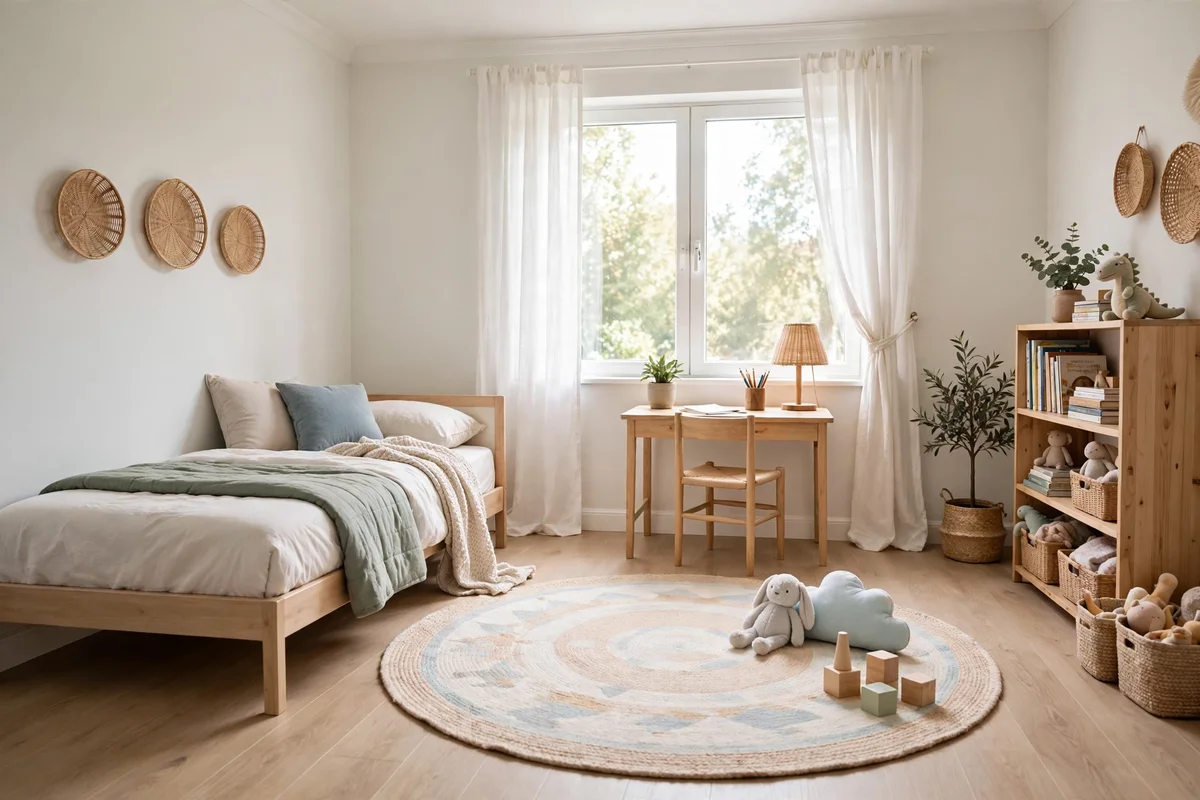
A new layout is a free makeover, and it is the fastest way to make a room feel different without spending anything. Move the bed to a different wall, turn the desk toward the window, and pull the bookshelf out of the corner it has been hiding in. The room your child has slept in for a year will feel new to them by bedtime, and you will see the room's problems clearly for the first time: the dark corner that needs a lamp, the wall that is begging for a shelf, the floor space that is wasted behind the door.
Start by pushing the bed against the longest wall, ideally the one you see from the door, because the bed is the biggest piece of furniture and it sets the room. Leave the floor in the middle of the room as clear as you can — that open floor is where play happens, and a room with a clear centre feels bigger than a room the same size with furniture scattered around the edges. If your child is an active player who builds, dances, or sprawls on the floor, that clear space matters more than any decoration; our guide to active kids room ideas has more on keeping a room ready for movement. Put the desk or homework spot near the window for daylight, and the reading corner in the quietest corner, away from the door.
3. Shop your own home first
Before you buy anything new, walk through your own house with fresh eyes and a list of what the room is missing. A lamp from the spare room, a basket from the bathroom, a picture frame from the hallway, a small chair from the living room, a cushion from the sofa — most houses have a whole kids room hiding in other rooms, and moving those things costs nothing. The lamp that looks ordinary in the hallway can look charming on a child's bedside table, and the basket that held towels can hold soft toys just as well.
This works best when you move things that match the room's colour family and leave the rest where it is. A cream lamp, a wooden frame, a sage cushion — if it matches the palette, it belongs. If it does not match, it will look like a spare, and a room full of spares looks like a storage room rather than a bedroom. Be honest about that test, and put back anything that fails it.
Walls: the biggest change for the least money
4. Give the walls a fresh coat of neutral paint
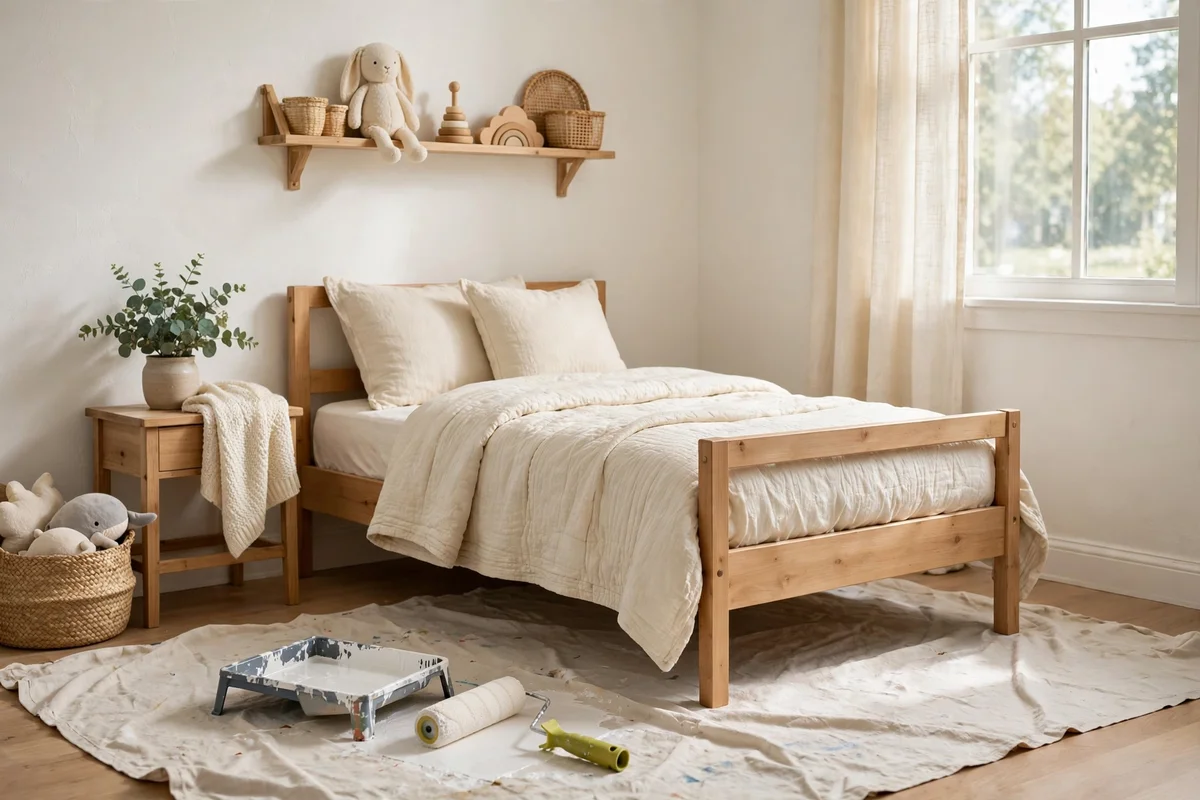
Paint is still the best value in home decorating, and it is the first thing worth spending on in a budget kids room. A fresh coat of warm white, cream, or pale grey makes a room feel brighter, cleaner, and bigger, and it gives every other change a clean background to sit against. It also hides the scuffs, marks, and old Blu Tack ghosts that make a room look tired even when the furniture is fine.
Choose a washable emulsion made for the job, because a kids room wall gets touched, leaned on, and drawn on more than any other wall in the house. A low-odour paint matters too, especially if your child sleeps in the room the same night — paint the room in the morning, leave the window open, and let it dry fully before bedtime. One tin is usually enough for a small bedroom's walls, and a roller, a brush for the edges, and a roll of painter's tape are the only tools you need.
5. Paint one accent wall instead of the whole room

If fresh neutral paint is the safe choice, one accent wall is the brave one — and it costs barely more. A single wall in a confident colour gives the room a focal point, a personality, and a backdrop that makes everything else look intentional, while the other three walls stay calm and cheap. Deep blue, forest green, terracotta, dusty rose, or mustard each change the mood of the room: blue calms it, green steadies it, terracotta warms it, mustard wakes it up.
Pick the wall behind the bed, because it frames the biggest piece of furniture and it is the first wall you see from the door. If that wall has a window or a wardrobe in the way, use the wall opposite the bed instead, and avoid the wall with the door — the door cuts the design in half every time it opens. Choose the colour from something already in the room, like the bedding or a favourite toy, rather than from a paint chart alone, and test three shades on the wall itself in patches as big as a sheet of paper. Look at them in daylight and again under the bedroom lamp at night, because a colour that looks perfect at noon can look grey at bedtime.
Repeat the accent colour twice more in the room — a cushion and a storage bin, or a rug stripe and a lampshade — so the wall has company. For more detail, our accent wall ideas for kids rooms cover paint, wallpaper, murals, wood slats, and decals, including which wall to choose and how to pick the finish.
6. Use peel-and-stick wallpaper on one wall
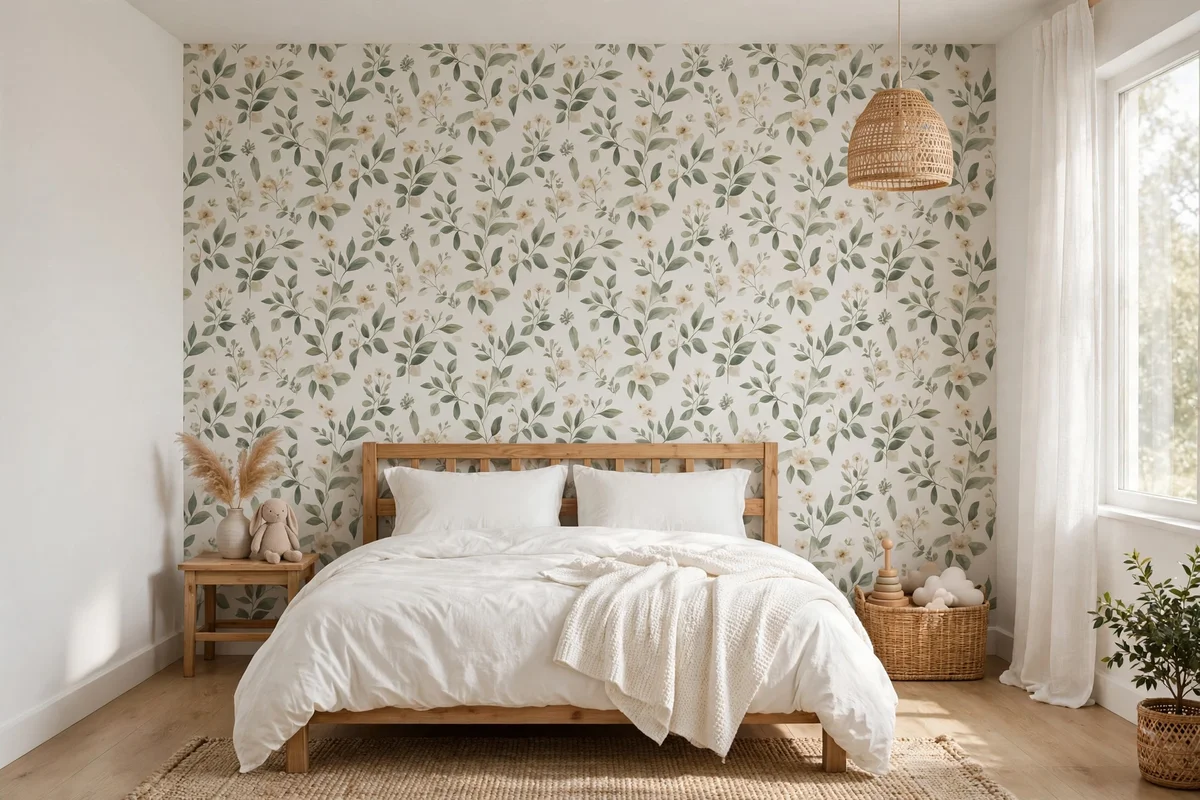
Peel-and-stick wallpaper is the easiest way to get a pattern you could never paint, and it is the friendliest option for a rental or for a parent who has never hung wallpaper before. Florals, woodland animals, stars, maps, and geometric prints all come ready-made, and the paper peels off cleanly when your child outgrows it, which matters in a kids room more than anywhere else. A feature wall instantly adds personality and makes the room look designed rather than decorated.
Keep it to one wall — the bed wall, usually — and keep the other walls plain, because a busy pattern on all four walls overwhelms a small room and costs four times as much. Measure the wall, add a little extra for pattern matching and trimming, and hang the first strip with a spirit level, because every strip after it follows the first. Smooth each strip from the centre outward with a clean cloth to push out air bubbles, and if a strip goes on crooked, peel it back and try again — that is the whole advantage over pasted wallpaper.
7. Add removable decals and wall art

Wall decals are the no-commitment way to decorate a wall, and they suit a budget room perfectly: they cost little, go up in minutes, peel off without taking paint with them, and can be moved when the furniture moves. Stars, animals, rainbows, flowers, and geometric shapes all come as decals, and a cluster of them at your child's eye level reads as a design, while decals scattered evenly across a whole wall can look like a pattern that ran out of ideas.
The trick is to cluster, not scatter. A large rainbow or a group of stars at eye level from the bed, with smaller decals around it, gives the wall a focal point. A row of animals along the top of a half-wall, or a few stars over a navy accent wall, gives a finished wall a second layer without any more work. Keep a few spare decals in a drawer, because replacing one that peels at the corner takes a minute, while re-sticking a peeling decal rarely holds.
8. Paint an arch or a colour block

A painted arch or a colour-blocked shape gives you the impact of a mural without needing any drawing skill, and it costs one small tin of paint and a roll of painter's tape. A soft arch behind the bed frames it like a headboard. A big circle behind a reading chair marks the corner as a place of its own. A half-wall — the lower half painted, the upper half left white — gives a room colour without the weight of a full wall of it, and it hides the scuffs that toys and shoes leave on the lower half of a wall.
Mark the shape with a pencil and a spirit level first, and sketch it on paper at a small scale before you touch the wall. For an arch, a piece of string pinned at the centre point makes a perfect curve if you hold a pencil at the end and sweep it around. Tape along the pencil lines, press the tape down firmly so paint cannot bleed underneath, and paint two thin coats, peeling the tape off while the last coat is still slightly tacky for the cleanest edge.
9. Build a gallery wall from your child's own art

A gallery wall is the accent wall that grows with your child, and it is one of the cheapest to build, because the art is already in the house. Frame your child's drawings, paintings, and school art in matching frames — the same frame colour, different art inside — and hang them at your child's eye level, not adult eye level, so the wall belongs to them. A clip frame or a magnetic poster hanger lets you swap art without tools, which matters when the display changes every few weeks.
Start with three or four frames and leave empty space for what comes next. Arrange the frames on the floor first, take a photo of the arrangement you like, and hang them using the photo as a guide. Keep the spacing between frames even — a hand's width apart is a good rule — and mix one or two larger pieces with several small ones. The best pieces go on the wall, the rest go in a folder, and the wall never looks finished, which is exactly the point.
Thrifted frames make this idea even cheaper: a mismatched set of wooden frames, painted the same colour, looks like a matching set once it is on the wall. If your child likes making things, our artsy kids room decor ideas have more ways to show off handmade work without buying new art.
Furniture: repaint, re-knob, and buy secondhand
10. Paint old furniture instead of buying new

A dresser, a bookshelf, a bedside table, or a desk can look brand new with a fresh coat of paint, and painting furniture is the single best return on effort in a budget room. It costs one tin of paint and an afternoon, and it lets you match the furniture to the room exactly, instead of hunting for a new piece in the right colour at the right price. Bright colours create playful energy; neutral shades look more grown-up and last longer.
Clean the piece first, sand it lightly so the paint has something to grip, and wipe off the dust. Use a primer on dark wood or on a piece that has been varnished, or the old colour will show through. Two thin coats of furniture paint, with a light sanding between them, give a finish that survives daily use — and a clear top coat on the top surface protects it from cups, books, and toy cars. Paint the piece outside or in a ventilated room if you can, and let it dry fully before it goes back into the bedroom.
The easiest first project is a bedside table: it is small, it is visible, and it teaches you the whole process in an afternoon. Our bedside table ideas show how much difference one small painted piece can make.
11. Swap the knobs and handles
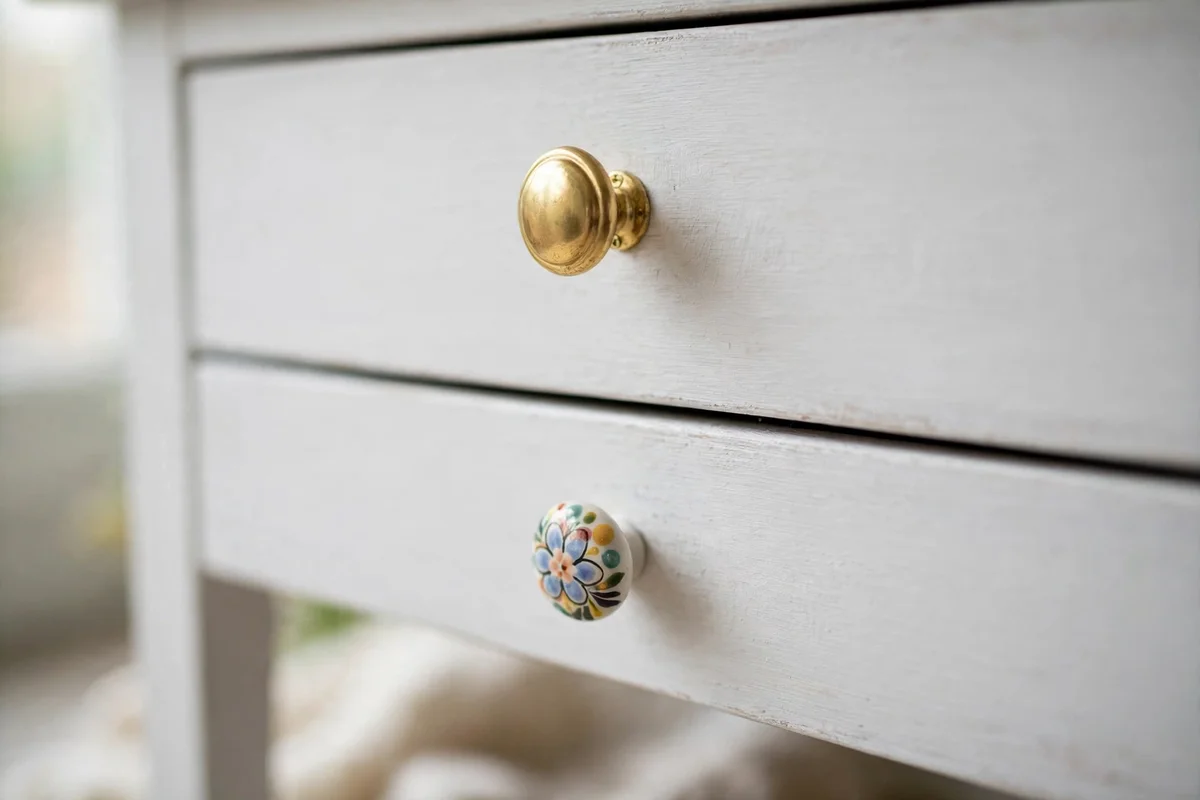
Replacing drawer pulls, knobs, and handles is the smallest job in this article and one of the most satisfying. A dresser that looked tired can look custom with a set of new knobs, and the whole job takes a screwdriver and half an hour. Brass knobs make a painted dresser look expensive. Colourful ceramic knobs make a plain white dresser look playful. Wooden knobs keep a natural wood piece looking calm.
Measure the distance between the screw holes before you buy, because not all handles fit all drawers, and take one old knob with you to the shop so you can match the screw size. Keep the old knobs in a bag in case you want them back, and let your child choose the new ones — it is a small, safe choice that makes the furniture feel theirs. If you want a playful touch, mix two knob styles on the same piece: one style for the big drawers, another for the small ones. It looks deliberate when the colours match the room, and it costs no more than matching them.
12. Buy secondhand furniture — and check it properly

Good secondhand furniture is the budget room's best friend, because a solid wood dresser from a thrift store or a buy-and-sell group often costs a fraction of a new flat-pack piece and lasts far longer. Look for solid wood, dovetail joints, drawers that slide smoothly, and a piece that feels heavy when you lift it — weight is usually a sign of real wood rather than hollow board. A scratched top or a dated colour is not a problem, because that is what paint is for. A wobbly leg or a cracked joint is a problem, because no amount of paint fixes structure.
Before you buy anything used for a child's room, check it the way you would check anything your child will climb on. Open every drawer, lean on it gently to test for tipping, and look for recalls on the make and model if it is a known brand — a quick search before you pay is worth more than a bargain after. Avoid painted furniture from unknown sources if the paint is flaking, and avoid anything with a strong chemical smell. Once it is home, clean it thoroughly, tighten every screw, and anchor any tall piece to the wall before your child uses it. A wall anchor costs very little and takes ten minutes, and it is the one job in this article that is not optional.
13. Add open shelves and a pegboard wall
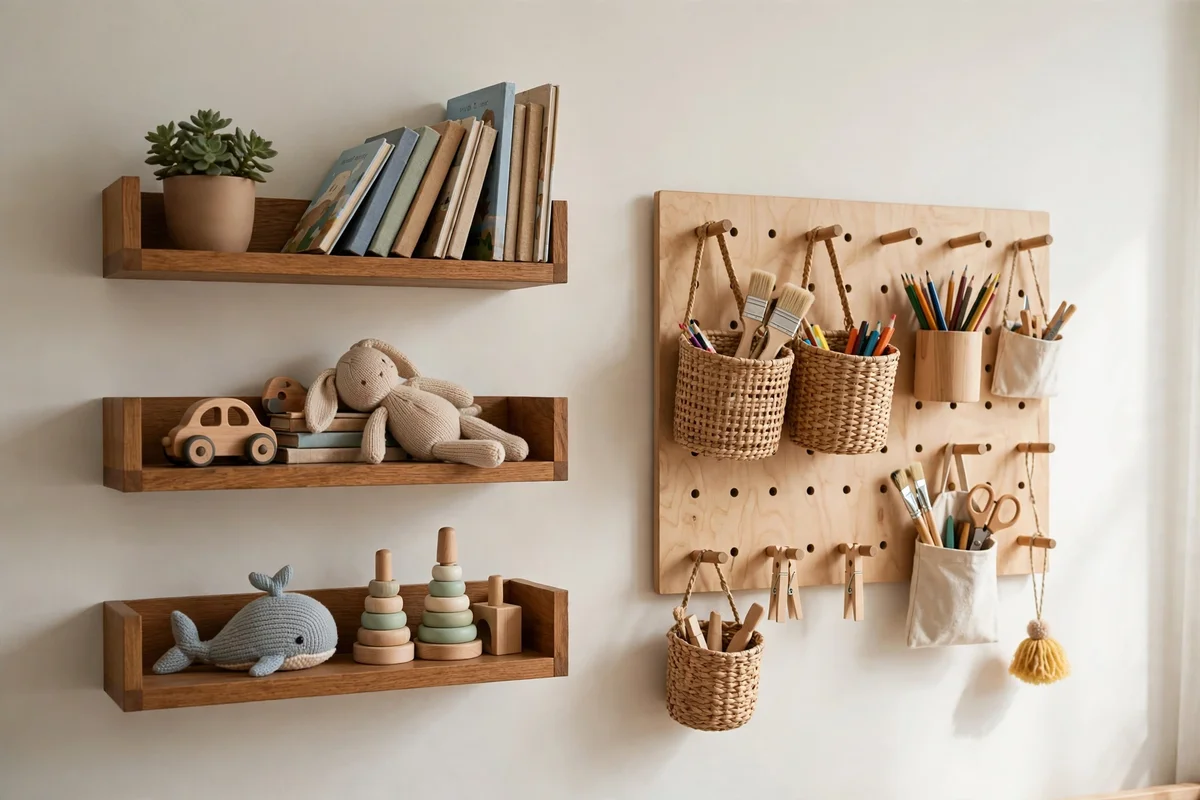
Open shelves give a room storage and display space without taking up any floor, and they make walls feel finished. A row of floating shelves can hold books, baskets, and a few favourite toys, and because everything on them is visible, they force a kind of tidiness that a closed cupboard never does. Put the things your child uses every day at their height, and the display things — a trophy, a framed photo, a special toy — higher up, where they can be seen but not knocked over.
A pegboard wall does the same job with more flexibility. A simple board with hooks, small baskets, and tiny shelves can hold art supplies, hair accessories, toy cars, or craft tools, and the arrangement can change whenever your child grows or their interests change. It also turns an otherwise plain wall into something useful, which is exactly what a small room needs. Fix the board securely to the wall with proper fixings, because a pegboard full of things is heavier than it looks, and keep the heaviest baskets at the bottom.
Storage that looks like decor
14. Use matching bins and baskets
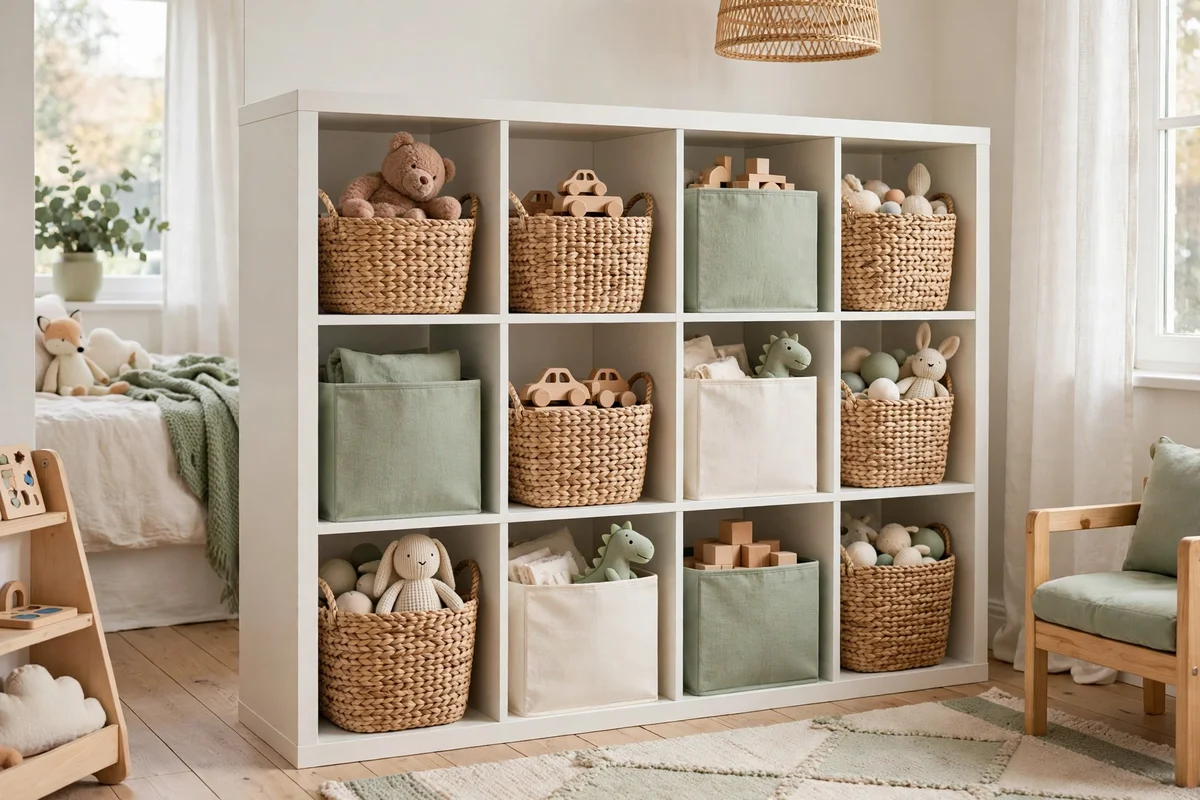
Matching storage is the fastest way to make a messy room look tidy, and it is one of the cheapest upgrades in this article. A set of woven baskets or fabric bins in the same colour and material, lined up on a shelf or in a cube unit, looks intentional and calm, while a collection of random tubs in different colours looks like clutter even when everything inside is perfectly organised. Consistency is what makes inexpensive storage look premium.
Choose one material and stick to it: woven seagrass for a natural room, fabric bins in the room's main colour for a softer look, or plain wooden crates for a room with a lot of wood already in it. Give every bin a job — soft toys, building blocks, dress-up clothes, books — and label them with pictures rather than words for younger children, so they can tidy up without reading. Keep the bins your child uses every day low and open, and the ones for out-of-season clothes or keepsakes higher up and lidded.
15. Refresh the closet and use the space under the bed

A tidy closet can make a whole bedroom feel bigger, and refreshing one costs very little. Start by taking everything out, just as you did with the room, and put back only the clothes that fit and get worn. Add a second hanging rail at your child's height if the closet is tall enough — a tension rod or a simple rail costs little and doubles the hanging space a child can actually reach. Use matching hangers, because a row of identical hangers looks calm while a row of mixed wire, plastic, and wooden ones looks chaotic for no reason.
Below the rail, use labelled bins or small baskets for shoes, accessories, and out-of-season clothes, and keep a laundry basket in the closet rather than on the bedroom floor. A closet that works means clothes stop migrating onto the bed and the chair, and the bedroom stays tidy between clean-ups. If the closet has no doors, a simple curtain in the room's colour family hides the contents and softens the room at the same time.
16. Let new bedding be the focal point
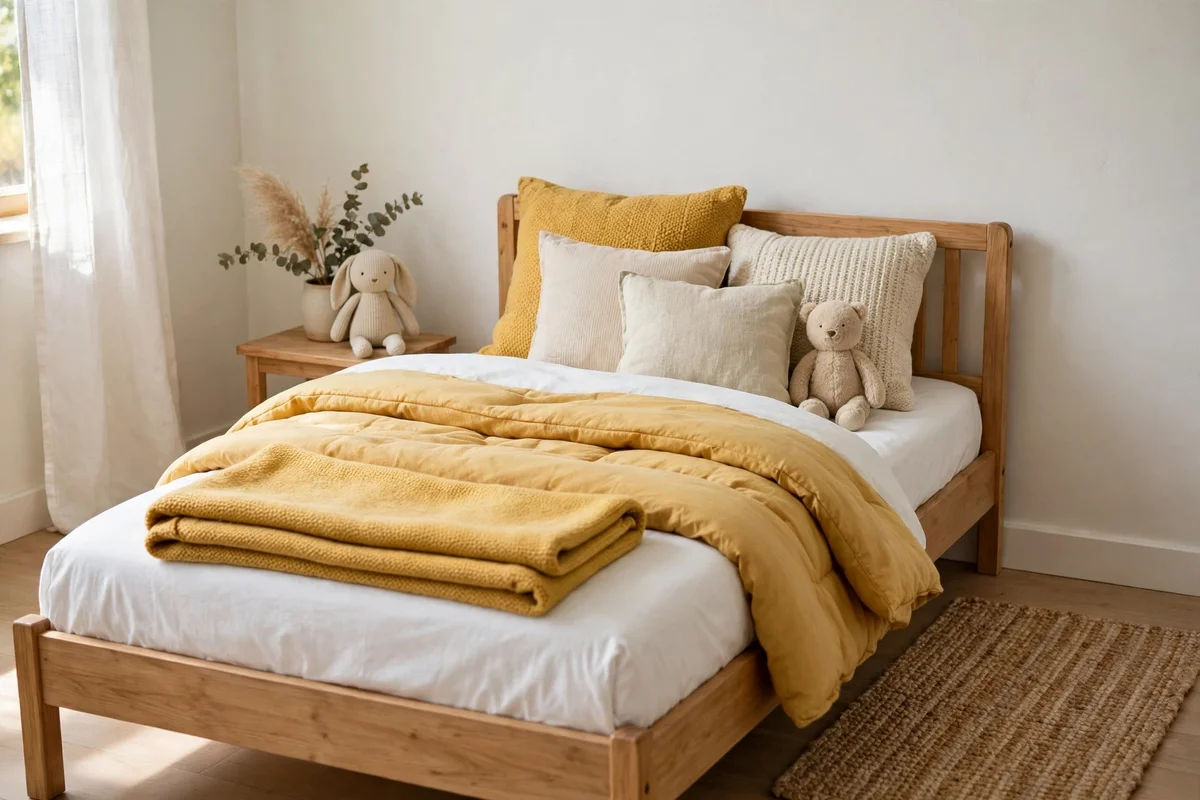
The bed is the biggest thing in the room, so new bedding is the biggest visual change you can buy without touching a wall. A fresh duvet set in the room's main colour, layered with a throw and two or three cushions, makes the whole room look new — and because the bed is what your eye lands on first, the bedding sets the tone for everything else. Choose simple designs with soft colours and comfortable textures rather than a busy character print, because a plain or lightly patterned duvet lasts through several changes of cushion and throw, while a themed set dates the moment the theme does.
Layer it the way a hotel does, on a smaller scale: a fitted sheet, a duvet, a folded throw across the foot of the bed, and cushions in two sizes. The throw and cushions are the cheap part — they carry the colour and the pattern, and they can be swapped when your child changes their mind, without replacing the whole set. Wash the bedding before it goes on the bed, and make the bed properly on the first day, because a well-made bed is the difference between a room that looks finished and one that looks halfway there.
17. Add a large rug — or a carpet remnant
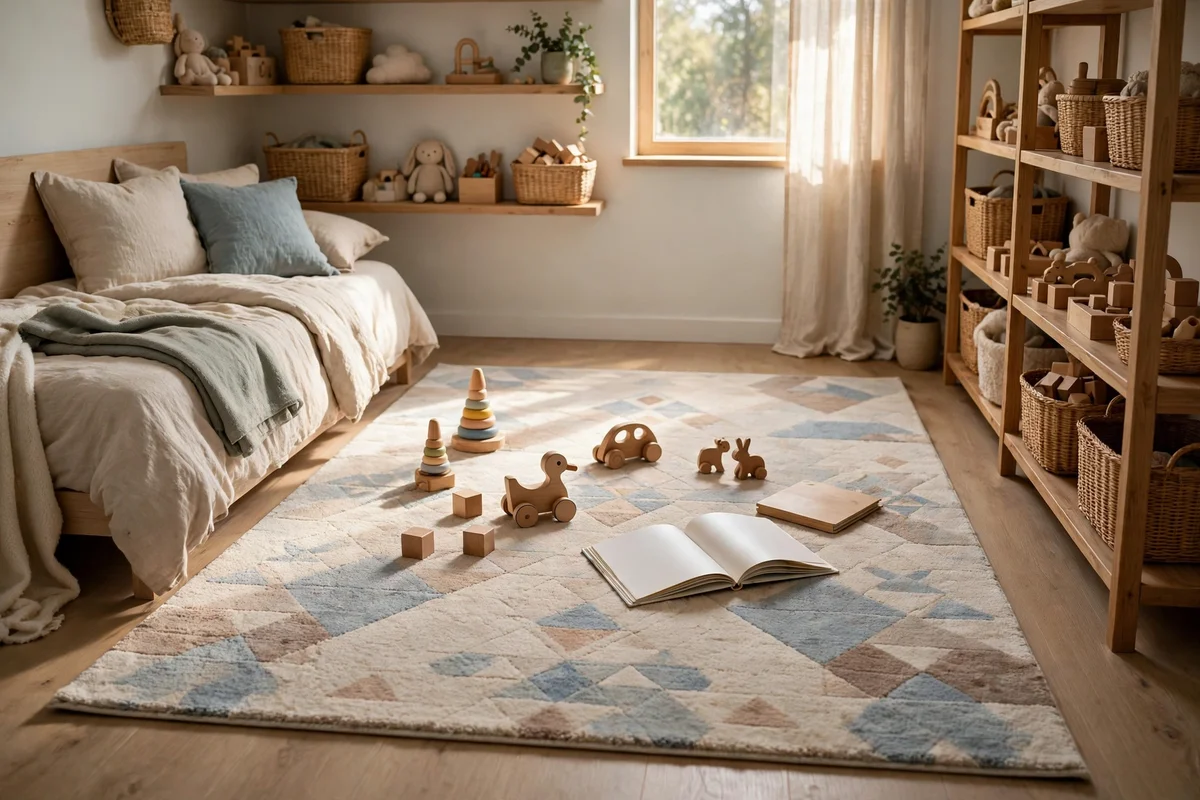
A large rug can instantly make a room feel finished. It adds warmth, comfort, and structure, it defines the play area in the middle of the room, and it ties the colours of the furniture together. A well-chosen rug often makes a room feel professionally designed, and it is the soft touch that most changes how a room feels underfoot. Put it beside the bed so little feet land on something soft in the morning, or in the centre of the room to mark where play happens.
If a new rug is beyond the budget, a carpet remnant is the same idea for less. Remnants can be cut to size and the edges bound with rug tape or fabric glue, and a remnant in a plain colour or a simple pattern does the same job as a shop-bought rug. Check secondhand listings too — rugs are one of the things people sell when they redecorate, and a good rug washes well. Whatever you buy, choose a low pile that is easy to vacuum and a colour that hides a little of daily life. A pale cream rug in a kids room is a brave choice, and bravery is not always rewarded.
18. Hang the curtains higher and longer
Hanging curtains closer to the ceiling is a trick designers use to make windows look larger and ceilings feel taller, and it costs nothing if you already have the curtains — just move the rod. A rod fitted a hand's width above the window frame, with curtains that reach the floor, makes the room look more spacious and polished than a short pair of curtains ever will. Floor-length curtains also frame the window properly, which makes the whole wall look finished.
If you need new curtains, choose a simple fabric in the room's colour family rather than a themed print. Plain curtains in a soft colour work with every bedding change, while a character print locks the room to a theme your child may outgrow by next year. A light, washable fabric matters in a kids room, because curtains get touched and pulled more than in any other room. And if the room gets a lot of sun, a lining — even a simple one — keeps the colour from fading and helps the room stay dark enough for sleep.
19. Layer pillows and textures — and carry the theme with accessories
Texture is what makes a room feel rich rather than flat. A soft rug, a woven basket, a chunky throw, a velvet cushion, and a linen curtain all add depth, and a room with five textures in one colour family feels more expensive than a room with five colours and one texture. Start with what the room already has — the rug, the bedding, the baskets — and add one soft layer at a time: a throw over the end of the bed, a cushion on the reading chair, a sheepskin-style rug beside the bed. Each layer should be a different material, because it is the mix of materials that the eye reads as expensive.
This is also where the theme belongs. You do not need a themed bed or themed furniture to give a child the room they dream of — themed accessories do the same job for a fraction of the cost and can be swapped in an afternoon. Pillows, a rug, a poster, and a storage bin in dinosaur, space, or rainbow colours carry a theme perfectly well, and when the theme changes, only the accessories change. An animal-loving child, for example, can have a whole wildlife feel from bedding, art, and a couple of soft toys, as our animal themed bedroom ideas for kids who love wildlife show — and an adventure-loving child can have the same treatment with maps, compass colours, and explorer-style accessories, as in our adventure themed kids room ideas for curious explorers. If you want to see what looks current right now before you choose the accessories, our aesthetic kids room ideas Pinterest is loving right now is a useful place to look — then buy the look with cushions and throws, not with furniture.
Corners and zones: give the room jobs to do
20. Build a reading nook from floor cushions

A reading nook can make a child's room feel extra special, and it does not need any furniture at all. A few floor cushions, a soft blanket, and a small basket of books in a quiet corner give a child a dedicated place to read, relax, and use their imagination — and it costs less than a single chair. Put it in the corner furthest from the door, where the room is quietest, and add a small shelf or a basket at arm's height so the books live in the nook rather than scattered across the room.
A canopy or a simple length of fabric draped from a hook can mark the nook as a place of its own, and a string of warm lights along the wall makes it feel magical in the evening without any electrical work. Keep the cushions washable, because floor cushions get sat on, jumped on, and occasionally eaten over, and keep the basket small — a nook with ten books that get read is better than a nook with fifty that never move.
For more corner ideas, see our cute bedroom corner ideas for kids — a corner that has a job is a corner that stops collecting clutter.
21. Make a small homework station
A dedicated homework station can improve both the appearance and the function of a child's room, and it does not need a full desk. A small table or a wall-mounted fold-down desk, a comfortable chair, and a little storage for pencils and paper are enough — and a secondhand desk, repainted to match the room, is the budget version that looks better than a new flat-pack one. Put it near the window for daylight, and keep it facing the wall rather than the bed, so the room has a clear work zone and a clear sleep zone.
Add a pegboard or a small shelf above the desk for supplies, a desk lamp for evenings, and a pot for pens — and keep the surface clear except for what is being worked on. A desk that doubles as a dumping ground stops being a desk within a week, so give everything else a home first and the desk will stay usable. A cork board or a magnetic strip above the desk holds timetables, drawings, and reminders without holes in the wall, and it gives the station a finished look for almost nothing.
22. Finish with lighting: string lights and a statement swap
Lighting often has a bigger effect than people realise, and it is one of the cheapest ways to change a room's mood. A string of warm white lights draped along a shelf, around a headboard, or across a wall can make a bedroom feel cosy and magical in the evening, and children love the soft sparkle — especially the ones who are nervous about the dark. Use warm white, not coloured bulbs, which can make a bedroom feel like a party when it should feel like a bedroom, and keep the lights on a timer or a simple switch your child can reach.
The other lighting swap is the ceiling light or the lampshade. A basic ceiling fixture swapped for a simple pendant, a paper lantern, or a shade in the room's colour can instantly lift the whole room, because lighting draws the eye upward and makes the ceiling feel like part of the design rather than an afterthought. Check that the fitting is secure and the bulb is the right brightness for reading as well as for sleep — a room that is too dim in the evening is a room where homework does not happen.
A Weekend Plan: Saturday and Sunday
A budget kids room does not need a month of planning. It needs a clear order, because buying before you have measured, or painting before you have decluttered, creates the rework that eats weekends and budgets.
On Friday evening, do the paperwork: measure the room, write the budget down, pick the colour family, and make the shopping list — paint, bins, bedding, and one soft touch. Buy only what is on the list.
On Saturday morning, declutter the room properly and clean it. Then move the furniture into the new layout, and do the messy work: paint the walls or the accent wall, paint any furniture that needs it, and hang the shelves, the pegboard, and the curtain rod. While the paint dries, wash the new bedding and cushion covers so they are ready for Sunday. Do not try to hang art or arrange shelves while paint is wet; it will get marked, and you will have to do it twice.
On Sunday, put the room back together in this order: bed and bedding first, then the rug, then storage, then the desk and the reading nook, then wall art, decals, and cushions last. Art goes last because it is the easiest thing to move, and you will only know where it belongs once the furniture is in place. Finish by walking to the door and looking at the room as a visitor would — the view from the door is the view that matters most, because it is the one you see every day. Then let your child put their favourite things on the open shelf, and call it done.
Small Rooms, Shared Rooms, and Nurseries
A small room needs the budget to work harder and take up less space. Spend on the things that already have to be there: paint on the walls, a rug that defines the floor, and storage that uses the walls rather than the floor. Under-bed boxes, wall-mounted book ledges, and a pegboard all store things without taking a single centimetre of floor. Skip the full mural and the gallery wall in a very small room — both eat wall space the room cannot spare. Vertical stripes or a painted arch make a low ceiling feel taller, and a mirror opposite the window bounces light into a dark corner. Keep at least one wall completely plain, so the room has somewhere for the eye to rest, and keep the accent colour light rather than dark, so the room does not feel smaller than it is.
A shared room needs a plan both children can live with, and a way for each child to have their own colour inside it. A neutral or mid-tone base — sage, dusty blue, warm grey — works well here, because it is less likely to feel like one child's taste imposed on the other. Give each child one signature colour inside the shared scheme: one child's bedding in blue, the other's in green, while the walls and the storage stay neutral. If the beds are on opposite walls, each bed wall can carry its own small accent — a painted arch, a strip of wallpaper, a cluster of decals in that child's colours — with the shared wall kept calm. Colour-coded storage earns its keep twice over in a shared room: each child's bins in their own colour end most arguments about whose toys are whose.
A nursery or toddler room should be soft, low, and safe above all else: pastel paint, a gentle wallpaper on one wall, or decals above the cot are enough. Keep the wall behind the cot plain or very pale, and anchor any tall furniture to the wall. Choose base colours with the next five years in mind — a soft sage or dusty blue works for a baby and still works for a five-year-old. For the youngest rooms, our baby girl room ideas show how a soft, simple scheme can carry a nursery through the toddler years.
Budget Kids Rooms by Age
A toddler room can be bolder, because toddlers use the room for play as much as sleep. Low furniture, a floor bed with a painted arch behind it, decals at toddler height, and floor cushions instead of chairs all suit this age. Keep the design to one wall and one idea, because toddlers change their minds fast, and keep everything they can reach soft, washable, and safe. This is also the age where storage matters most — low open bins they can reach themselves teach tidying as a game rather than a chore.
A school-age child's room can carry the strongest version of a budget plan, because the child can tell you what they like and what they have outgrown. This is the age for the accent wall, the gallery wall with their own art, the homework station, and the reading nook. It is also the age to involve them in the work: a school-age child can paint a dresser with supervision, stick decals, and choose between two colours with genuine opinions. Let them choose between options you have already approved — "blue or green?" — rather than facing the whole paint chart, and the room will feel theirs without becoming a colour you regret.
A pre-teen's room needs the plan to feel grown-up, not themed. One bold colour, a painted dresser, matching storage, and a proper desk all work, because they read as design rather than decoration. This is the age where a wall of decals or a themed bed starts to feel young, and where the base of the room should be chosen so it can stay for several years. Spend the money on the base — the paint, the bed, the storage — and let the pre-teen own the accessories, because accessories are the part they will want to change, and they are the cheapest part to change. For rooms that need to work for an older child, our big kids room ideas cover layouts and storage that last into the tween years.
Budget: Three Price Levels
A budget kids room does not have to be expensive, and the difference between the three levels below is how much is painted and how much is bought ready-made, not how good the result looks. The figures are rough ranges, not researched prices — costs vary by where you live and what you already own — but they give you a way to plan.
A refresh for roughly under $50 uses paint you already own or one tin of emulsion, a roll of painter's tape for a geometric pattern or an arch, a set of removable decals, and art your child has already made in thrifted frames. The furniture gets rearranged, the room gets decluttered, and the curtains go up higher on the same rod. The room changes without any new furniture, and it takes a weekend.
A mid-level refresh, roughly $50 to $200, adds the pieces that make the biggest difference: a roll or two of peel-and-stick wallpaper, a tin of washable paint for a bold accent wall, a large rug or a carpet remnant, a set of matching baskets, and new bedding. This is the level most families choose, because it changes the room properly without changing the furniture. A secondhand dresser, repainted and re-knobbed, often fits in this level too.
A fuller redo, roughly $200 and up, adds a painted dresser and bookshelf, a proper homework station, a statement light, and the soft layers — curtains, cushions, throws, and a reading nook with cushions and lights. This is worth doing when the room is being redecorated anyway — a move, a new bed, or a child moving into a bigger room — rather than as a standalone project. If you are spending at this level, spend it on the things that are hardest to change later: the paint, the storage, and the furniture. Bedding and cushions can always be upgraded later, one piece at a time.
Mistakes That Waste Money in a Kids Room
The most common mistake is buying before planning. A cushion here, a poster there, a toy bin that matches nothing — each purchase is small, and together they cost more than the paint and the rug that would have changed the room properly. If the room still looks unfinished after a shopping trip, the problem is almost never that you did not spend enough. It is that the money went out before the plan existed. Write the list first, buy from the list, and stop when the list is done.
The second mistake is spending on a theme instead of a base. A themed bed, themed curtains, and themed wallpaper all have to be replaced together when the theme ends, and themes end fast. A neutral base with themed accessories costs a fraction of that, because only the accessories change. If you are about to buy something with a character printed on it that cannot be removed, ask whether a cushion with the same character would do the job — it almost always would.
The third mistake is buying new what you could repaint. A new flat-pack dresser often costs more than a tin of paint and lasts less long than the solid secondhand dresser it replaced. Before you buy any new furniture, ask whether the piece you already own, or one you can buy secondhand, would do the job with paint and new knobs. The answer is usually yes, and the saving is usually the biggest single saving in the room.
The fifth mistake is forgetting the light. A dark wall in a dark, north-facing room can feel heavy, and a pale pattern in a bright, south-facing room can look washed out. If the room feels wrong and the colour looked right in the shop, the light is usually the reason. Swapping a dark colour for a lighter shade of the same colour, or adding a warm lamp, often fixes it without redecorating. And the sixth mistake is skipping the safety jobs to save money: a tall dresser without a wall anchor, a secondhand cot or bed bought without checking for recalls, or a cheap paint that is not meant for a child's room. Safety is the one place in this article where saving money is never the right call.
How to Let the Room Grow Up With Your Child
The best budget rooms are built to be undone in stages, because children outgrow rooms faster than rooms wear out. When your child outgrows the theme, change the cheap things first: swap the bedding for a solid colour, take down the themed prints, change the cushion covers, and swap the themed bins for plain ones. That alone removes most of the theme, and the room will already feel older.
If that is not enough, repaint the accent wall in a single colour drawn from the old design — sage green, dusty blue, or warm cream — and keep the painted dresser, the shelves, and the pegboard, which will now look like furniture rather than part of a theme. The storage and the bookshelf can stay, because they were never really part of the theme at all.
The expensive reversals are the themed bed and the full-wall wallpaper, which is why they never belonged in a budget room. Buy the base once, rent the theme from the accessory aisle, and the room will grow up with your child.
Frequently Asked Questions
How much does it cost to decorate a kids room on a budget?
A room can be refreshed for roughly under $50 with paint, decals, rearranged furniture, and art your child has already made. A fuller refresh with wallpaper, a rug, matching storage, and new bedding usually falls roughly in the $50 to $200 range. A complete redo with repainted furniture, a homework station, and new lighting runs roughly $200 and up. The figures are rough ranges, not researched prices — what you already own and where you shop change them more than anything else.
What is the cheapest way to make a kids room look expensive?
Paint, matching storage, and a clear floor. A fresh coat of neutral paint, one accent wall, a set of matching baskets, and a room with nothing on the floor that does not belong there will look more expensive than a room full of new decorations. Cohesion — one colour family, one material for storage, one focal point — is what the eye reads as expensive, and cohesion costs almost nothing.
Can I decorate a kids room on a budget in a rental?
Yes, and rentals suit budget decorating well, because the cheapest ideas are also the least permanent. Peel-and-stick wallpaper, removable decals, a gallery wall hung with removable hooks, new bedding, a rug, and matching baskets all come with you when you move. Avoid painting unless your landlord agrees, and keep any holes small and filled before you leave.
How do I decorate a small kids room on a budget?
Spend on the things that already have to be there: paint, a rug, and storage that uses the walls. Use under-bed boxes, wall-mounted book ledges, and a pegboard so nothing takes floor space. Keep one wall plain, keep the accent colour light, and keep the floor in the middle of the room clear for play. A small room with a plan feels bigger than a big room without one.
Is secondhand furniture safe for a kids room?
It can be, if you check it properly. Look for solid wood, sturdy joints, and drawers that slide smoothly. Check for recalls on the make and model before you buy, avoid pieces with flaking paint or a strong chemical smell, and clean and tighten everything once it is home. Anchor any tall piece to the wall before your child uses it. Safety is the one place where saving money is never the right call.
How do I choose a colour for a budget kids room?
Start from something already staying in the room — the bedding, a favourite blanket, a rug, or a toy your child loves — and pick a shade from it. Test three shades on the wall itself in patches as big as a sheet of paper, and look at them in daylight and under the bedroom lamp at night before you commit. Then repeat the chosen colour twice more in the room, in different materials, so the wall looks planned rather than random.
What should I spend the most on in a kids room?
The mattress, one sturdy dresser or wardrobe, and washable paint. Those are the things that get used every day and have to last. Save on bedding, cushions, curtains, and decorations — those are the things that change as your child grows, and they are the cheapest things to swap.
Final Checklist Before You Start
- Set one budget number for the whole room, and write down what it has to cover.
- Sort every idea into spend, swap, or skip before you buy anything.
- Declutter the room and clean it before you spend a single coin.
- Measure the room, the walls, the closet, and the space under the bed.
- Pick one colour family from something already staying in the room, and repeat it twice more.
- Choose one focal point — the bed wall, the bedding, or one accent wall — not three.
- Rearrange the furniture and live with the layout for a few days before buying to fit it.
- Buy matching storage in one material, and label bins with pictures for younger children.
- Check secondhand furniture for recalls and sturdiness, and anchor tall pieces to the wall.
- Buy the paint after the bedding and wallpaper, not before.
- Keep the theme in the accessories, not the furniture.
- Leave at least one wall completely plain.
A budget kids room does not need to be perfect. Start with the declutter and the paint, add the storage and the bedding, and let the art and the cushions grow over time.