Classic Christmas decor has a familiar rhythm: green branches, red ribbon, warm light and a little gold. In a small home, those details can feel rich and welcoming without being spread across every surface.
These 19 classic Christmas decor ideas use a coordinated palette from the living room to the dining table and hallway. Choose a few that suit your layout, repeat the same materials and leave enough room for the everyday routines that continue all through December.
Affiliate disclosure: As an Amazon Associate I earn from qualifying purchases. Optional shopping links below open Amazon search results so you can compare sizes, finishes and current listings. The AI-generated images illustrate decorating ideas; they do not show the exact products linked.
Before you start
Choose the version of traditional Christmas you want to see every day. Bright red and gold feels cheerful; burgundy, deep green and antique brass feels softer. Either can work with existing furniture. Keep your main ribbon color consistent and let wood, cream textiles and greenery fill the background.
Decide which area will be the focal point, usually the tree or a mantel. Make the other displays smaller so the rooms do not compete. Before bringing anything new home, check its width, height, weight and packed size. A premium decoration earns its place when it suits the house and will be useful for several seasons.
Jump to an idea
- Start with a red, green and gold tree
- Choose a gold star with a simple outline
- Repeat the same red ribbon in several rooms
- Give the mantel a clear traditional outline
- Display one substantial wreath
- Use a short garland on a sideboard
- Bring the window into the lighting scheme
- Mix brass holders with ivory flameless tapers
- Add plaid where people can enjoy it
- Set a traditional table with ordinary white plates
- Use nutcrackers as a paired accent
- Add bells as a small metallic detail
- Fill a bowl with matching ornament colors
- Tie modest bows to the dining chairs
- Put staircase bows on the balusters
- Keep the hallway display low and narrow
- Give a reading corner a winter layer
- Keep wrapped gifts in a single generous-looking group
- Protect the collection you want to reuse
1. Start with a red, green and gold tree
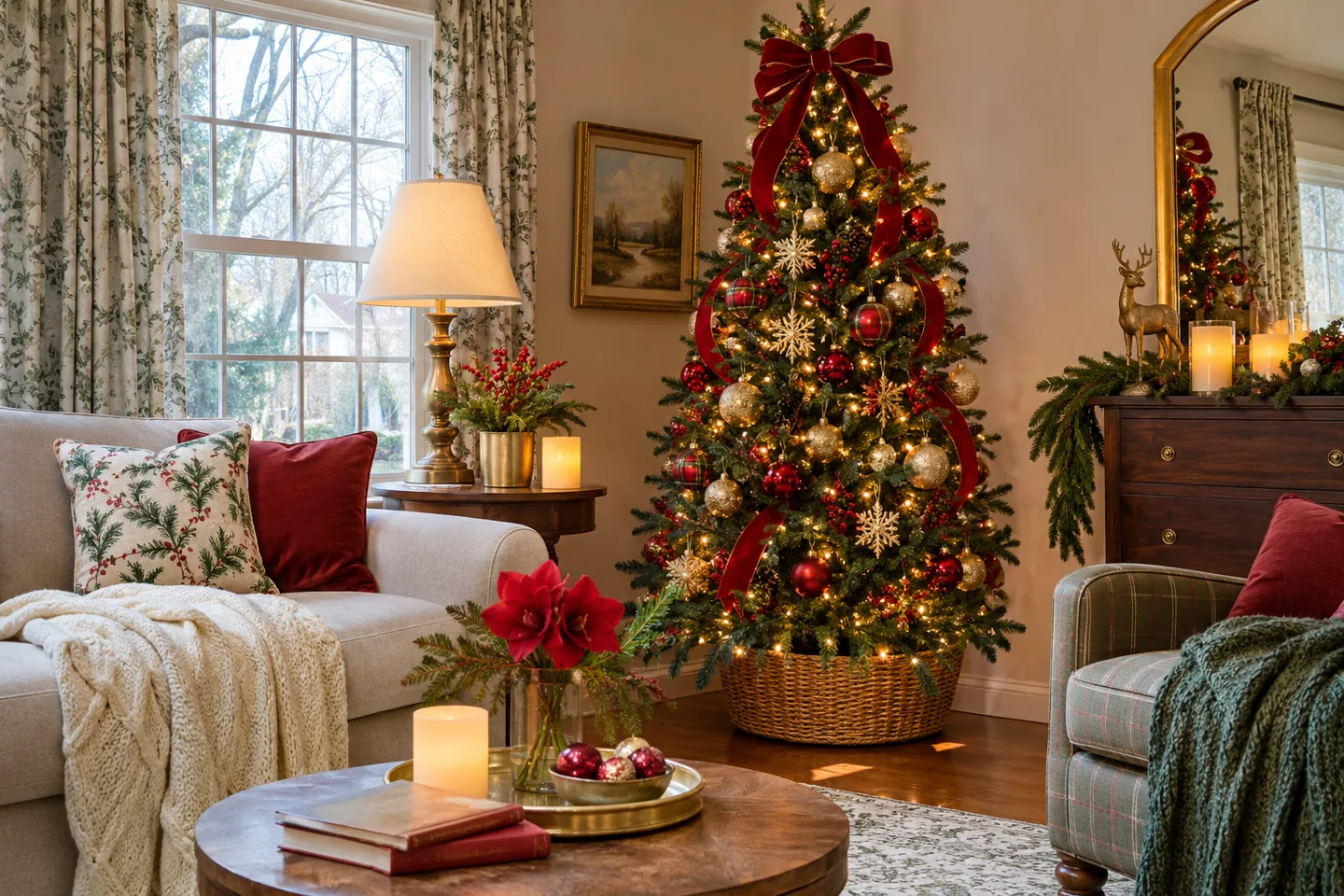
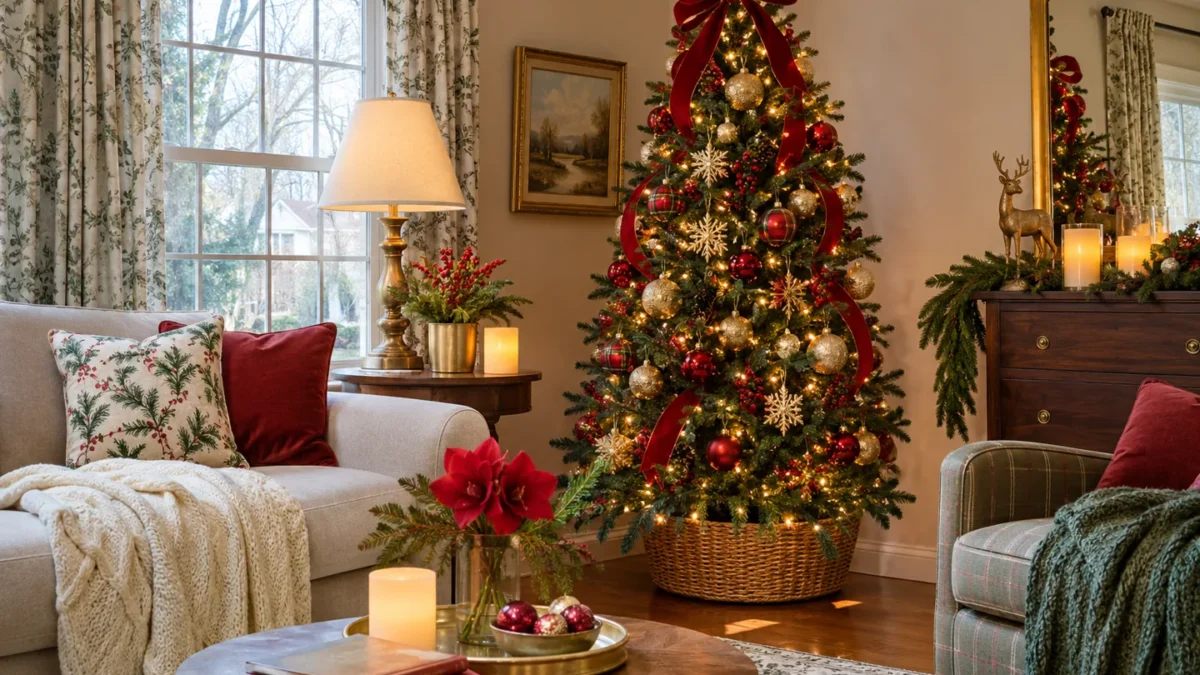
Let the tree establish the palette for the whole home. Spread red ornaments through the branches, add gold in smaller amounts and leave enough greenery visible to keep the shape clear. Place larger ornaments where the branches can support them, then fill gaps with lighter pieces.
For a small room, the tree’s width matters as much as its height. Measure the stand and lower branches before choosing a premium realistic model. A well-fitting tree can make the room feel generous even when it is modest in size. Avoid buying a larger one with the assumption that you will find somewhere for the furniture afterward.
Compare premium realistic prelit slim Christmas tree on Amazon (optional affiliate shopping link)
2. Choose a gold star with a simple outline

A gold star gives a traditional tree a recognizable finishing point. Choose one that suits the upper branch and leaves enough clearance beneath the ceiling. Repeat a little of the same gold lower on the tree so the topper feels connected rather than isolated.
An elaborate topper is not necessary when the ornaments already have plenty of detail. A simple metal, paper or lightweight star can work beautifully. Check its stability before turning on the lights or placing gifts below. If the tree is small, a smaller star often looks more graceful than a dramatic topper that bends the branch or overwhelms the silhouette.
3. Repeat the same red ribbon in several rooms
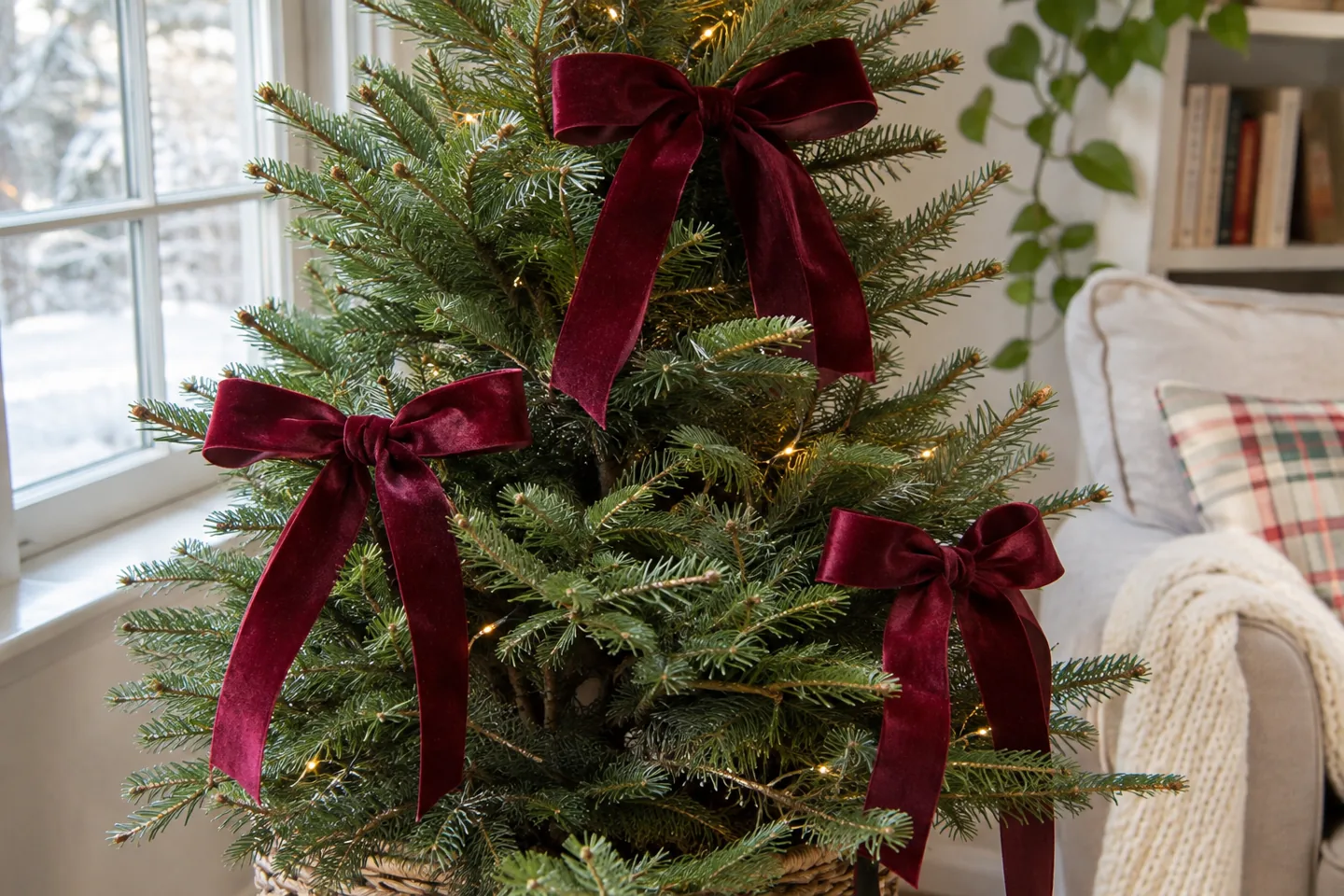
Use one ribbon color on the tree, a wreath and a small dining detail. The bows do not need to be identical, but the repeated material makes the house feel coordinated. Keep the largest bows on the largest objects and use shorter lengths for smaller accents.
Burgundy velvet creates a softer traditional look; bright red cotton or satin feels more playful. Start with ribbon you already own and add only what is missing. Tie rather than glue where practical so the ribbon can be reused. Roll it loosely after Christmas instead of crumpling it into the ornament box.
4. Give the mantel a clear traditional outline
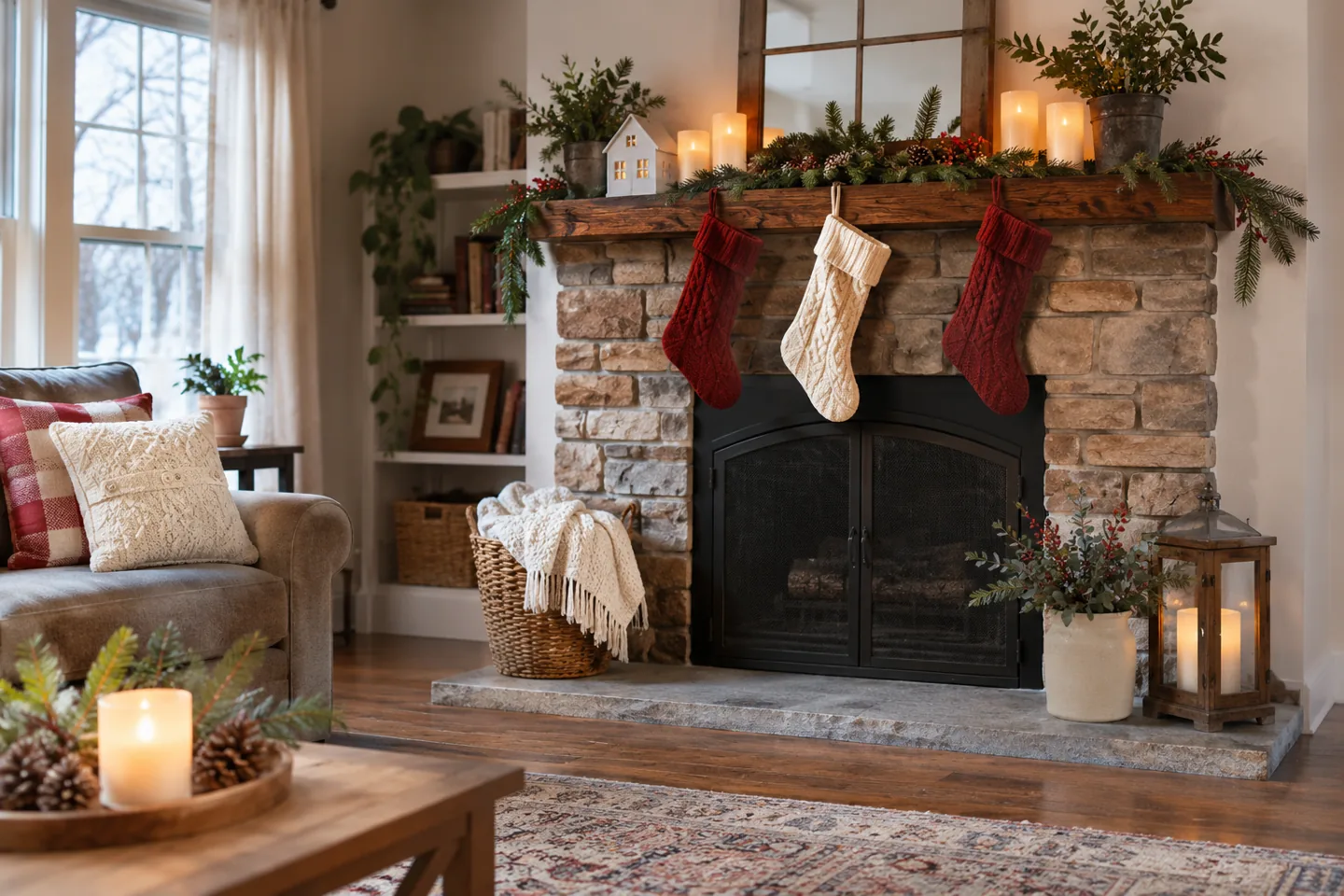
A low garland and a couple of stockings can define a mantel without covering every inch. Let a mirror or framed picture remain visible above it, then use flameless candles for height. Keep the stocking colors related to the tree so the two main features belong together.
The illustration shows an unused fireplace. For a working fireplace, follow the manufacturer’s required clearances and remove combustible decorations from unsafe areas; a decorating photograph does not establish safe placement. If the mantel is too narrow, use the stockings elsewhere on a suitable support and keep the top simple. The traditional feeling comes from the combination, not from copying every element.
5. Display one substantial wreath
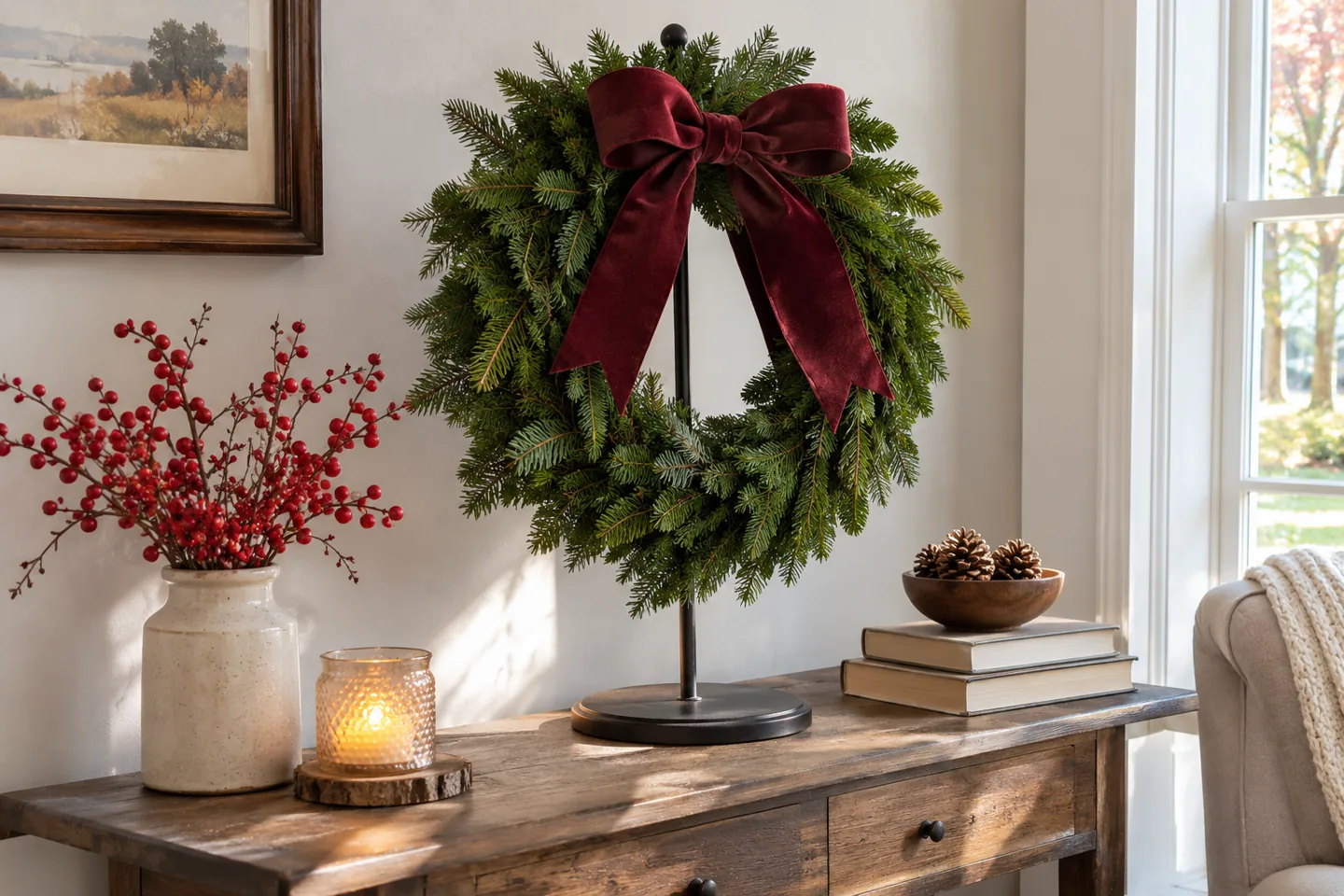
A wreath with a single red bow can be enough for an entire wall or console area. If hanging it is inconvenient, use a freestanding stand suited to its weight and diameter. Let the round shape remain visible rather than surrounding it with many smaller objects.
A premium realistic wreath may be a useful long-term piece because you can change its ribbon each year. Compare its actual diameter, depth and storage needs before buying. Check whether it is intended for indoor or outdoor use rather than assuming either. For a small home, one well-placed wreath often has more impact than several crowded together.
Compare Balsam Hill Christmas wreath on Amazon (optional affiliate shopping link)
6. Use a short garland on a sideboard
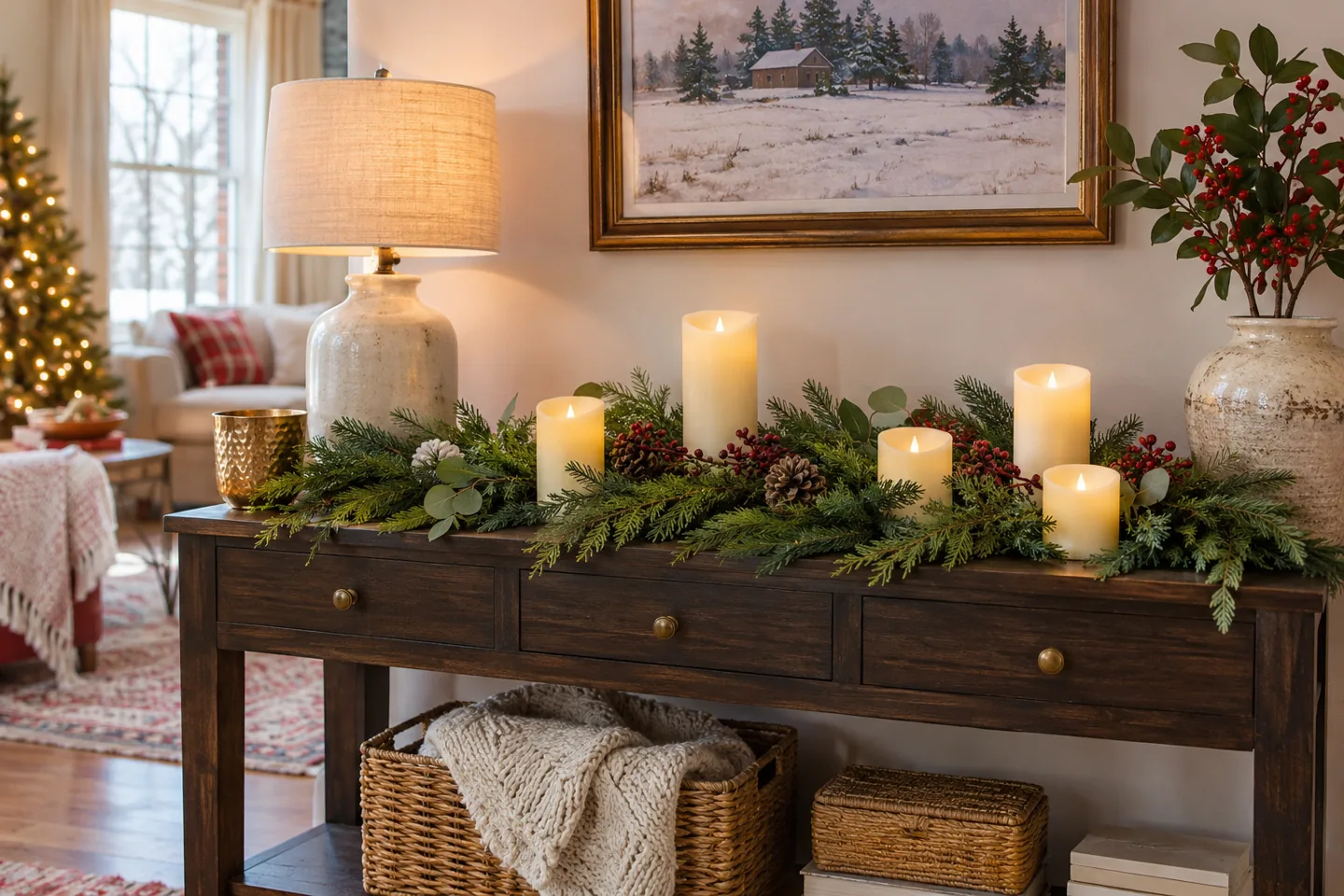
A sideboard can carry traditional greenery even when there is no fireplace. Lay a short garland along the back, with its ends contained on the furniture. Add a few LED candles or a simple bowl and leave some surface available for serving.
Check the underside for wire or rough stems that could mark the finish, and use suitable protection where needed. A full realistic garland may require fewer added ornaments, but it should still fit the furniture. Measure before ordering and avoid a heavy piece that needs unsupported overhangs. If the sideboard is used for meals, keep the display easy to move.
Compare premium realistic Christmas garland on Amazon (optional affiliate shopping link)
7. Bring the window into the lighting scheme

A row of simple LED candles gives the home a familiar Christmas glow. Space them according to the width of the sill rather than squeezing in a full set. Leave window handles and curtains usable, and make sure every base sits completely on a stable surface.
Choose a warm light that works with the tree lights and lamps. Timer controls can make the display easier to maintain, especially behind furniture. Compare candle height and battery access before buying. If the sill is narrow, one candle can look more deliberate than several leaning against the glass or crowded beside everyday objects.
Compare premium LED Christmas window candles timer on Amazon (optional affiliate shopping link)
8. Mix brass holders with ivory flameless tapers
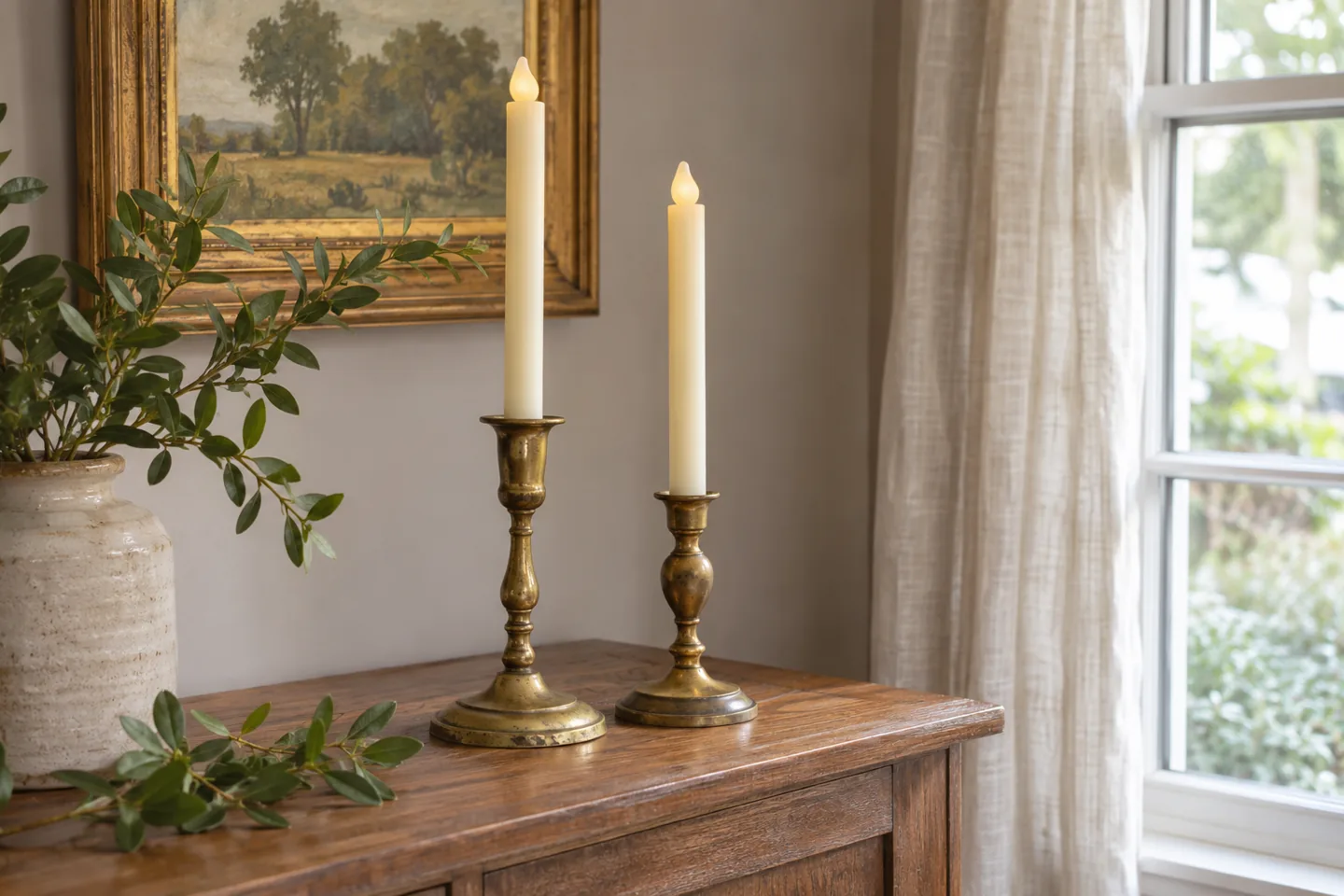
Brass and ivory bring a warm traditional note to a dining room or console. Use a pair of holders for symmetry or a small group with slightly different heights. Keep the candles upright and make sure their diameter suits the holders securely.
Premium LED tapers can be a practical option for reusable displays, especially where an open flame would be unsuitable. Compare the controls and battery requirements so the set is easy to use. You do not need to polish every holder to the same shine; a little variation can feel collected. Leave enough space around the arrangement to avoid knocking the tall pieces.
Compare Luminara flameless ivory taper candles on Amazon (optional affiliate shopping link)
9. Add plaid where people can enjoy it
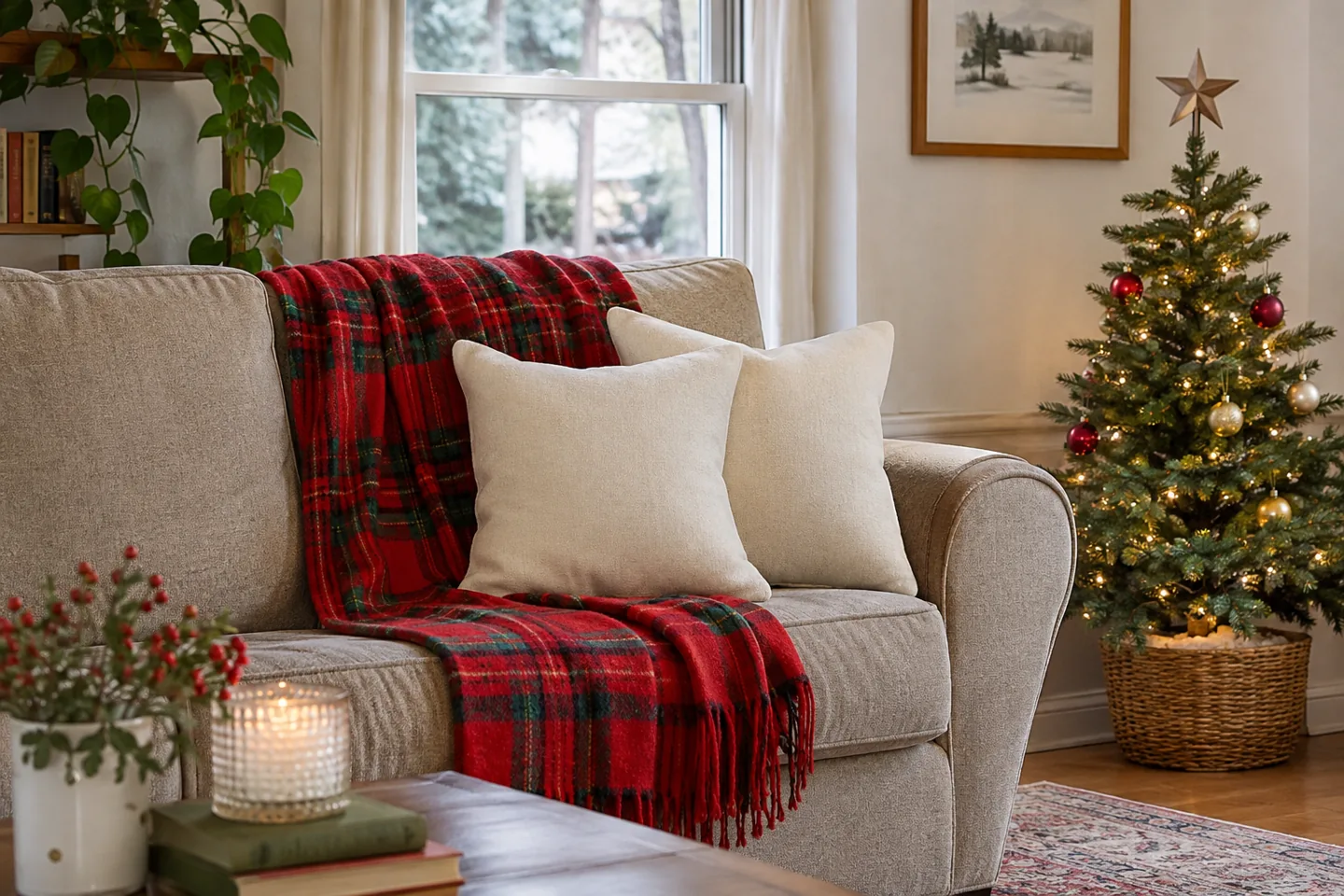
A tartan throw over a sofa arm adds pattern without asking you to replace the room’s textiles. Choose colors that repeat the tree palette and keep nearby cushions relatively quiet. Drape the blanket so it can be picked up and used easily.
If you are choosing a premium wool throw, consider softness, dimensions and cleaning instructions as carefully as the pattern. A blanket that stays in use through winter is a more practical purchase than a decorative textile nobody wants to touch. An existing plaid scarf or smaller throw can also work as a visual accent on a chair, provided it is not needed elsewhere.
Compare premium wool tartan blanket on Amazon (optional affiliate shopping link)
10. Set a traditional table with ordinary white plates
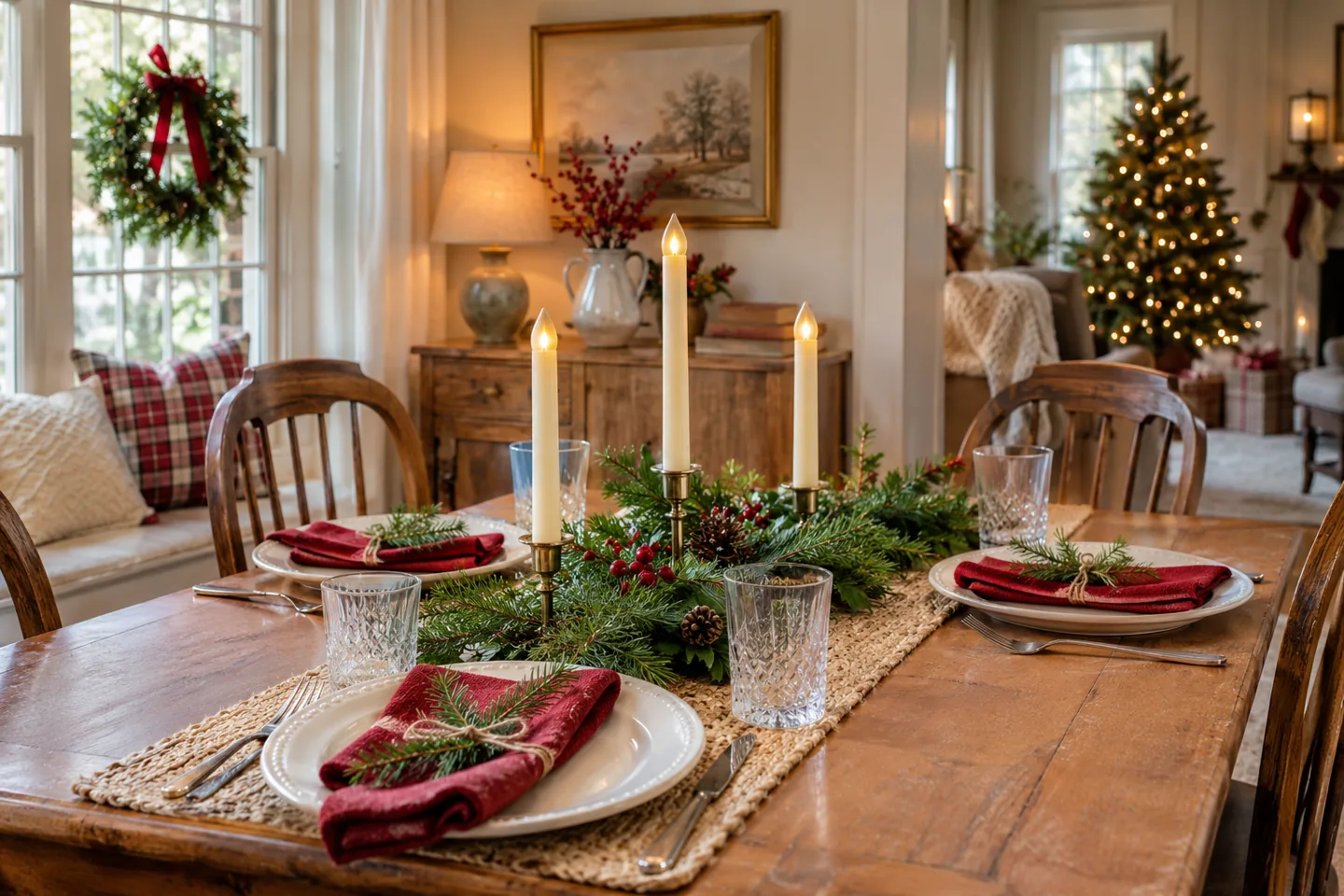
White plates give you a calm base for red napkins, low greenery and a few flameless candles. Keep the centerpiece low enough for conversation and leave room for serving dishes. Repeat the same red used on the tree rather than introducing another strong color just for the table.
You do not need a separate Christmas dinnerware set. Use the plates you own and let the textiles do most of the seasonal work. Before guests arrive, sit at the table and test the space with glasses and cutlery in place. Remove any decoration that forces people to balance dishes on the edge or reach through branches.
11. Use nutcrackers as a paired accent
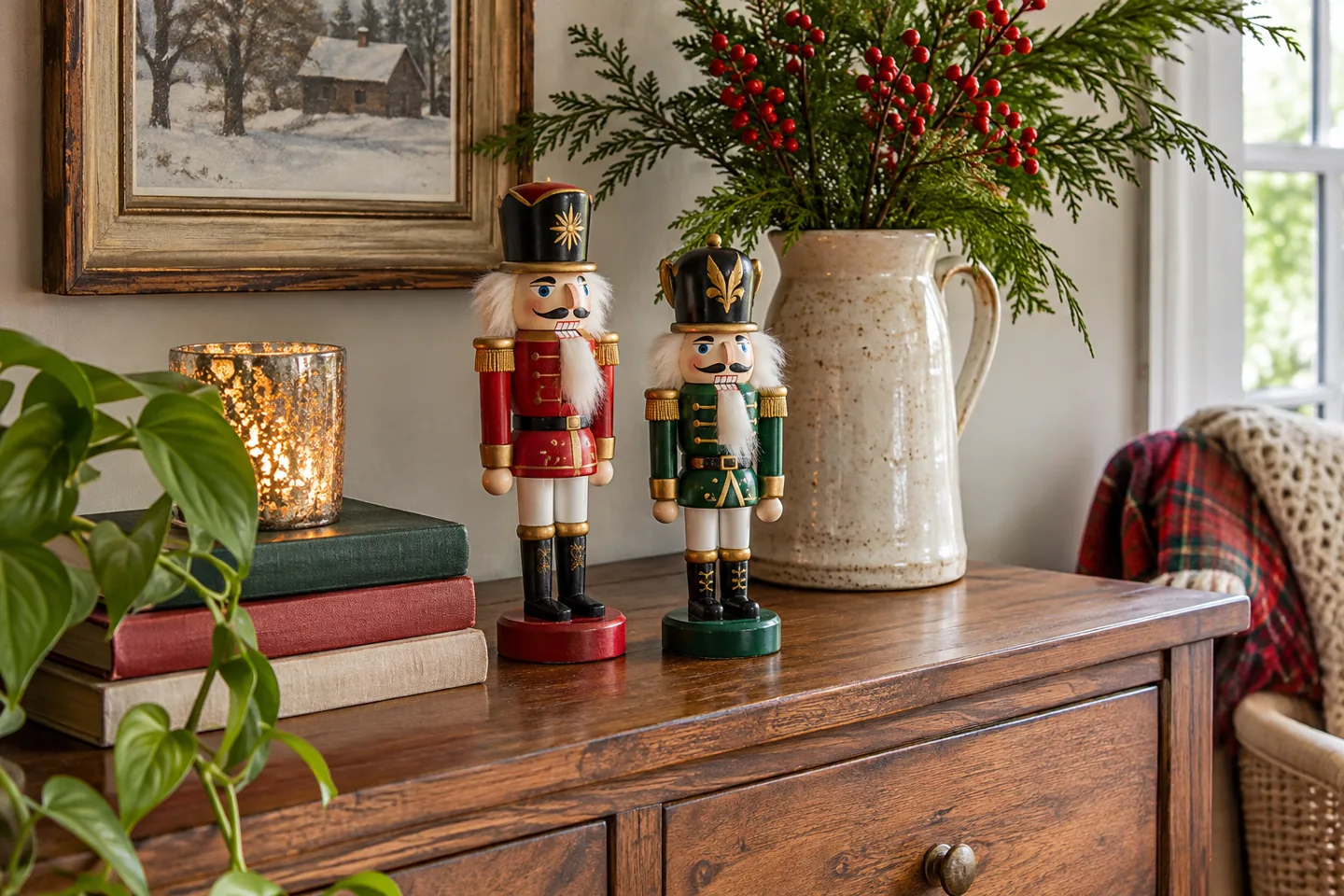
A pair of nutcrackers can give a sideboard a traditional holiday character. Place them together or at opposite ends of a small arrangement, with enough space for their painted details to be seen. Keep the rest of the surface simple so the figures do not compete with many patterned objects.
Check that both bases are stable and that older pieces do not have loose parts or flaking paint. Decorative nutcrackers are not necessarily made for cracking nuts or food contact. If you own a collection, choose a few favorites for this room and keep the remainder for another year. A small edit can make the collection feel more special.
12. Add bells as a small metallic detail
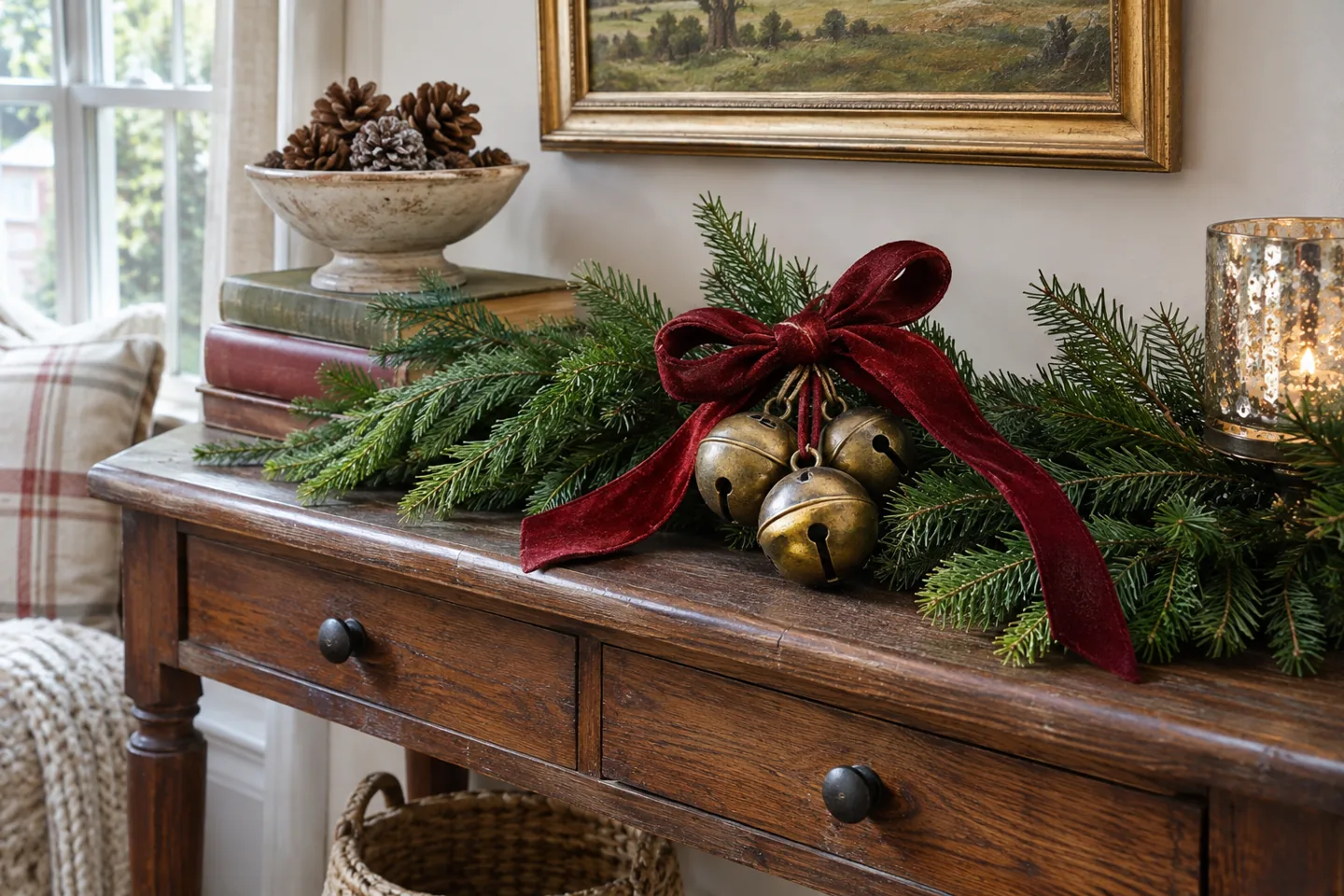
A few brass-colored bells tied to greenery can repeat the gold on the tree without adding another large decoration. Use a short ribbon knot and place the group where it will not catch on clothing or furniture. Let the bells sit within a low arrangement rather than dangling into a walkway.
Choose the scale to suit the surface. Oversized bells can overwhelm a narrow console, while a small cluster is easy to tuck beside a framed picture. Keep loose small parts out of reach of young children and pets. The sound is not essential; the shape and warm metal finish are enough to carry the traditional look.
13. Fill a bowl with matching ornament colors
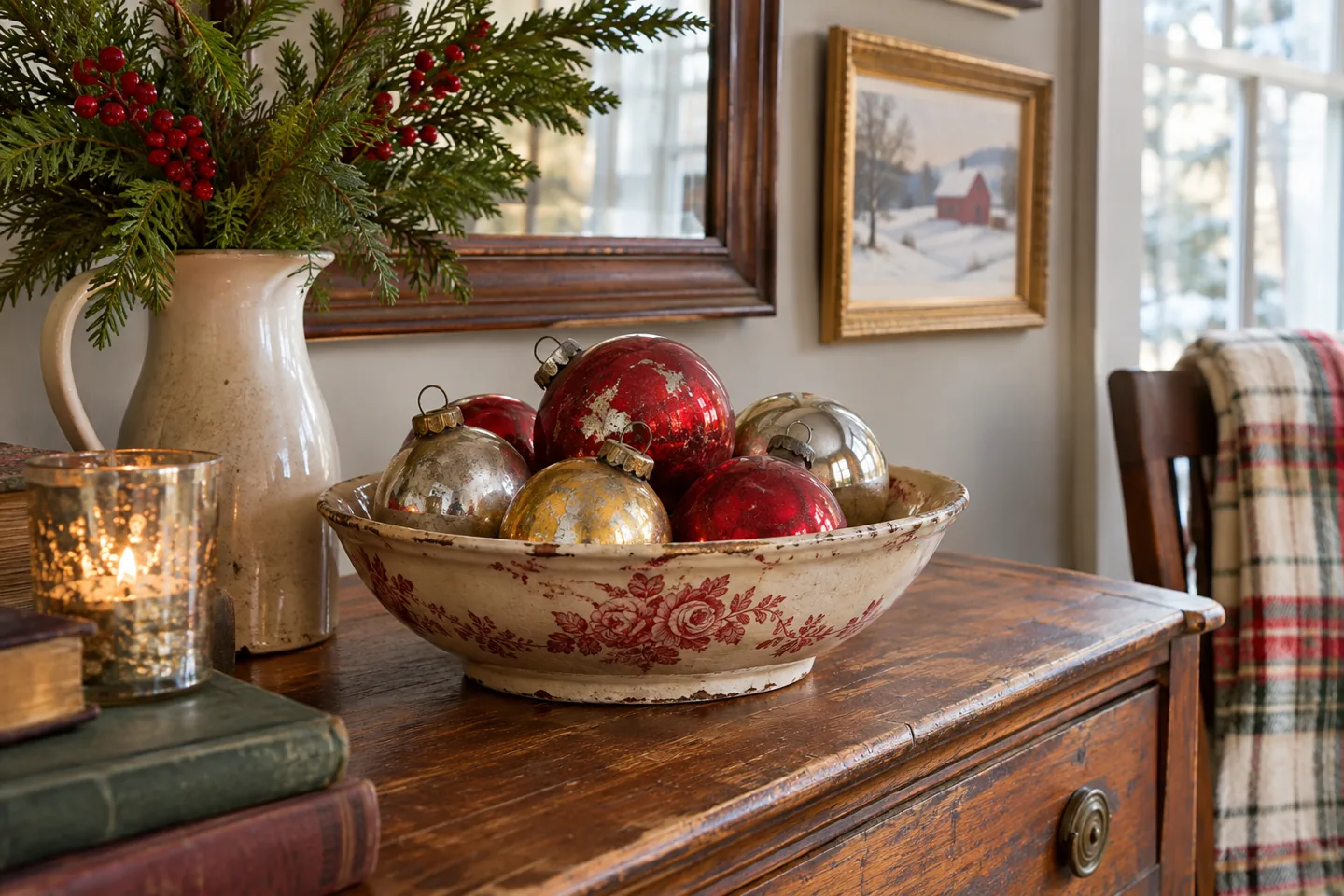
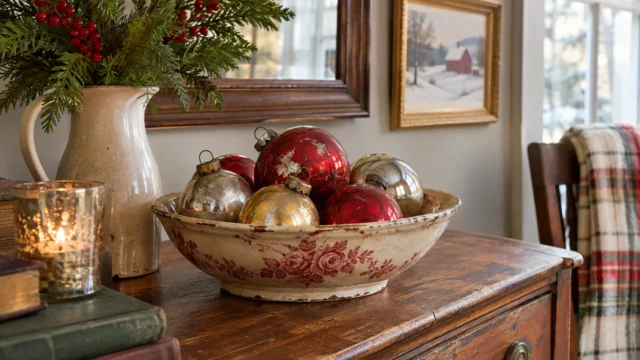
Use a ceramic, wood or glass bowl to repeat the tree palette on another surface. Select a handful of red and gold ornaments, with one quieter finish to soften the group. Place the largest pieces underneath and avoid piling them above the rim.
This is a useful way to include ornaments that do not suit the current tree layout. Keep damaged glass out of the bowl and add a soft protective layer if the pieces are delicate. A bowl on a sideboard can move easily when the furniture is needed for food, making it more practical than a display built from dozens of separate objects.
14. Tie modest bows to the dining chairs
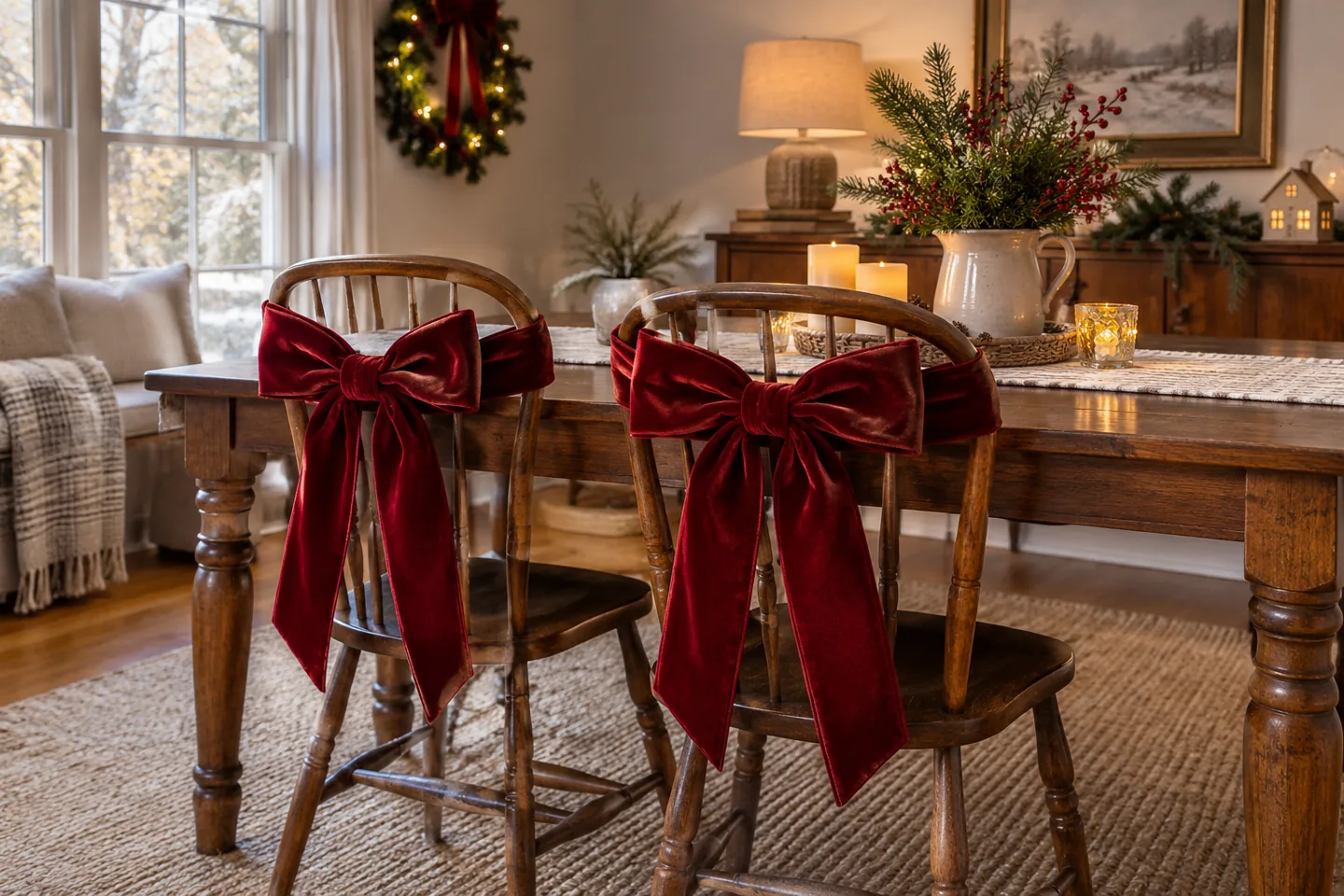
A bow on each end chair can make a small dining area feel dressed for Christmas. Tie soft ribbon around a suitable part of the back and keep the knot on the outside. Test the chairs while sitting and sliding them under the table before adding more.
Use the same ribbon as the wreath or tree, with shorter tails so they do not brush the floor or catch on clothing. If the chairs are upholstered or have moving parts, choose a placement that does not interfere with their use. The effect should be a small finishing detail, not something guests have to untie to become comfortable.
15. Put staircase bows on the balusters
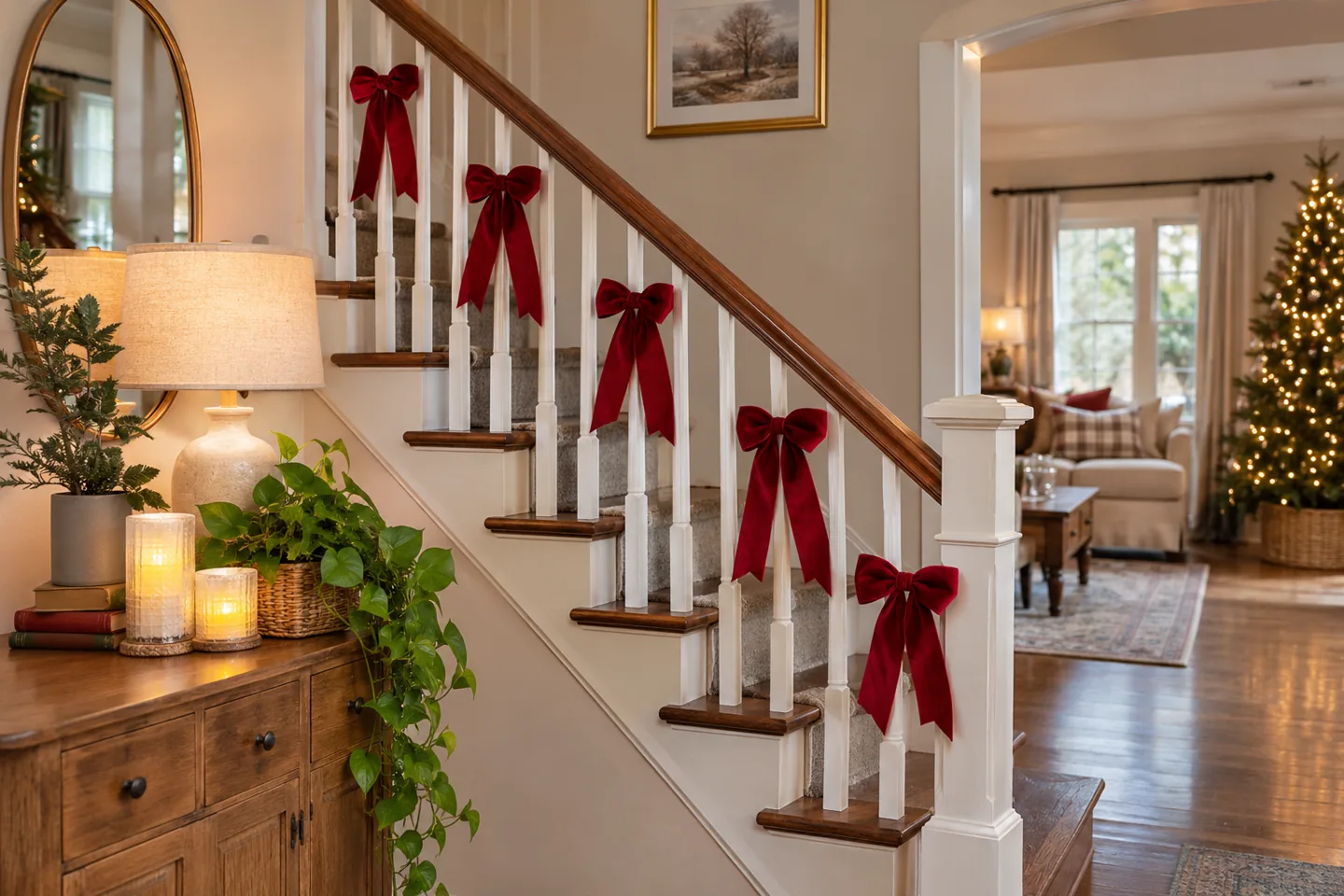
If your home has a staircase, a few bows on the vertical balusters can repeat the red ribbon without covering the handrail. Space them evenly and keep the tails short enough that they do not reach the steps. Leave the rail easy to grip along its full usable length.
Do not add a dense arrangement just because the staircase is a large surface. A small home often looks more balanced with a few repeated accents. Check that the ties cannot slip or interfere with movement, and skip the idea if the stair design does not offer a suitable position. Clear, comfortable use of the stairs comes first.
16. Keep the hallway display low and narrow
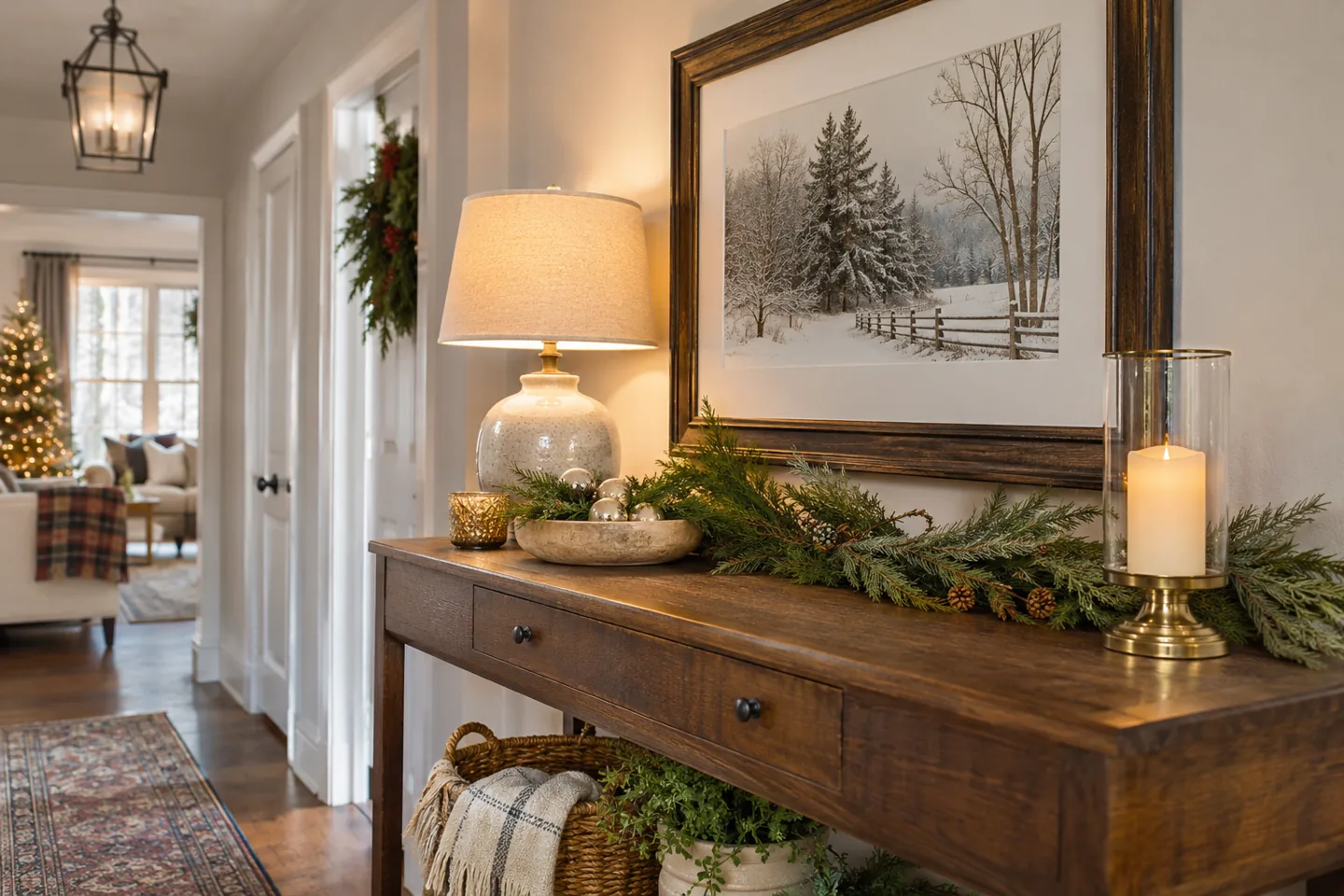
An existing console can hold a framed winter scene, a short length of greenery and one LED candle. Keep all objects within the furniture’s footprint, with no branches reaching into the path. Use the same brass, red or green found in the main room.
A hallway needs very little decoration because people see it while moving. Avoid introducing another piece of furniture if the space is already tight. Make sure doors, light switches and outlets remain accessible. If there is no console, a small seasonal detail in the next room can provide the same welcoming view without reducing the hallway’s usable width.
17. Give a reading corner a winter layer
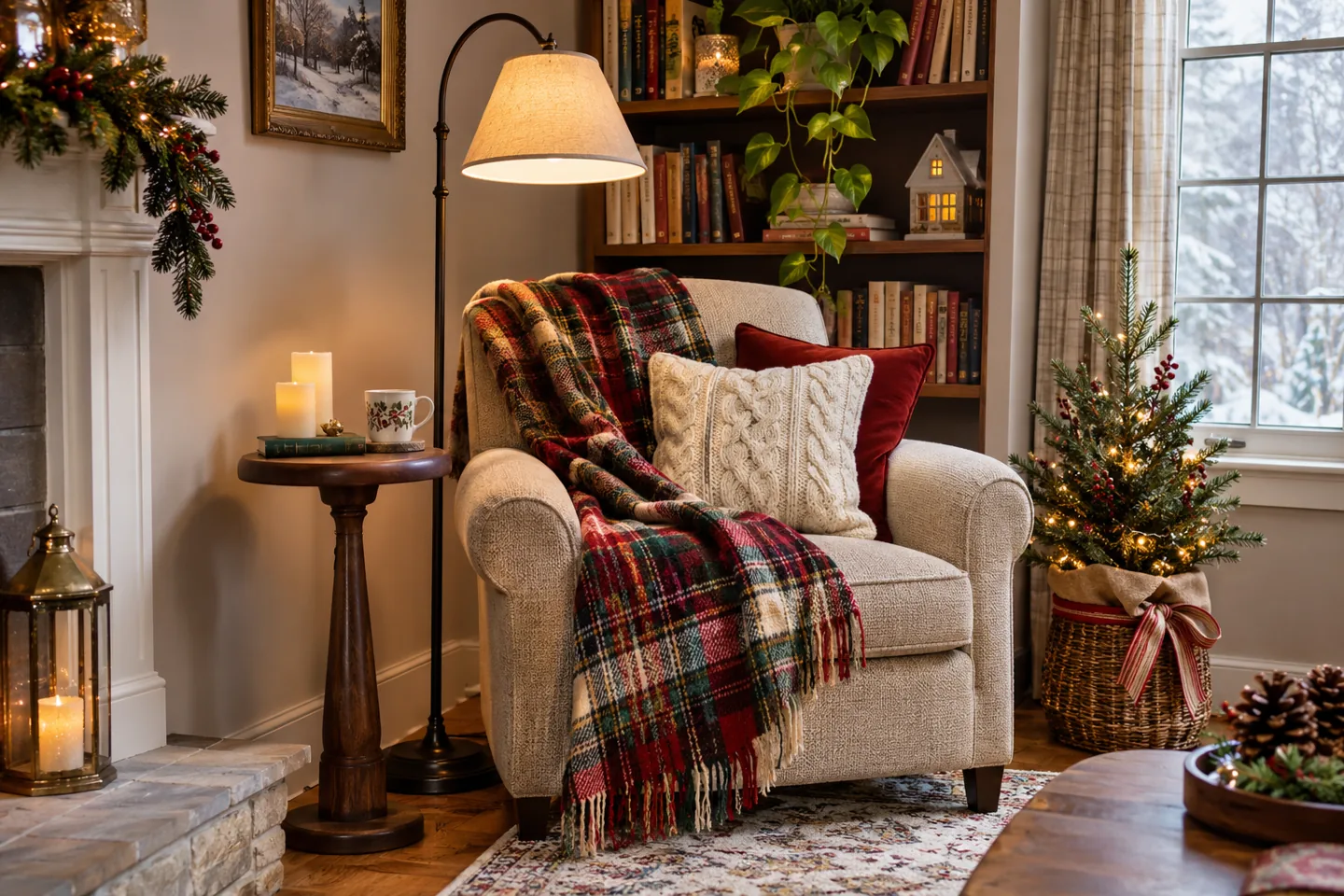
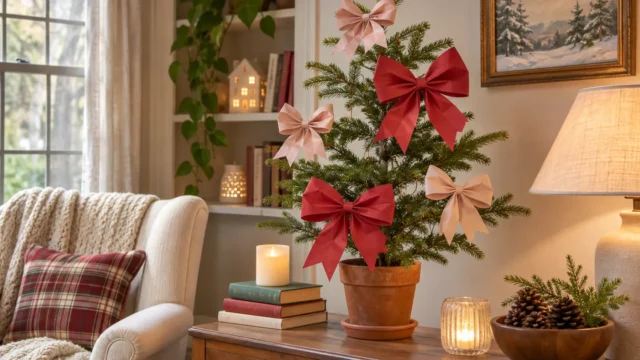
A comfortable chair, a tartan throw and a tiny evergreen make a quiet Christmas corner. Keep the chair available for sitting and leave a clear place for a cup or book. The seasonal detail can be small because the lamp and textile already create much of the atmosphere.
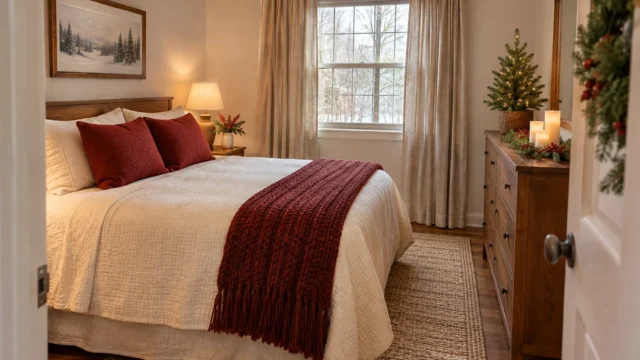
Use a mini tree or greenery you already own before buying another one. Check that the lamp remains accessible and that nothing rests against its shade or other warm parts. This is a good place to enjoy a softer version of the main palette: deep green, cream and a little burgundy rather than a second fully decorated tree.
18. Keep wrapped gifts in a single generous-looking group
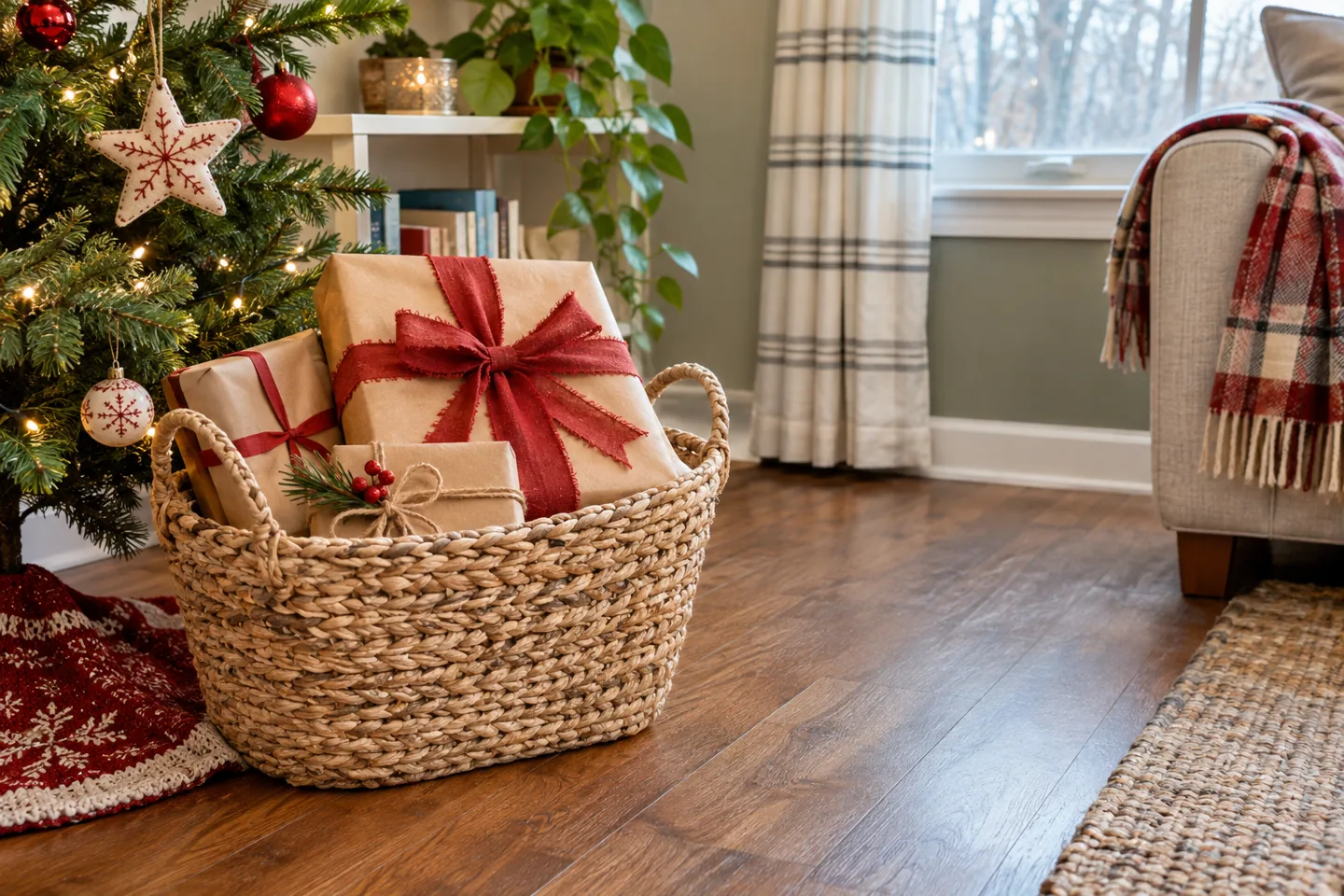
A basket of gifts makes the tree area feel finished while containing the parcels. Mix kraft paper with a few red or gold accents, then use ribbon to connect the different packages. Put heavier boxes at the bottom and keep fragile gifts where they will not be squeezed.
Leave the surrounding floor clear rather than spreading gifts into every gap. If the basket will need moving, check its capacity and carry it before filling or lighten it first. After Christmas morning, return it to holding blankets or magazines. A traditional home can still look settled after the presents have been opened.
19. Protect the collection you want to reuse
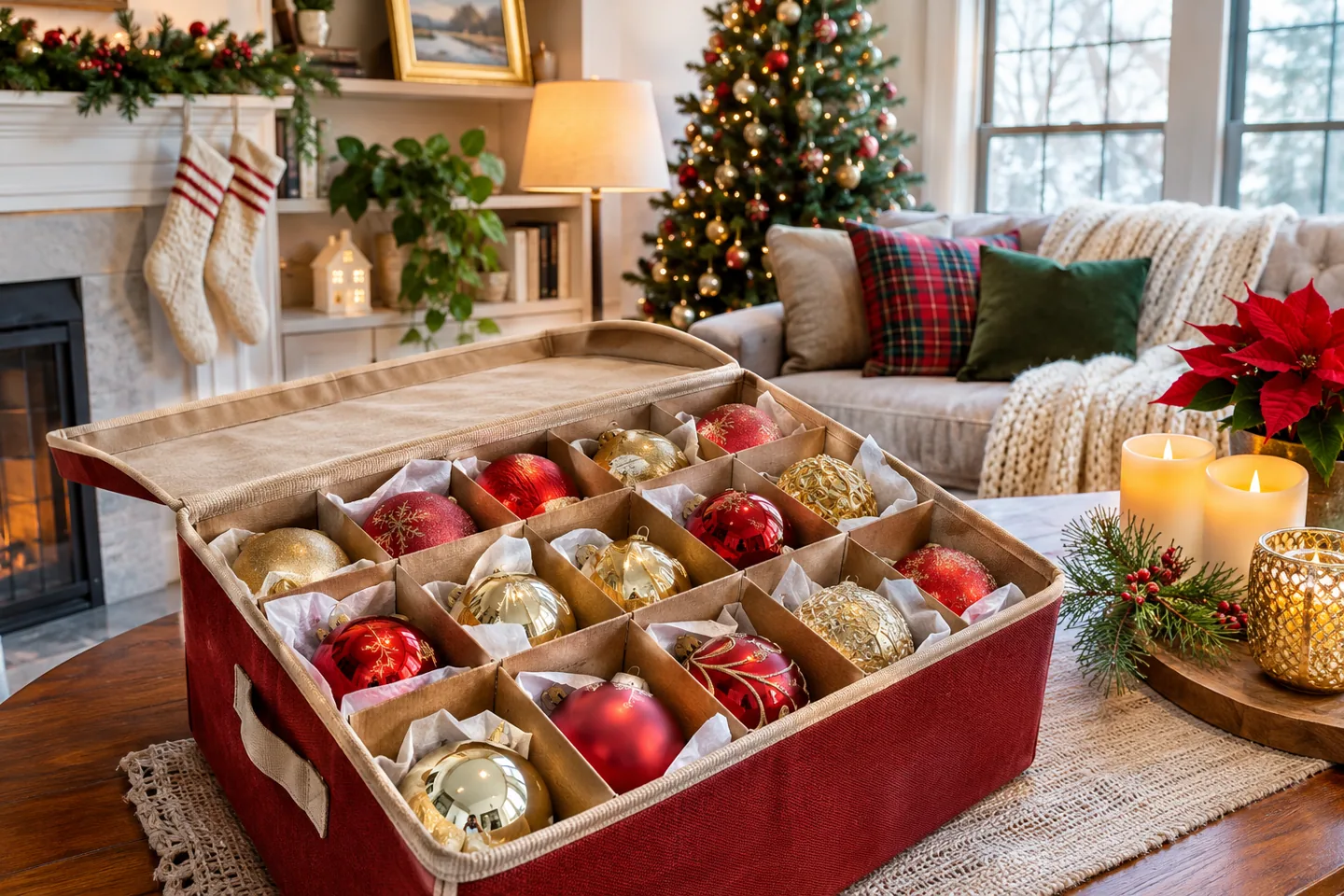
A classic Christmas scheme gets easier when the pieces are stored well. Photograph the finished arrangements, separate fragile ornaments and label small groups by room. Keep ribbon loosely rolled and place heavy decorations below lighter ones rather than on top of them.
A sturdy divided ornament box may be worth considering for a delicate collection, but check compartment sizes and the available shelf space before buying. Follow the decoration manufacturers’ instructions for removing batteries and storing electrical items. Review the collection as you pack: keep what you use and enjoy, repair what is worth repairing and avoid carrying unnecessary clutter into next December.
Compare premium Christmas ornament storage box on Amazon (optional affiliate shopping link)
How to carry one classic palette through a small home
Use the tree as the most detailed display. In the dining area, repeat its red ribbon through napkins or chair bows. In the hallway, repeat the greenery and one metallic finish. A bedroom or reading corner only needs a textile or a small evergreen to feel connected. The repetition matters more than the number of decorations.
Work from the largest pieces to the smallest: tree, wreath or garland, lighting, textiles, then ornaments. Pause after each layer and look at the house from the routes you use most. If two displays compete in the same view, simplify one. A classic scheme feels welcoming when there is room to notice its familiar shapes.
Choose optional premium purchases for longevity and fit. A realistic tree, a well-made wreath, useful flameless candles or a comfortable wool throw may have a place in many future Christmases. Compare specifications and storage requirements, and do not assume a higher price guarantees a better match for your home. The most successful decoration is the one you are pleased to bring out again.
A room-by-room plan for a coordinated home
| Area | Main traditional detail | What connects it |
|---|---|---|
| Living room | Red-and-gold tree with visible greenery | The main ribbon color |
| Dining area | White plates, red napkins, low greenery | A small amount of the same metallic finish |
| Entry or hallway | Compact wreath or low console display | Matching greenery and ribbon |
| Reading corner | Plaid throw and tiny evergreen | A softer version of the main colors |
You can follow this plan without decorating every room. If the dining area is visible from the sofa, its small repeated detail may be enough to make the entire home feel connected. If the entrance opens directly into the living room, let the main tree provide the welcome and keep the entry furniture practical.
Choose one of two traditional moods
For a cheerful look, use clear red, green branches, warm gold and white. Keep the red in obvious places such as bows, napkins and a few larger ornaments. For a softer look, use burgundy, deep green, cream and aged brass. Natural wood and a wool throw can help the second palette feel relaxed. Neither version requires every decoration to be new or perfectly matched.
Do not mix several different reds by accident across large objects. Put the ribbon, textile and ornaments together in daylight before arranging them. Some variation is attractive, but a bright orange-red beside a very purple burgundy can pull attention away from the overall room. If a meaningful object is outside the palette, give it a small place of its own rather than forcing everything else to match it.
A practical order for decorating
Assemble the tree and check its position first. Add the wreath or mantel arrangement next, then lighting. Bring in textiles after the main shapes are settled, and use smaller ornaments to repeat colors where needed. This order makes it easier to stop before the house becomes crowded. It also prevents delicate small pieces from being knocked while larger items are still moving.
Before finishing, walk through with the doors open and the lights at their normal evening setting. Check that a chair can be pulled out, the curtains close and the dining table still serves a meal. Remove any extra piece that makes those routines awkward. Traditional Christmas style feels most welcoming when it leaves space for the people who live there.
Frequently asked questions
What colors make Christmas decor look classic?
Red, evergreen and gold are a familiar starting point, often softened with cream, wood and brass. Burgundy can replace bright red if you prefer a quieter version. Repeating the palette matters more than using every traditional color.
How do I decorate a small home in a traditional style?
Choose one main feature and keep the other displays smaller. Repeat ribbon, greenery and warm light across rooms while preserving useful surfaces and walking routes. A compact tree and a few coordinated accents can be enough.
Can classic Christmas decor include modern pieces?
Yes. Modern furniture and simple white dinnerware can provide a calm background for traditional ribbons, ornaments and greenery. Keep the colors connected so the mix feels deliberate.
Which decorations are worth upgrading?
Consider the items you will use repeatedly and that solve a real need: a tree that fits, a durable wreath, convenient flameless lighting or a comfortable winter throw. Compare size, care and storage before deciding; expensive extras are optional.