
Fun Sleepover Ideas for Teens: 40+ Games, Food, Themes and a Full Night Plan
The best fun sleepover ideas for teens are not the fanciest ones. They are the ones that give a group of 13-, 14- or 15-year-olds something to do together at 7 p.m., something different at 10 p.m., and something calm at midnight — without anyone spending the whole night staring at a phone in a corner.
This guide does that job in one place. Pick five ideas, one from each part of the night, and you have a plan: an easy first-hour activity, one big group game, one creative project, one food activity, and one quiet late-night wind-down. Everything else here is a backup for when the mood changes, the weather turns, or the budget is tight.
Use it whether you are the teen hosting, the parent helping behind the scenes, or the friend who got asked to “bring an idea.” Every activity below lists how long it takes, what you need, and how many people it suits, so you can choose fast instead of scrolling through another list of fifty vague suggestions.
How to Plan a Teen Sleepover That Actually Works
A sleepover fails for predictable reasons: too many activities crammed into one evening, one activity that only suits half the group, no food ready when everyone gets hungry, or no plan for the last hour when energy drops. Fix those four things and the night mostly runs itself.
The pick-five method
Choose one idea from each of these five slots and stop planning. More than that is a backup list, not a schedule.
- Arrival activity (first 30–45 minutes): something hands-on that people can join as they arrive, with no explanation needed.
- Main event (60–90 minutes): one game or project the whole group does together.
- Food activity (30–45 minutes): dinner or snacks the group makes or customises, not just a bowl put on a table.
- Second wind (45–60 minutes): a different kind of energy — creative, competitive, or outdoors if the weather allows.
- Wind-down (30–45 minutes): quiet, low-light, low-noise. This is what stops a 1 a.m. energy crash turning into a 3 a.m. argument.
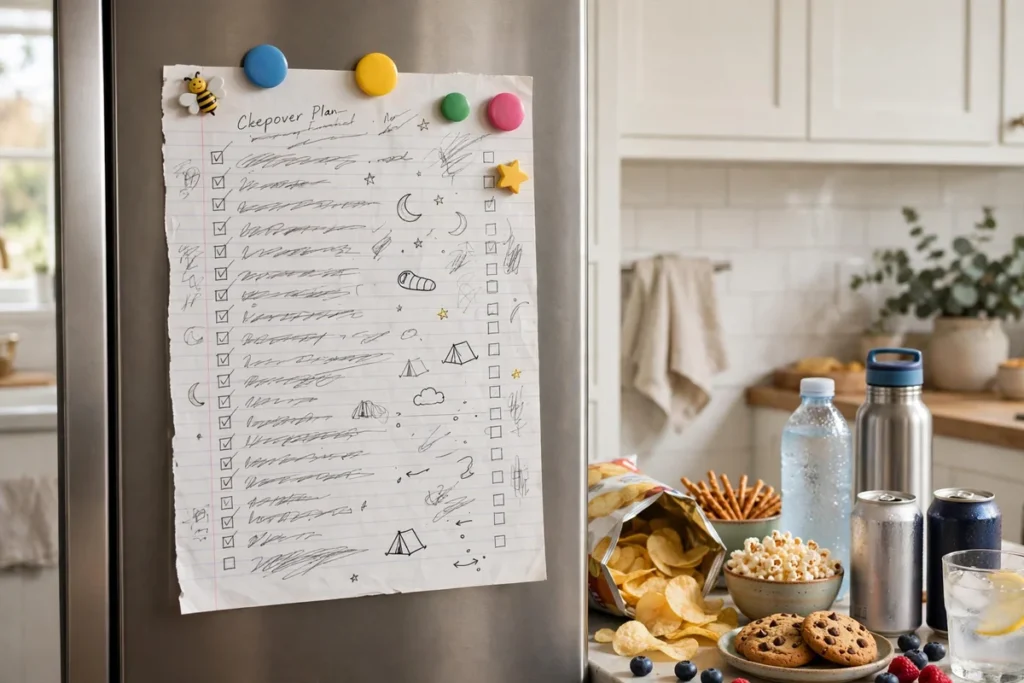
Write the five picks on a piece of paper and stick it on the fridge. If an activity flops, cross it out and move to the next one. Nobody needs to know it was plan B.
Five decisions to make before anyone arrives
- Guest list and group size. Four to six guests is the sweet spot: enough for teams, small enough that everyone gets a turn. With eight or more, split into two teams for most games or run two activities at once.
- Food and allergies. Ask every parent about allergies and dietary needs when they confirm, not on the night. Keep labels, keep nuts out of shared bowls if anyone is allergic, and have one plain option (plain pizza, plain popcorn, plain pasta) that anyone can eat.
- Phones. Agree the rule in advance and put it in the invitation, for example “phones in the charging basket from 11 p.m.” A rule announced at midnight feels like a punishment; the same rule announced a week earlier feels like part of the plan.
- Lights-out and noise. Agree a time when the main lights go off and voices drop, even if nobody is asleep yet. A sleepover where everyone is still shouting at 2 a.m. is not fun the next morning.
- The early-exit plan. Agree a simple code phrase a guest can text a parent if they want to go home, with no questions asked and no teasing. Homesickness happens at every age, and a quiet exit beats a miserable night.
What to have ready in the room
You do not need decorations to have a good sleepover, but you do need the basics within reach: enough floor cushions or sleeping bags, blankets, a rubbish bag, cups and plates, phone chargers, a first-aid kit, water, and a snack station that can be refilled without a trip to the kitchen every ten minutes. Set the sleeping area up before guests arrive so the end of the night is a five-minute job, not a twenty-minute furniture move.
The First Hour: Easy Ways to Get Everyone Settled
The first hour is the hardest to plan because people arrive at different times and some guests know each other better than others. The right activity is one a late arrival can join without a catch-up explanation.
1. Snack table vote
 Save this image to Pinterest (opens in a new tab)
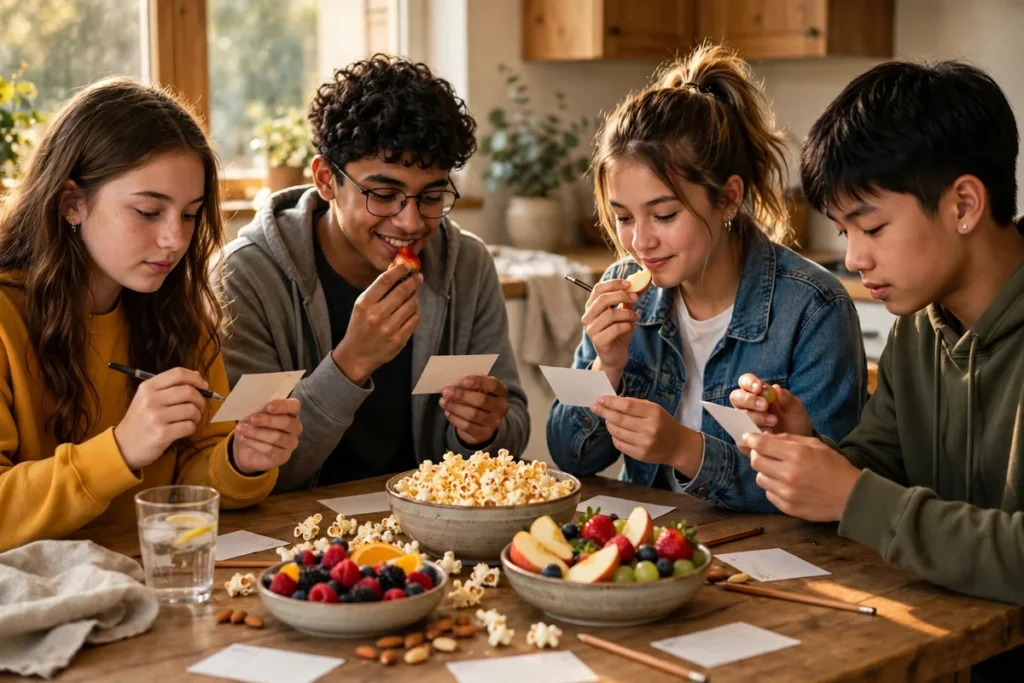
Set out four or five snacks — popcorn with two seasonings, two kinds of crisps, fruit, biscuits, and one drink — and give everyone a small scorecard. Each person rates each snack out of five and votes for categories such as “most surprising” and “would eat again.” It takes ten minutes, gives everyone something to talk about, and tells you which snacks to buy more of next time. Keep portions small and label anything with nuts, dairy, or gluten.
2. Playlist detective
 Save this image to Pinterest (opens in a new tab)
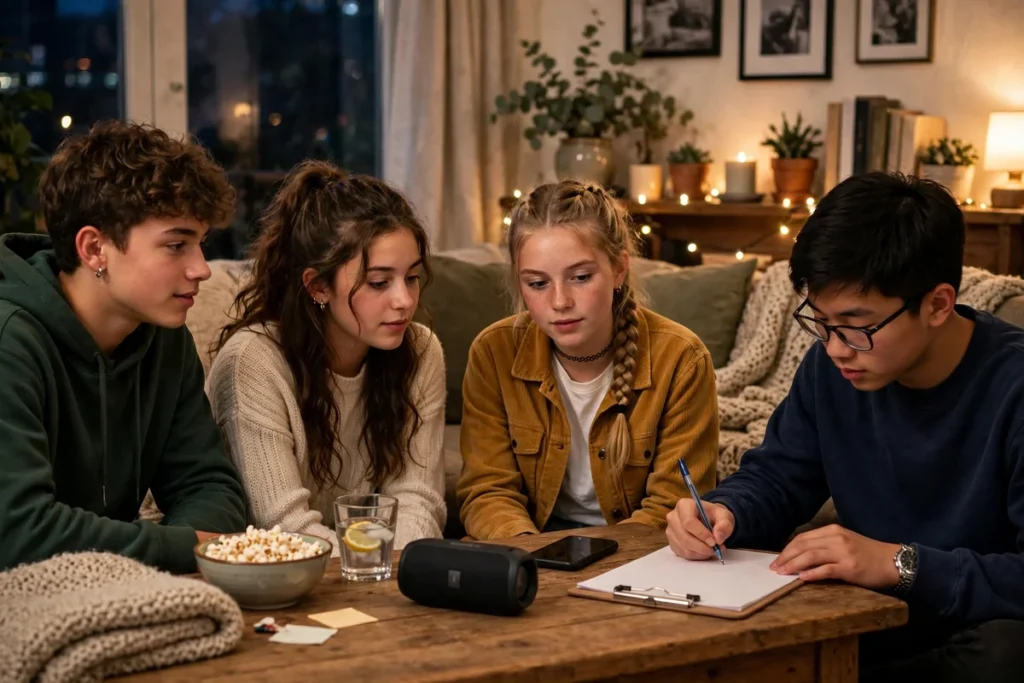
Before the night, ask each guest to send the host two songs privately. Mix them into one playlist with no names attached. Play the first fifteen seconds of each song and let everyone write down who they think picked it. One point for the song, one for the picker. Reveal answers in batches of five so the guessing builds up. It works because it is personal without being embarrassing — nobody has to explain why they like a song.
3. Two-minute teach-in
Go around the group. Each person gets two minutes to teach everyone one small thing: a card trick, a dance step, a phrase in another language, a way to fold a paper crane, a phone shortcut. The time limit matters. Two minutes is short enough that nobody feels put on the spot, and long enough to learn something real. If someone would rather pass, let them pass and come back to them later — the best teach-ins often come from the quietest person, once the group has warmed up.
4. Build-your-own drink station
Put out two or three juices, sparkling water, lemonade, sliced fruit, mint, and ice. Everyone invents a drink, gives it a name, and the group votes on best flavour and best name. No alcohol, no energy drinks, and an adult handles anything hot or sharp. This is also a useful job for the guest who arrives first and wants something to do while waiting.
5. Photo prompt hunt (one room only)
Write ten photo prompts on cards: something that casts an interesting shadow, three objects of the same colour, a close-up that makes an ordinary object hard to recognise, a reflection in a mirror, the group pulling the same face. Everyone has fifteen minutes and a phone camera. One point per prompt, plus a group vote for the most creative photo. Keep it to rooms the host has said are open, and agree before starting that nobody photographs anyone who does not want to be in a picture.
Sleepover Games for Teens That Work for the Whole Group
A good sleepover game has three qualities: everyone can play at the same time, the rules take less than two minutes to explain, and nobody is eliminated in the first round and left watching. These five pass that test for most groups.
6. Blind ranking
 Save this image to Pinterest (opens in a new tab)
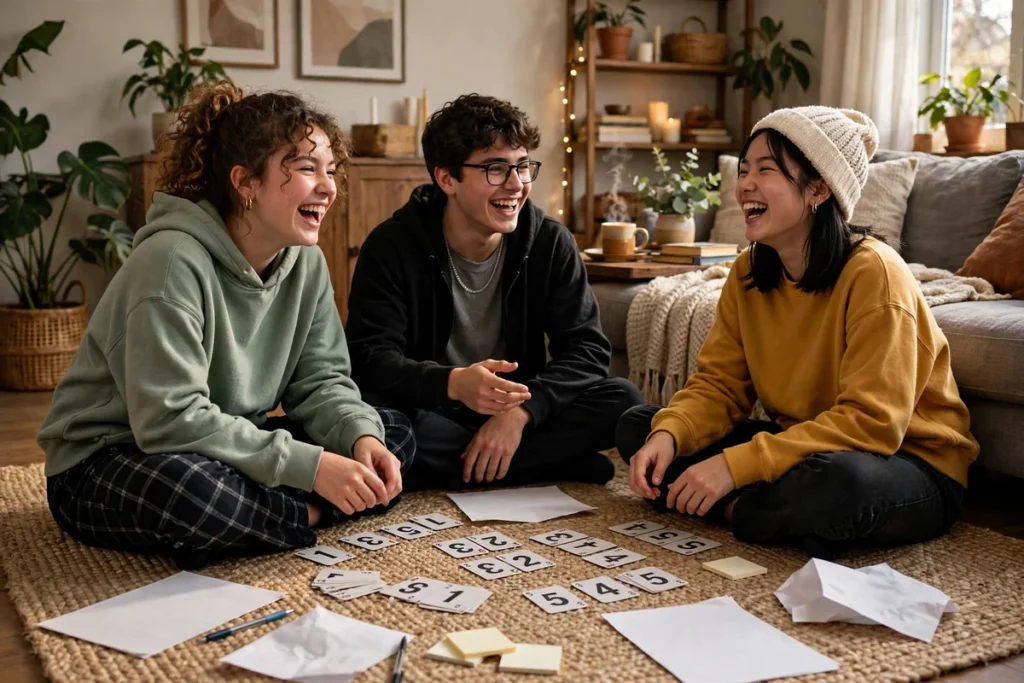
Pick a category — best ice-cream flavours, best movie snacks, best fictional characters to take on a camping trip, best songs for a road trip. Reveal five options one at a time. Each player must place each option on a ranking from one to five as it appears, and once a spot is used it cannot change. The fun is in the forced choice: put the first option at number one and a better one may appear next. Play three rounds with different categories and keep a running total.
7. The friend-group quiz
This is trivia about the group, not about general knowledge. Before the night, each person writes three questions about shared experiences: which snack does the group always finish first, what phrase does someone in the group say all the time, which film has the group talked about most. Collect the questions, remove the names, and read them out. Everyone writes an answer before the correct one is revealed. Keep questions about shared memories and jokes, never about crushes, grades, appearance, or private conversations. If a question makes anyone uncomfortable, skip it without comment.
8. Code-breaker relay
 Save this image to Pinterest (opens in a new tab)
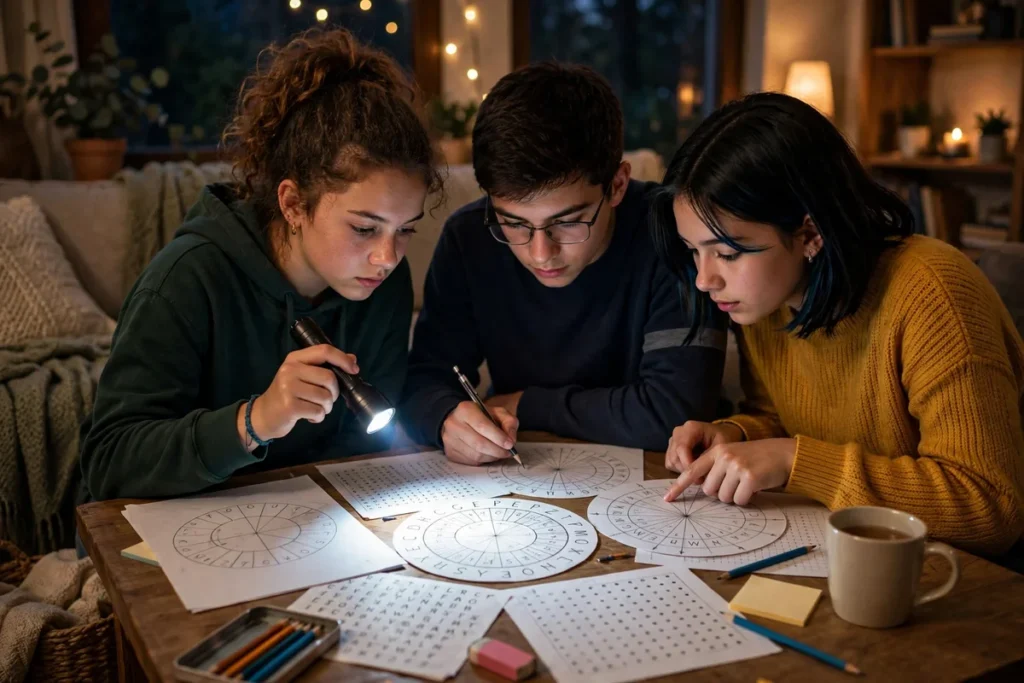
Write five short coded messages using a simple letter-shift code (each letter moved three places forward, so HELLO becomes KHOOR) and hide them around the living room. Teams race to find, decode, and write down the messages. Give every team a copy of the alphabet key so the challenge is decoding, not guessing the code from scratch. Twenty minutes, paper and pens only, and it works just as well at midnight as it does at 8 p.m. because it is quiet.
9. Telephone drawing
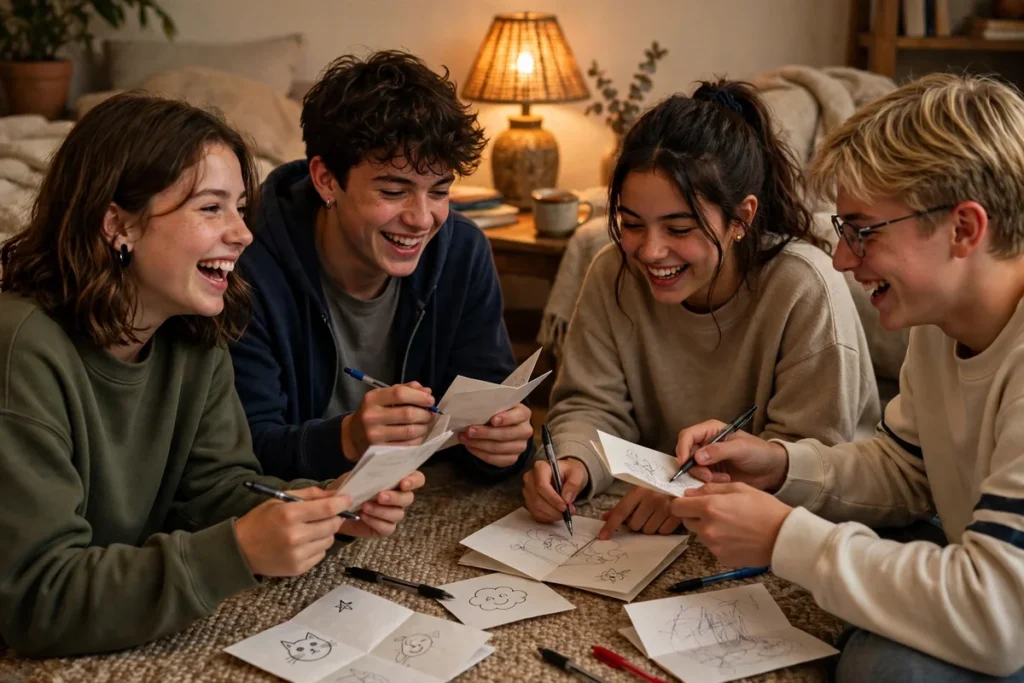 Save this image to Pinterest (opens in a new tab)
One person writes a simple prompt on a piece of paper — “a cat wearing a crown,” “a birthday cake on a rollercoaster” — and passes it on. The next person draws it, folds the paper so only the drawing shows, and passes it on. The next person writes what they think the drawing shows, folds again, and the next person draws that description. Keep alternating until the paper has gone around the group, then unfold the whole chain. Start several chains with the same prompt if the group is large; comparing how differently the same prompt ends up is the best part.
10. DIY game show
Split into two teams and run four rounds of five questions: general knowledge, music intros (play three seconds, name the song), picture puzzles, and “would you rather” debates where teams have to defend their answer. One person hosts, scores are kept on paper, and the winning team chooses the next film or the breakfast playlist. Prepare spare questions in case of a tie, and check factual answers before the game starts so a disputed answer does not derail the night.
11. Murder mystery in an envelope
Keep it fictional and light: a birthday present has gone missing from the living room between 9:00 and 9:15 p.m. Prepare three suspect statements and four pieces of evidence on paper, and hand one clue to each guest. Nobody can solve it alone; the group has to compare what they each hold. One clue should point the wrong way at first, so the group has to notice the contradiction. Decide the answer before you write the clues, and test them once — a mystery with no answer, or two equally good answers, is worse than no mystery at all.
12. Video game tournament, done properly
A gaming session fails when two people play and everyone else watches. Fix it with short rounds and a visible scoreboard: five- or ten-minute matches, rotating players, three points for a win and one for a draw. Choose games with short rounds that support the number of guests you have, test the equipment before anyone arrives, and keep spare charging cables nearby. If you only have one screen, run a second activity alongside — a card game or a snack station — so nobody waits more than ten minutes for a turn.
Creative Sleepover Ideas: Make Something Worth Keeping
Creative activities work best in the second half of the evening, when the group wants to slow down but is not ready for bed. They also solve the “what do we do now” problem, because the project itself fills the time.
13. Make a one-night magazine
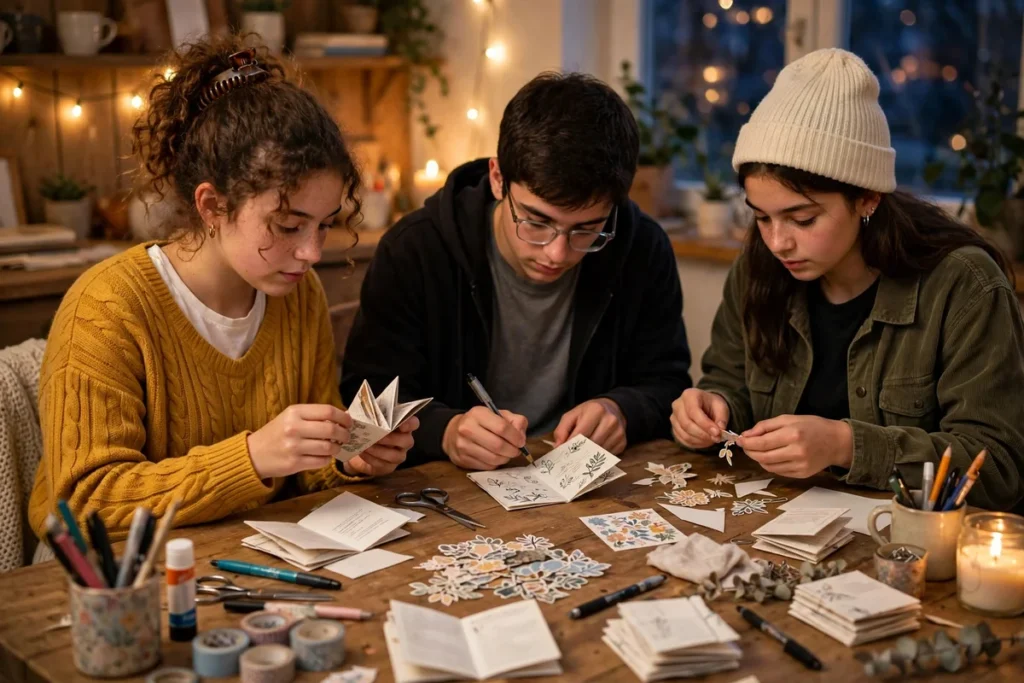 Save this image to Pinterest (opens in a new tab)
Fold sheets of paper into a small booklet and give each person a page: an interview with another guest, a “currently obsessed with” list, snack reviews from the night, funny quotes, predictions for next year, and a final page everyone signs. Set a deadline — finished before breakfast — and keep it friendly: no embarrassing stories, no private information, no photos anyone would not want shared. A paper version works better than a digital one because everyone can work on different pages at the same time.
14. Friendship bracelets with a twist
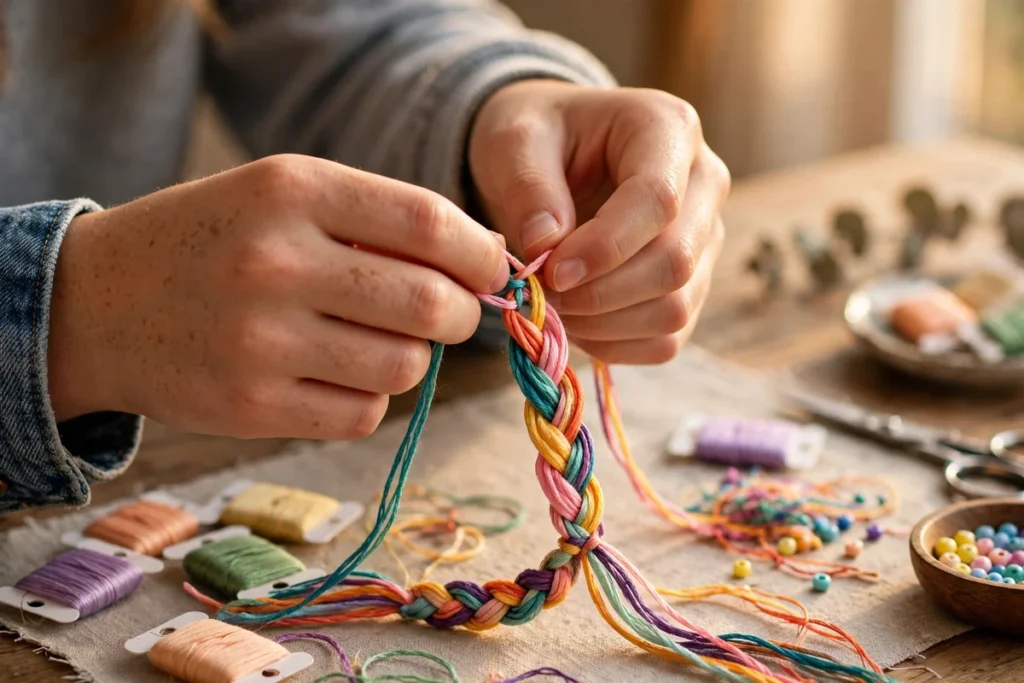 Save this image to Pinterest (opens in a new tab)
Each person picks three colours and explains, if they want to, what each colour stands for: a shared memory, a favourite place, a joke only the group understands. A simple three-strand braid is enough; nobody needs to learn a complicated knot on the night. Make one extra for a friend who could not come, if you know what they would like. Keep small beads away from younger children in the house.
15. Tiny film trailer
Forget filming a whole movie. In teams of two or three, make a 30- to 60-second trailer for a film that does not exist: pick a genre, invent a title and a main character, and film two scenes plus a final moment that makes the audience curious. Cushions become hiding places, a torch becomes dramatic lighting, a handwritten sign becomes a location. Watch the trailers together at the end and vote for funniest scene and most original plot. Get everyone’s permission before sharing any video outside the group.
16. Build a paper bridge — or a paper tower
Give each pair the same materials: five sheets of paper and a short strip of tape. The bridge version spans a gap between two stacks of books and has to hold as many coins as possible. The tower version has to stand on its own and hold a small object on top. Let teams test, change one thing, and test again. The second attempt is the interesting one, because the group can see whether the change helped. Keep the test area low and clear, and use coins, not heavy objects.
17. Design a board game about your group
Draw a path of about twenty spaces on cardboard. Mark a few with instructions — move forward two spaces, miss a turn, answer a question about the group — and use coins as counters and a die to move. Agree three rules before playing: how to win, what happens on special spaces, and what happens when two players land on the same space. Play one test round, fix the parts that do not work, and play again. A playable simple game beats a complicated one that never gets finished.
18. Future-me time capsule
Each person writes a short letter to their future self: three things they like right now, one thing they think will change, one prediction about the group, and one question they want their future self to answer. Seal the letters in envelopes, write an opening date on the front — a birthday, graduation, or one year from today — and keep them somewhere safe. It is a snapshot, not a list of goals, and ordinary details (“I am currently obsessed with this one song”) are the ones that feel most surprising a year later.
Sleepover Food That Doubles as an Activity
Food is not a break from the activities. At a sleepover it is one of the activities, and the best food ideas are the ones where everyone makes their own version.
19. Build-your-own pizza or tacos
 Save this image to Pinterest (opens in a new tab)
Pick one base — personal pizzas, tacos, wraps, or baked potatoes — and put the toppings in bowls on the table. One or two proteins, a few vegetables, a sauce, and a couple of extras is enough; twenty choices slow everyone down. Everyone assembles their own, and the group votes on the most creative combination. Ask about allergies first, keep ingredient packaging nearby so labels can be checked, and keep one plain base free of toppings for anyone with a restricted diet.
20. Mystery snack challenge
Choose six to eight ingredients already in the kitchen — bread, crackers, bananas, biscuits, peanut butter, cheese, popcorn. Each person draws three slips of paper, one per ingredient, and has ten minutes to make a snack using all three. Name the creation, explain the idea, and vote for tastiest, most creative, and best presentation. Check allergies before the draw, and skip anything that needs cooking unless an adult is supervising.
21. Popcorn bar and hot chocolate station
 Save this image to Pinterest (opens in a new tab)
Popcorn with three seasonings (salt, paprika, cinnamon sugar) and a hot chocolate station with marshmallows, whipped cream, and a sprinkle topping covers the whole evening for very little money. Set it up once and let people help themselves. It also gives the group a reason to gather in the kitchen between activities without anyone having to cook a full meal at 11 p.m.
22. Midnight snack box
Prepare a box before the night starts: small sandwiches, fruit, biscuits, and a bottle of water for each person. Put it in the fridge with a note saying what time it opens. A planned midnight snack stops the 11 p.m. kitchen raid, stops arguments about who ate the last biscuit, and gives the wind-down part of the night a small event to look forward to.
23. Breakfast-for-dinner (or breakfast for breakfast)
Pancakes with a topping station — fruit, chocolate spread, honey, yoghurt — work at 7 p.m. and again at 8 a.m. If you cook them in the evening, let everyone flip their own pancake (with an adult nearby for younger teens) and vote on the best flip. In the morning, the same station means breakfast is ready in ten minutes with no extra shopping.
Sleepover Themes That Do the Planning for You
A theme is useful because it answers ten small decisions at once: what to wear, what to eat, what to watch, what to make. Pick one and let it do the work.
24. Movie marathon night
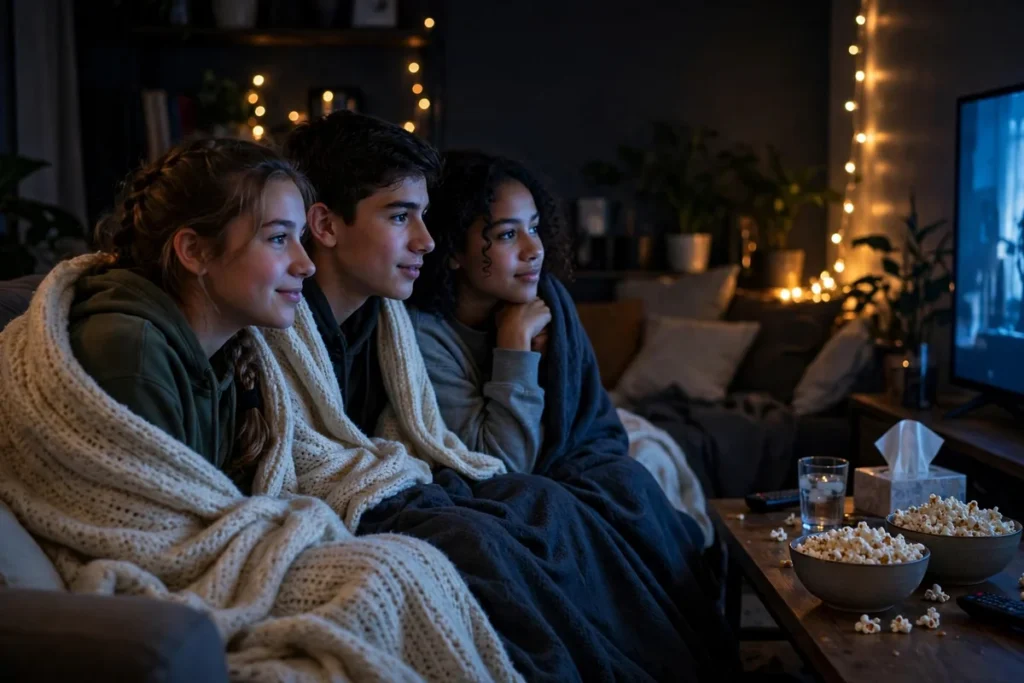 Save this image to Pinterest (opens in a new tab)
Choose a theme, not just a list of films: childhood favourites, one film series, spooky films, or comedies. Two films is enough for most nights; three only works if the first one starts early. Build a cinema corner with blankets and cushions, dim the lights, and run a popcorn bar. Vote on the films before the night so nobody spends forty minutes arguing about what to watch. Check that the films suit the youngest guest in the group.
25. Spa and pamper night
Face masks (shop-bought or simple homemade ones, patch-tested first and skipped for anyone with sensitive skin), nail painting, hair braiding, and a calm playlist. The trick is to keep it optional: set up a pamper corner and let people drift in and out, rather than making everyone sit through a two-hour routine. A short guided stretch or breathing exercise at the end helps the group wind down.
26. Backyard camp night
 Save this image to Pinterest (opens in a new tab)
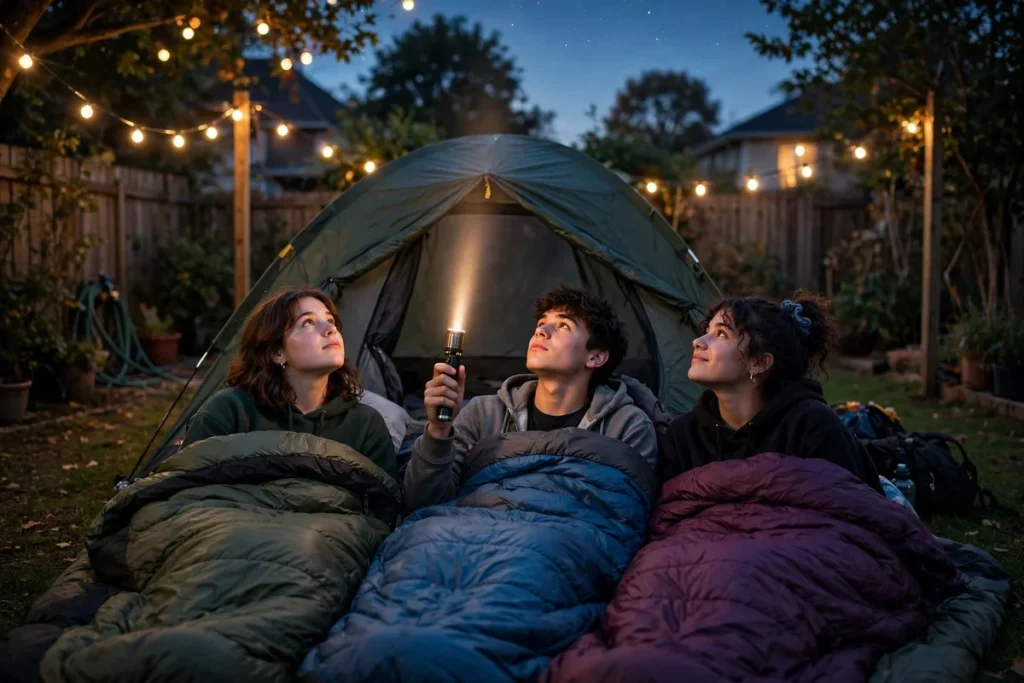
If the weather allows, move the sleeping bags outside: a tent or a blanket fort, torches, and a snack box. Stargazing, ghost stories, and a “one light source” challenge — set up a comfortable camp using only one lamp — give the night a shape. Check the forecast, have an indoor backup ready, and keep torches and water within reach. If anyone is nervous about sleeping outside, let them sleep inside with no teasing; the camp is the fun part, not a test.
27. Detective night
Combine the code-breaker relay, the envelope mystery, and a fingerprint-style craft (ink pads and paper, not real forensic kits) into one evening with a single story: something fictional has gone missing and the group has until midnight to solve it. Give each guest a role — detective, witness, clue-keeper — and a small notebook. The theme works because every activity feeds the same story.
28. Craft and makers night
Set up three stations and let people rotate: friendship bracelets, a mini magazine page, and a custom tote bag or pillowcase with fabric markers. Thirty minutes per station, no pressure to finish everything. This theme suits groups who like making things and groups with mixed energy levels, because someone can sit and craft while others talk.
What Changes by Age: Sleepover Ideas for 13, 14 and 15 Year Olds
Thirteen, fourteen and fifteen are not the same sleepover. The activities overlap, but the amount of freedom, the bedtime, and the kind of humour that lands are all different. Plan for the youngest guest in the group, not the oldest.
Sleepover ideas for 13 year olds
Thirteen is often a first proper teen sleepover, and the group still likes structure. Short activities with clear rules work best: the snack vote, telephone drawing, a paper tower challenge, a movie marathon with a theme, and a craft station. Keep the night shorter in practice — plan the main event early, wind down by 11 p.m., and have an adult nearby but not in the room. Avoid games that depend on phones, late-night dares, or anything that singles one person out. A small keepsake to take home, like a friendship bracelet or a page from the group magazine, matters more at thirteen than it does at fifteen.
Sleepover ideas for 14 year olds
Fourteen-year-olds want more independence and more say in the plan. Let them choose the theme and the films, and give them a job: one person runs the music, one runs the scoreboard, one is in charge of the snack station. Longer projects suit this age — the envelope mystery, the tiny film trailer, the board game design, a DIY game show with rounds they wrote themselves. They can also handle a later wind-down and a bit more freedom outdoors, as long as the boundaries (which rooms, which garden areas, what time) are agreed before the night starts. This is also the age where a phone rule matters most, because the group will test it.
Sleepover ideas for 15 year olds
Fifteen-year-olds want the night to feel grown-up, not organised for them. Give them a loose framework and let them fill it: a theme they picked, a cooking challenge with real ingredients, a debate or ranking night, a short film with a rule that forces creativity, and a late-night conversation game with good prompts. They still need a lights-out time and an adult in the house, but they do not need an adult running every activity. The best role for the host parent at fifteen is the person who provides food, checks in once, and then steps back. Avoid anything that feels like a children’s party game; if an activity needs a forfeit or a dare to be fun, it is the wrong activity for this age.
The age test
Before you add an activity, ask three questions. Would the youngest guest understand the rules in under two minutes? Would the oldest guest find it embarrassing? Could everyone play at the same time? If the answer to any of them is no, change the activity or make it optional rather than the main event.
Sleepover Ideas for Teen Girls, Teen Boys — and Mixed Groups
The most useful way to choose is by interest, not by gender. Plenty of girls love a gaming tournament and plenty of boys love a craft night, and a mixed group needs activities that do not split the room in two. Use the sections below as starting points, then let the actual group choose.
Sleepover ideas for teen girls
Groups of girls often enjoy activities with a creative or social core, but the best ones still have a clear task: a spa corner that people can drift in and out of, a blind ranking game, a tiny magazine about the group, a recipe challenge where teams recreate a snack from a taste test, a “museum of us” where each person brings one object and writes a label explaining why it matters, and a photo prompt hunt. The common thread is that everyone contributes something personal without being put on the spot. Keep one rule for any activity involving photos, videos, or personal stories: nothing is shared outside the group without everyone’s agreement.
Sleepover ideas for teen boys
Groups of boys often enjoy competition, building, and outdoor time — but the activities that work best are the ones with a problem to solve, not just a contest to win. A gaming tournament with short rounds and a scoreboard, a backyard base camp with a layout challenge, a target-building challenge with craft sticks and rubber bands, a “fix the bad design” challenge (pick an everyday object, list what is annoying about it, sketch a better version), a marble run, and a build-your-own dinner all fit. The same rule applies as for any group: test the equipment beforehand, keep rounds short so nobody waits too long, and have a second activity running alongside any single-screen game.
Mixed groups: what actually works
Mixed groups do best with activities that do not depend on everyone having the same taste or the same energy. The safest picks are the friend-group quiz, blind ranking, code-breaker relay, DIY game show, mystery snack challenge, telephone drawing, and a movie marathon with a vote. Avoid games that pair people up by gender, games that depend on dares, and any activity where one person is singled out. If the group splits naturally into two smaller groups for a while, let it happen — two good activities running at once beat one activity half the group is enduring.
How girls’ and boys’ sleepovers actually differ
In practice, the difference is smaller than most lists suggest. Girls’ groups tend to choose more craft and conversation activities; boys’ groups tend to choose more competition and building activities; mixed groups tend to choose a bit of both. The planning difference that matters is not the activity list but the setup: girls’ groups often want a comfortable corner to talk in, boys’ groups often want space to move, and every group wants food within reach and a clear plan for when the noise stops. Plan the room around that, and the activity list almost chooses itself.
Cheap Sleepover Ideas (Free or Under $10)
A good sleepover does not need matching pyjamas, special decorations, or a big shopping trip. Most of the ideas in this guide cost nothing. These are the cheapest of all, using things already in the house.
29. Mystery snack menu from the kitchen
Six to eight ingredients already in the cupboard, three drawn at random per person, ten minutes to invent a snack. No shopping, no cooking unless an adult supervises, and the voting costs nothing.
30. Thrifted-outfit styling challenge
Each person brings one or two clean items they already own. The group picks a category — concert outfit, rainy-day look, fictional character — and everyone has ten minutes to style a look from the shared pile. Vote for best use of accessories and most unexpected combination. No new clothes needed.
31. Paper airplane contest, three ways
 Save this image to Pinterest (opens in a new tab)
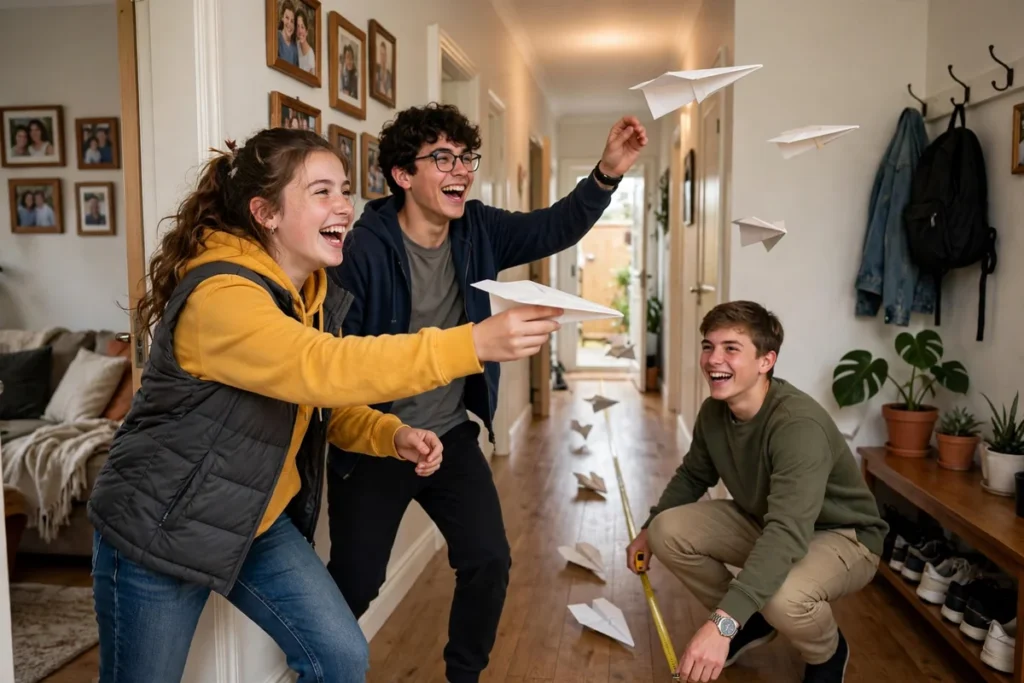
Same paper, same launch line, three rounds: distance, accuracy (land in a marked zone), and flight time. Change one fold between rounds and see whether it helps. Scrap paper, a tape measure, and an empty hallway are all you need.
32. One-room photo scavenger hunt
Ten prompts, fifteen minutes, phone cameras only. No printing, no props, no going outside. The prompts do the work: a shadow, a reflection, three objects of the same colour, a close-up that hides what the object is.
33. Mini comic about the group
Four to six panels on a sheet of paper, a beginning, a problem, and an ending. Stick figures are fine. The story should be fictional — a character discovers the sleepover snacks have disappeared, for example — so nobody feels singled out. Twenty minutes, then read the comics aloud and vote for the funniest ending.
34. Music intro guessing
Each person contributes two or three songs. Play the first three seconds and guess the title and artist. One point each. A phone and a speaker are enough; check beforehand whether the music app needs a subscription or will interrupt with adverts.
Budget tip: spend the small amount of money you do have on food, not decorations. A good snack table and a hot chocolate station will be remembered; matching paper cups will not.
Indoor Sleepover Ideas for Bad Weather or Small Spaces
 Save this image to Pinterest (opens in a new tab)
Rain, cold, or a small living room does not have to shrink the night. Indoor ideas work when they use the space you have instead of wishing for more of it.
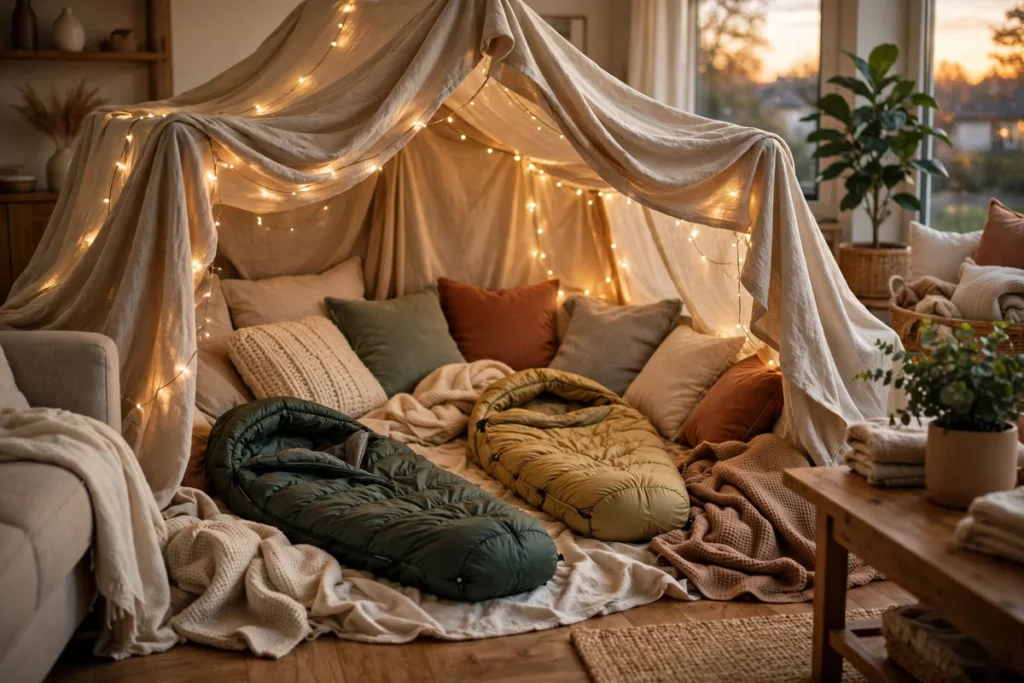
- Indoor camp: build a blanket fort in the living room, hang a string of fairy lights, and run the whole evening inside it — snacks, games, and wind-down included. The fort is the theme.
- Escape puzzle on paper: a chain of three clues where each answer unlocks the next. One person writes it, the group solves it, then someone else writes the next one. Quiet, seated, and genuinely absorbing.
- Cooking challenge: the mystery snack challenge or a build-your-own pizza, both of which happen at a table.
- Craft stations: bracelets, mini magazine pages, and custom tote bags, rotated every thirty minutes so nobody is stuck at one table all night.
- Quiet tournament: board games and card games in two teams, with a scoreboard on paper. Choose games with short rounds so everyone gets a turn.
- Indoor stargazing substitute: if clouds cancel the real thing, run a constellation quiz or a “design a constellation” drawing game, then try again outside if the sky clears.
The rule for small spaces is simple: one activity at a time, in one room, with everything else put away. Two activities running in a small room feels crowded; one activity with everyone involved feels cosy.
Late-Night Sleepover Ideas (After Midnight, Low Noise)
 Save this image to Pinterest (opens in a new tab)
After midnight, the night needs a different gear. Loud games wake the house, and high-energy activities make it harder for anyone to sleep. These ideas are quiet by design.
35. Six-sentence stories
Each person writes a complete story in exactly six sentences, from the same prompt: a phone ringing in an empty room, a photograph with someone nobody recognises, a note found inside the house describing something that has not happened yet. Read them aloud by torchlight and vote for the most unexpected ending. Anyone who does not want to read aloud can pass their story to someone else.
36. Question jar
 Save this image to Pinterest (opens in a new tab)
Fill a jar with prompts before the night: “What is the best meal you have ever eaten?”, “If you could learn any skill overnight, what would it be?”, “What is the funniest thing that has happened at school this year?” Take turns drawing a question and answering it. Keep prompts light and optional — anyone can pass, no follow-up questions about private topics, and no recording without agreement. A good question jar is also useful earlier in the night when conversation stalls, and it is a natural place for the kind of late-night chat where someone mentions they are tired — if a friend says they are exhausted, the kind thing is to wind down rather than push on, and our guide on what to say when someone says they’re tired has gentle replies that fit that moment.
37. Silent games
A memory game (look at a tray of objects for thirty seconds, cover it, write down what you remember), a drawing game where nobody speaks, or a “guess the sound” round with everyday objects. Silent games are calming, they work by lamplight, and they suit the guest who is tired but does not want to be the first to sleep.
38. Letters and keepsakes
Write the future-me letters, finish the group magazine, or make a shared page where everyone writes one sentence about the night. This is the activity that turns a fun evening into a memory, and it works best when the room is quiet and nobody is rushing.
39. Stargazing, if you can get outside
A blanket, a clear sky, and a free stargazing app are enough. Give the group five minutes of silence to look up before anyone talks — it sounds odd, and it works. If it is cloudy, skip it and go back inside; do not spend half an hour waiting for a sky that is not going to clear.
Bored at a Sleepover? The 10-Minute Rescue List
Boredom at a sleepover is rarely a lack of things to do. It is usually that nobody can agree, or that the last activity ended and nobody knows what comes next. Keep this list on the fridge and use it the moment energy dips.
- Would you rather, five rounds. No preparation, no equipment, and it restarts conversation in under a minute.
- Blind ranking, one round. One category, five options, two minutes.
- Snack vote. Rate what is already on the table.
- Photo prompt hunt, five prompts. Ten minutes, one room.
- Telephone drawing, one chain. One prompt, one sheet of paper, five minutes.
- Music intro guessing, five songs. Whoever’s phone is nearest runs it.
- Paper airplane, one round. Distance only, hallway, two minutes.
- Question jar, three questions. Pick three, answer, move on.
- Make a trailer, one scene. Thirty seconds, one phone, one ridiculous prop.
- Change rooms. Move from the living room to the kitchen, or from inside to the garden. A change of place resets the mood faster than a new activity.
If none of these work, the group is probably tired, not bored. That is the signal to start the wind-down, not to add another game. And if the boredom is really about phones — everyone scrolling in silence — try a ten-minute phone basket: all phones in a basket, one activity, and a promise to check messages afterwards. Most groups are surprised how quickly conversation restarts. For the friend who keeps replying to messages mid-game, a light reply helps more than a rule; our list of funny replies when someone says you’re funny is a good model for keeping that kind of teasing friendly rather than sharp.
Winding Down and the Morning After
 Save this image to Pinterest (opens in a new tab)
The last hour decides how the night is remembered. A good wind-down is not “everyone must sleep now.” It is a gradual drop in light, noise, and activity.
- 9:30–10 p.m.: last big activity ends, snack station refilled, sleeping area set up.
- 10–11 p.m.: quiet activity — question jar, letters, a calm film, or a playlist at low volume.
- 11 p.m.: phones in the charging basket, main lights off, torches and fairy lights only.
- 11 p.m. onwards: talking is fine, but keep voices low and let anyone who wants to sleep do so without teasing. The guest who falls asleep first is not the joke; they are the sensible one.
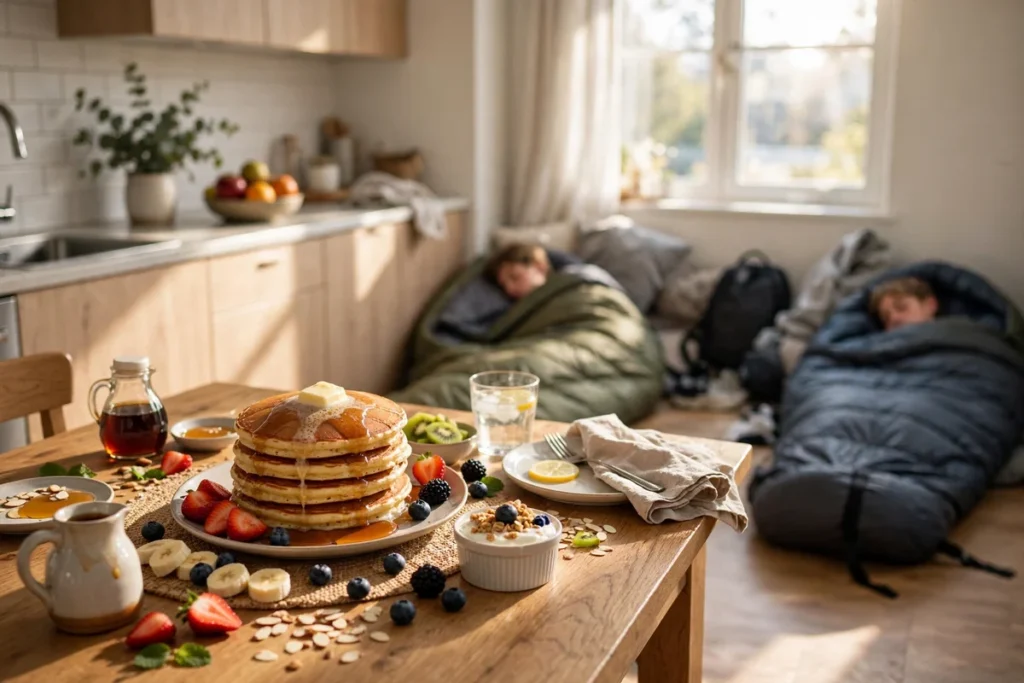
- Morning: breakfast ready in ten minutes (pancake station, cereal, fruit, toast), sleeping bags rolled up before anyone leaves, and a quick tidy-up where everyone helps for five minutes. A five-minute tidy-up with six people beats a thirty-minute clean-up by one parent.
If someone is homesick, tired, or upset, do not make it a group discussion. A quiet word, a phone call home, and the option to leave early with no fuss is the right response every time.
A Sample Sleepover Timeline You Can Copy
 Save this image to Pinterest (opens in a new tab)
This is one workable evening for six guests, arriving at 6 p.m. Move the times to suit your group; the order matters more than the clock.
| 6:00 p.m. | Arrivals, snack table vote, playlist detective |
| 6:45 p.m. | Build-your-own pizza or tacos |
| 7:30 p.m. | Main event: envelope mystery or DIY game show |
| 9:00 p.m. | Second wind: tiny film trailer or craft stations |
| 10:00 p.m. | Popcorn bar, movie marathon (film one) |
| 11:00 p.m. | Phones away, question jar, six-sentence stories |
| 11:30 p.m. | Lights low, letters and wind-down |
| 8:00 a.m. | Pancake station breakfast, tidy-up, photos |
If the group is younger, move everything one hour earlier. If the group is fifteen, move the wind-down one hour later and let them choose the second film. Either way, keep one free slot in the evening with nothing planned — the best moments of a sleepover are usually unplanned, and a gap in the schedule is what lets them happen.
FAQs
What are the best sleepover ideas for teens who get bored easily?
Pick activities with a decision in them, not just something to watch. Blind ranking, the friend-group quiz, a code-breaker relay, and a cooking challenge all work because everyone has to choose, guess, or make something. And keep the rescue list above handy — a five-minute activity that restarts the night beats a fifty-minute activity nobody wanted.
How many activities should I plan for a teen sleepover?
Five: one for arrival, one main event, one food activity, one second-wind activity, and one wind-down. Plan five more as backups and do not try to fit all ten into one night. A sleepover with five good activities and time to talk is better than a sleepover with fifteen rushed ones.
What should I do if not everyone wants to join in?
Let them opt out of that activity without comment. Set up a quiet corner with a craft, a book, or a card game, and let the group re-form naturally for the next activity. Forcing participation is the fastest way to make someone dread the next sleepover. If the same person opts out of everything, check in with them quietly — they may be tired, homesick, or unsure about the group, and a private word helps more than a public invitation.
What food should I serve at a teen sleepover?
One main meal everyone builds themselves (pizza, tacos, wraps), a snack station that can be refilled (popcorn, fruit, biscuits), a planned midnight snack box, and a quick breakfast (pancakes, cereal, toast). Ask about allergies when guests confirm, label everything, and keep one plain option available.
What time should a teen sleepover end?
Agree the wind-down time before the night, not during it. For 13-year-olds, aim for lights low by 11 p.m.; for 14- and 15-year-olds, midnight is realistic. The exact time matters less than the fact that everyone agreed it in advance. And if a guest needs to leave early, let them go quietly with no teasing — the code phrase in the planning section exists for exactly that reason.
Can a sleepover work with a small budget?
Yes. The cheapest ideas in this guide — the mystery snack challenge, paper airplanes, the photo hunt, the mini comic, music guessing — cost nothing, and a popcorn bar plus a hot chocolate station feeds a group for a few dollars. Spend what you have on food, not decorations.
The Short Version
You do not need forty activities. You need five good ones, in the right order, with food ready and a wind-down planned. Pick an arrival activity that anyone can join, one main game the whole group plays together, one food activity everyone makes themselves, one creative project to slow the night down, and one quiet late-night activity to end on. Add the age, budget, and indoor options from this guide only if they fit your actual group. Then stop planning, put the list on the fridge, and let the night happen — the best sleepovers are the ones with enough structure to avoid boredom and enough free time for the conversations nobody planned.
1 comment