
A small apartment can host a lovely Friendsgiving dinner when every surface has a job. These 19 Friendsgiving setup ideas help you make room for guests, serve food without a kitchen traffic jam, and create a cozy table with things you can borrow or already own.
Start with the seats and walking routes, then add the pretty details. You do not need to use all 19 ideas: choose the ones that solve your apartment’s actual problems.
The images in this guide are original AI-generated styling illustrations. Use them for inspiration and check your own room dimensions before arranging furniture.
Choose a Friendsgiving layout before buying decorations
Count the seats you can comfortably use, including your own. Put a dinner plate and glass at each proposed place, pull every chair out, and walk from the front door to the kitchen and bathroom. If you need to turn sideways or ask someone to stand up at every step, change the layout or reduce the guest list.
Also check the refrigerator, oven, and cabinet doors with the table in its party position. An arrangement that looks spacious before dinner can become awkward when the oven door opens and six people are holding full plates. Ask guests privately about seating or access needs before choosing benches, high stools, or floor seating.
| Your apartment | A workable starting layout | What to avoid |
|---|---|---|
| Separate small dining nook | Keep dinner at the table; serve food from a kitchen counter. | Putting all the serving dishes between the place settings. |
| Open living and dining room | Use one dining zone and a separate drinks surface. | Blocking the route between the sofa and the kitchen. |
| Studio with no dining table | Borrow a suitable table if it fits, or use stable individual dining trays and a menu suited to them. | Expecting everyone to balance a knife-and-fork meal on their knees. |
| Long, narrow room | Test a lengthwise table arrangement with accessible seating. | Assuming the wall-side seats will be easy to reach. |
Keep exits clear throughout the gathering. These are layout ideas, not a substitute for your building’s occupancy or accessibility requirements.
19 Friendsgiving setup ideas for a small apartment
1. Give the room three simple zones
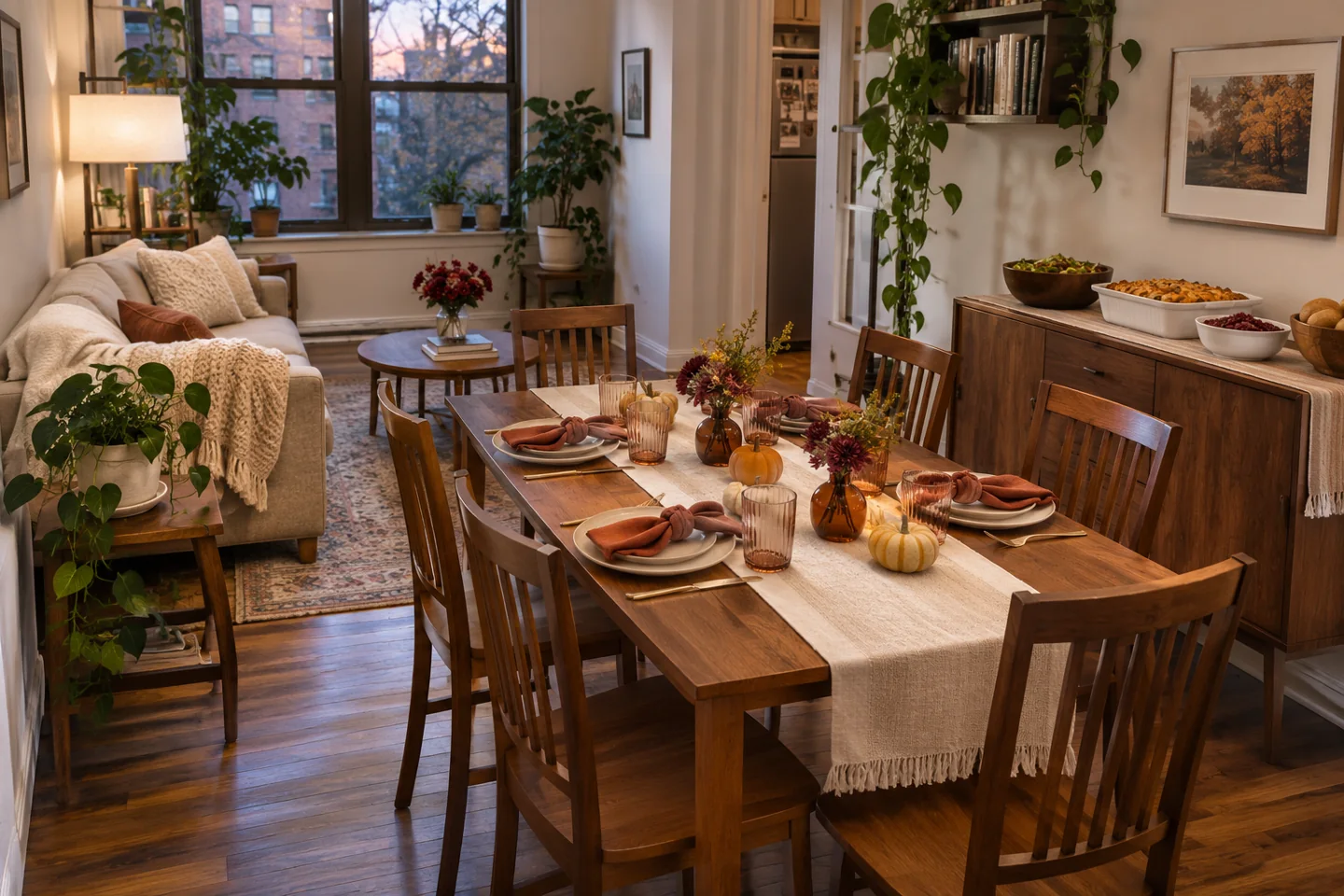
Choose one place for eating, one for serving food, and one for drinks. The zones do not need separate pieces of furniture: your dining table, a cleared kitchen counter, and one existing side table may be enough. Put the drinks where guests can reach them without walking through the cooking area.
Try the arrangement with empty serving dishes before the party. Carry a plate from the buffet to every seat, then make the same trip with a drink. You will spot blocked corners and inconvenient turns much earlier than you would by looking at a room sketch.
Make it work: If you only have two surfaces, keep food on the counter and drinks on a tray that can move to the dining table after everyone is seated. Avoid squeezing in another table just to create a third zone.
2. Turn a cleared kitchen counter into the buffet
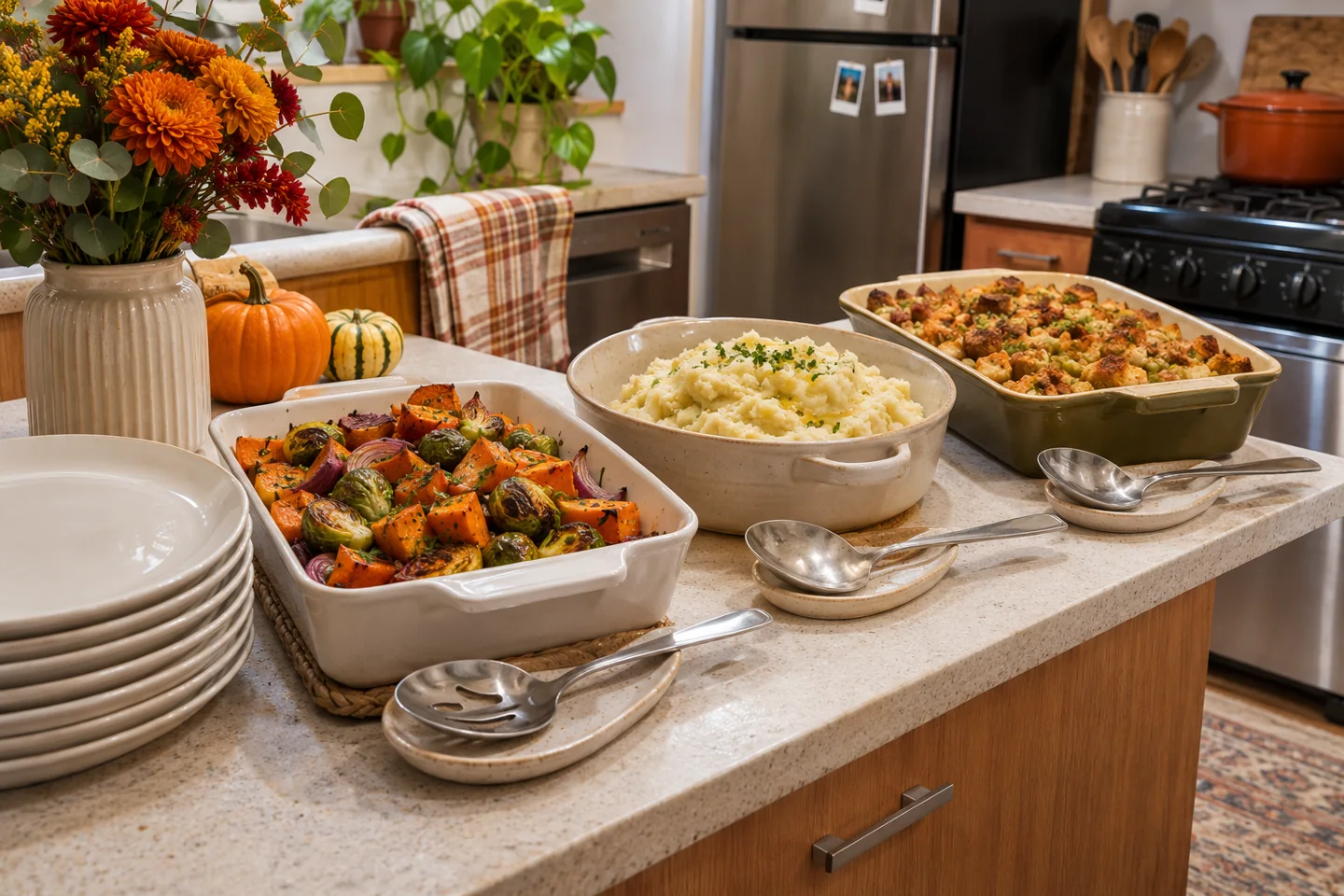
Move the toaster, mail, and decorative jars out of the serving area. Put plates at the start, main dishes and sides in the middle, and utensils or napkins at the end if they are not already at the seats. Leave room beside the dishes so guests can briefly set down a plate.
Place a serving spoon or pair of tongs with each dish. Add trivets under hot cookware, and keep hot handles away from the counter edge. The stove should remain a cooking space rather than an improvised buffet guests reach across.
Small-space adjustment: Bring out food in manageable batches instead of covering every inch of counter. Keep cold dishes refrigerated until serving time, and decide in advance where the empty serving pieces will go.
3. Borrow a second table only if the chairs still fit
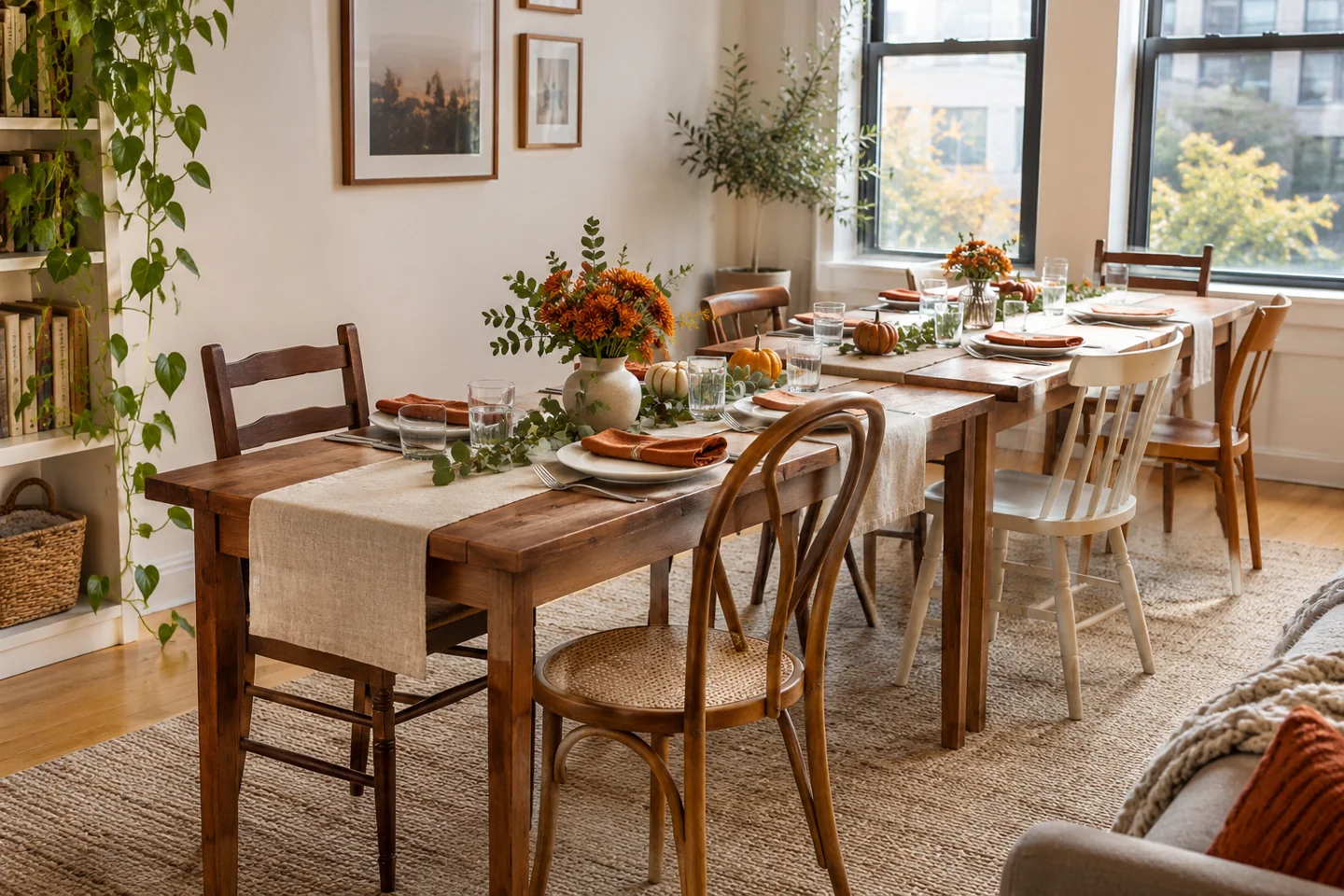
Two tables can create a shared dinner space, but their height, stability, and leg positions matter more than matching finishes. Try them end to end before setting the table. Do not place a dinner setting directly over a gap, and keep each table structurally independent rather than improvising a bridge between them.
A matching pair of runners can make different tabletops feel coordinated. If the heights do not line up comfortably, use one table for dinner and the other as a separate serving station instead.
Before guests arrive: Sit in every chair. Check knees against table legs, make sure folding furniture is fully locked, and remove any seat that only works when its occupant cannot move. Borrowing furniture is useful only when it improves comfort.
4. Make mismatched chairs feel intentional
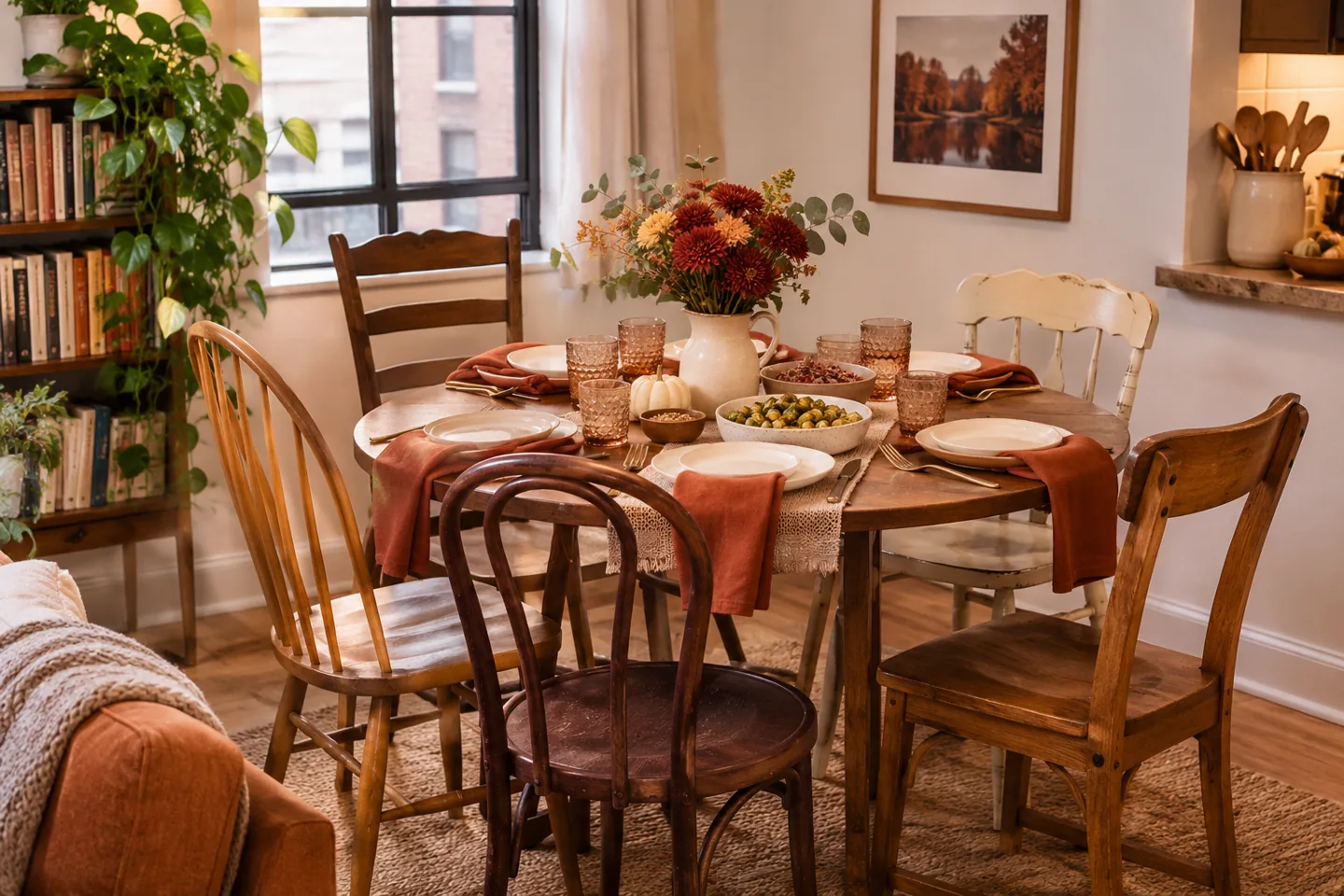
You do not need six identical chairs to create a welcoming Friendsgiving dinner party. Repeat the table details instead: the same napkin color, simple glasses, or a handwritten place card at every seat will tie the arrangement together.
Check that each chair suits the table height and feels steady. Avoid using an upholstered ottoman or decorative stool as a dinner chair simply because it fits an empty corner. If you use a dining bench, keep its entry side accessible and stay within the manufacturer’s seating capacity.
Skip the extra purchase: Matching chair covers are unnecessary. They add another thing to buy and wash, and long fabric can get caught under chair legs. Clean, comfortable borrowed chairs are enough.
5. Move the coffee table for dinner
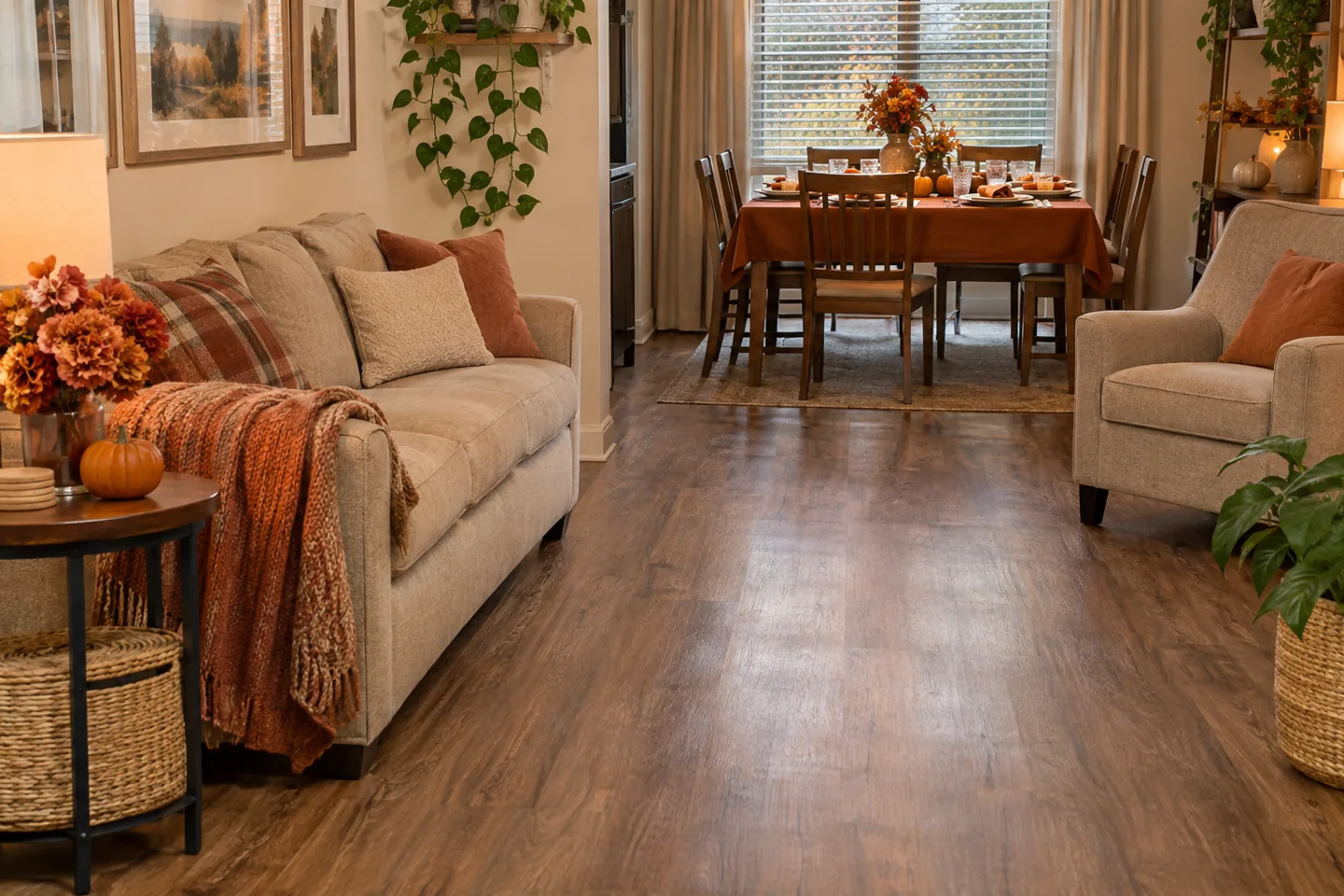
In an apartment where the dining area opens into the living room, the coffee table may be the piece that makes the whole room feel crowded. If it can be moved safely, park it in a bedroom or another unused spot before guests arrive. Never put it in an exit route or shared building hallway.
Clearing that center space gives arriving guests somewhere to stand without gathering behind the dining chairs. It also creates a place to return to after dinner, when you can bring back a small side table for mugs.
Alternative: If moving the table is impractical, remove bulky decor and make it the designated spot for one appetizer tray. Keep it out of the main dinner-serving route.
6. Create a real home for coats and bags
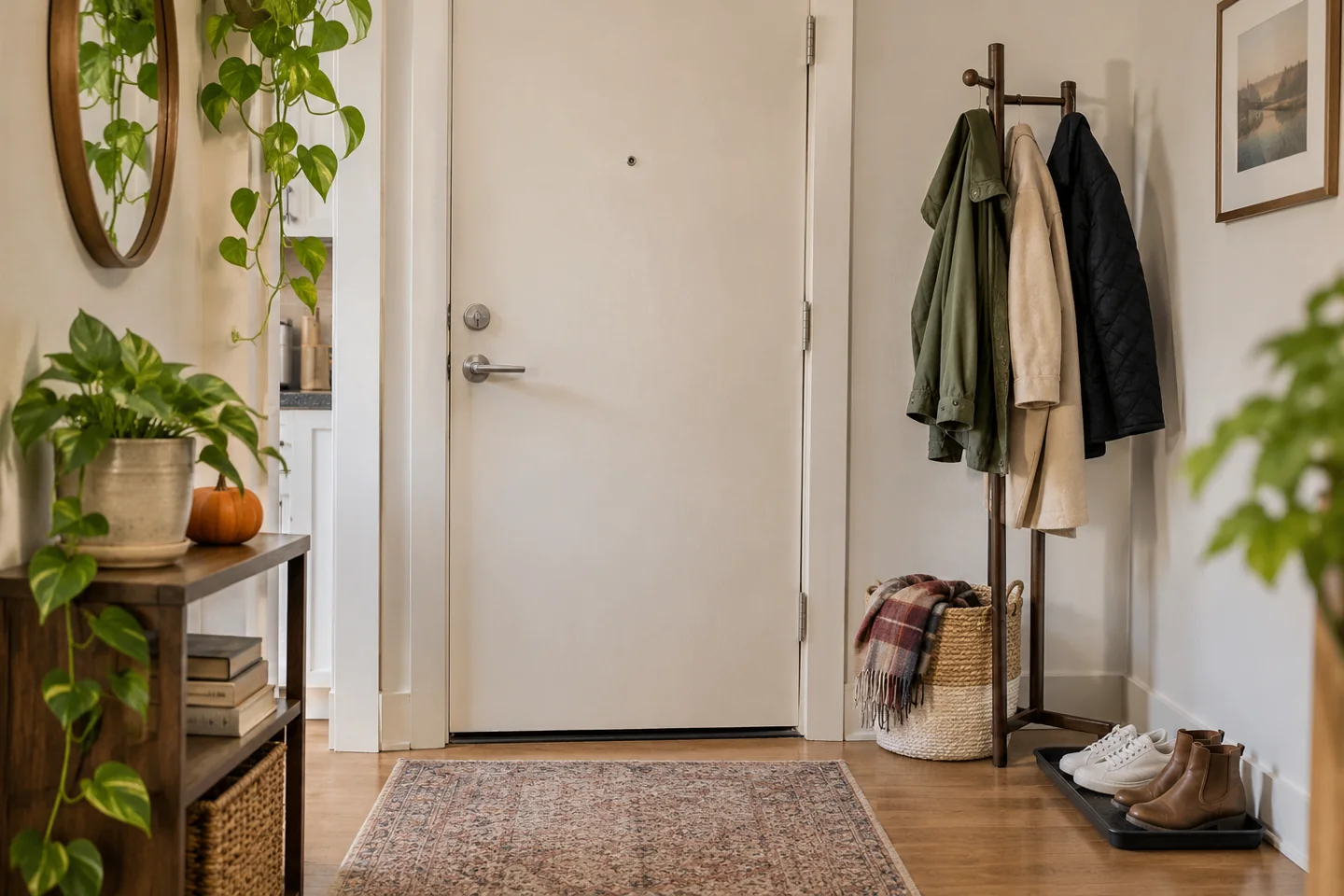
A small apartment can feel full before the first guest sits down if jackets cover the sofa and bags occupy two dining chairs. Clear part of a closet, use an existing sturdy coat rack, or designate a tidy bedroom surface with permission from anyone sharing the room.
Tell guests where their things belong as they arrive. A basket for scarves or small bags can help, but place it outside the walking path. Keep shoes together beside the entry if that suits your household, and let guests know about your shoes-off preference beforehand.
Helpful detail: Put a clean hand towel and visible toilet paper in the bathroom now. Small practical preparations reduce the number of questions you need to answer while finishing dinner.
7. Pick a palette from dishes you already own
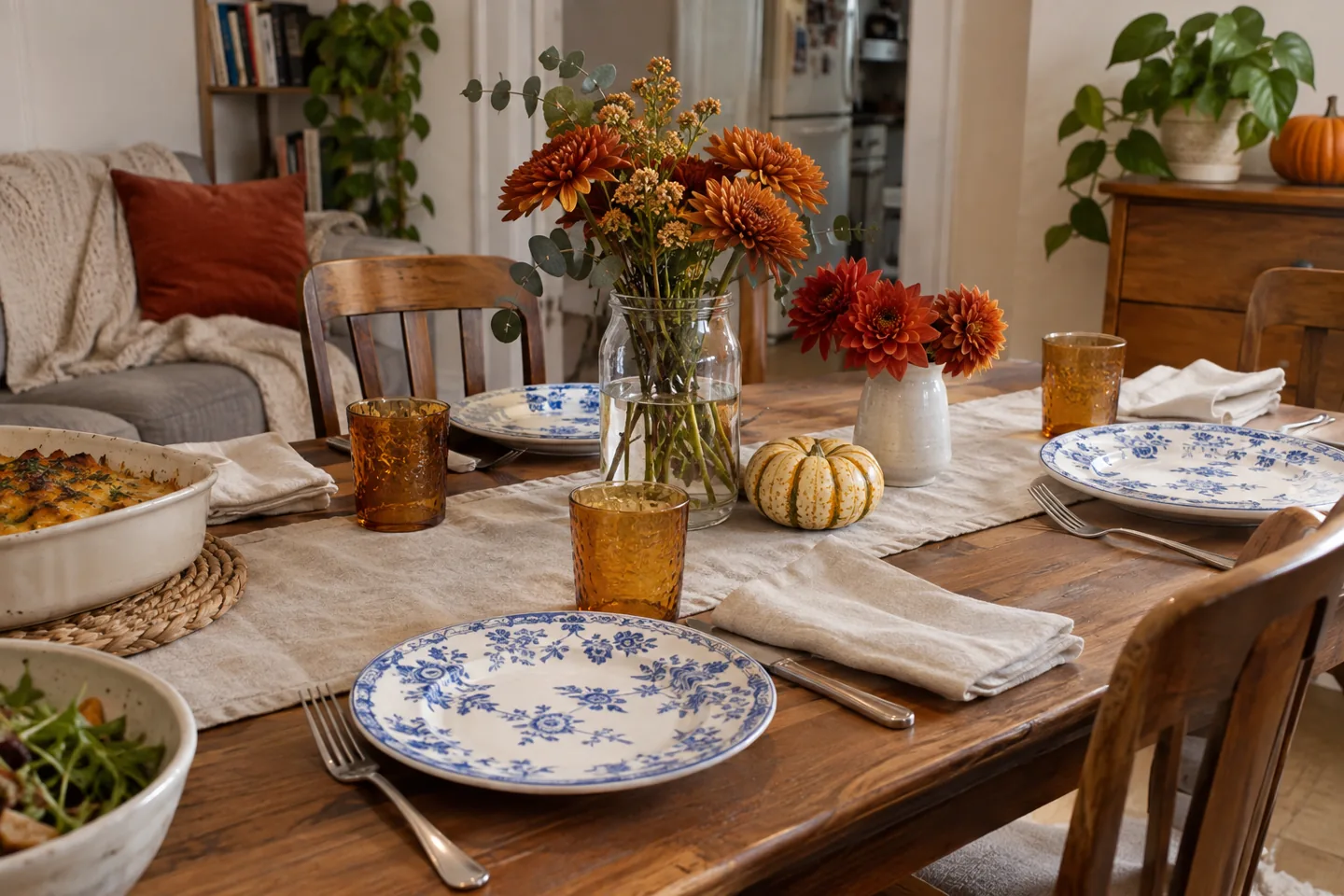
Look at your everyday plates before choosing a Friendsgiving theme. White dishes can work with rust napkins and wood; blue dishes can look lovely with cream and amber. Choose two main colors and let your existing furniture provide the background.
Repeat one accent at the table and one nearby surface. A rust napkin, a rust-colored tea towel at the drinks station, and a small arrangement of autumn stems are enough to connect the room. Every item does not need a leaf print.
Avoid a shopping spiral: If your dishes already have a busy pattern, simplify the runner and flowers. The goal is to make the pieces you have look considered, not to replace them with a complete seasonal collection.
8. Use a narrow runner instead of layers of table decor
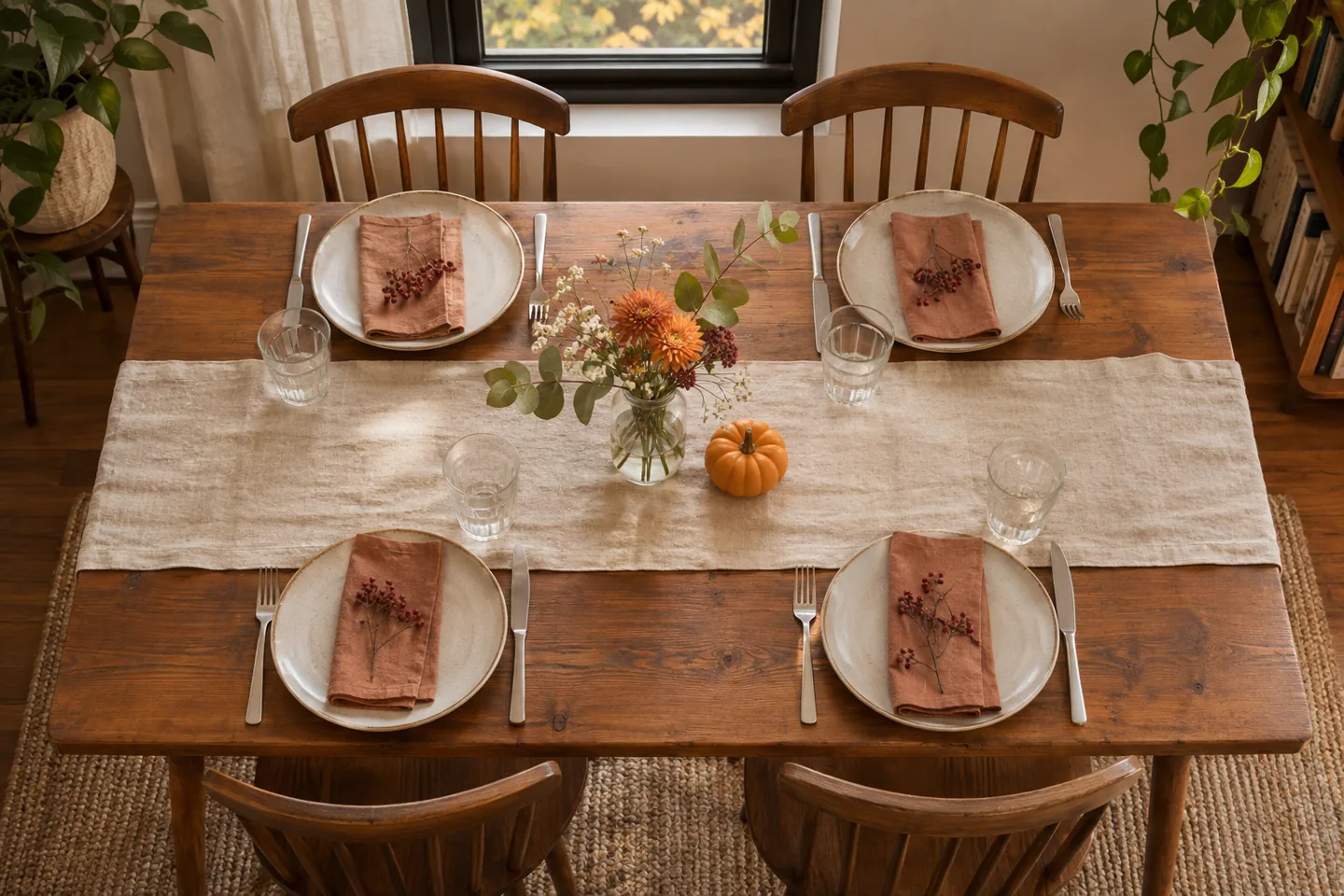
A runner gives a small dining table a focal point while leaving the edges open for plates. Choose a washable one, or fold a plain tablecloth to suit the table’s width. Check that the ends do not pool on the floor or interfere with chairs.
Set the plates and glasses first. Only then decide how much room is left for decorations. If the table is particularly narrow, skip the runner and put one small arrangement at an end that nobody needs for seating.
Practical swap: Avoid decorative chargers when they crowd the place settings. A simple dinner plate over a neatly folded napkin can look finished while leaving more usable tabletop.
9. Keep centerpieces low and easy to move
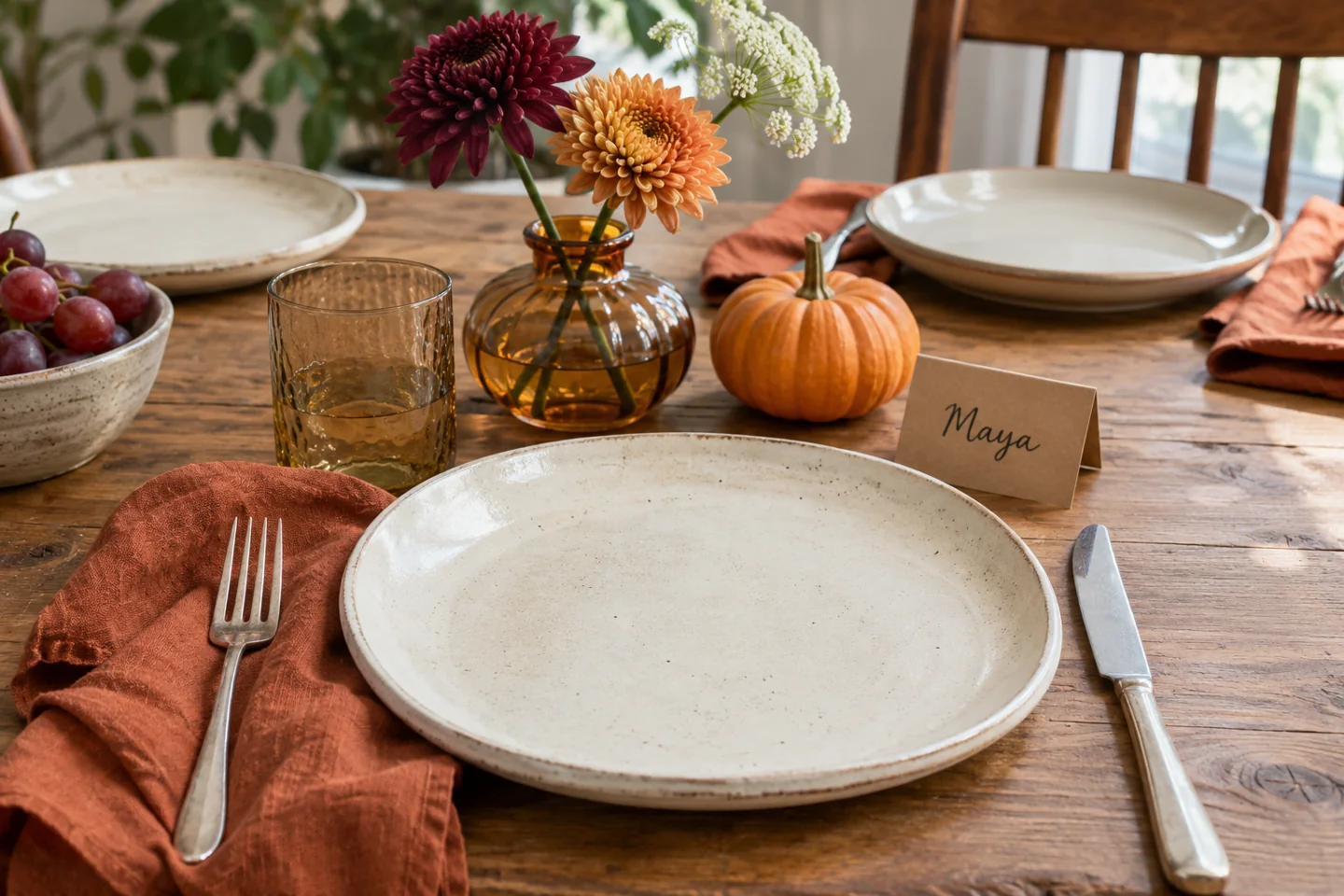
Use a small bud vase, two or three mini pumpkins, or a shallow bowl of seasonal fruit. Keep everything low enough that people can see the person opposite them. A long garland may look beautiful in a photo but become frustrating when someone needs to pass the bread.
Place the arrangement on a small tray if you expect to move it during dinner. Avoid loose leaves, glitter, or decorations that shed near food. If you use fresh stems, keep them in a stable vessel and out of serving dishes.
Quick test: Sit down and look across the table. If you need to lean around the centerpiece, shorten it or move it to the buffet after taking your table photo.
10. Set places with only what guests will use
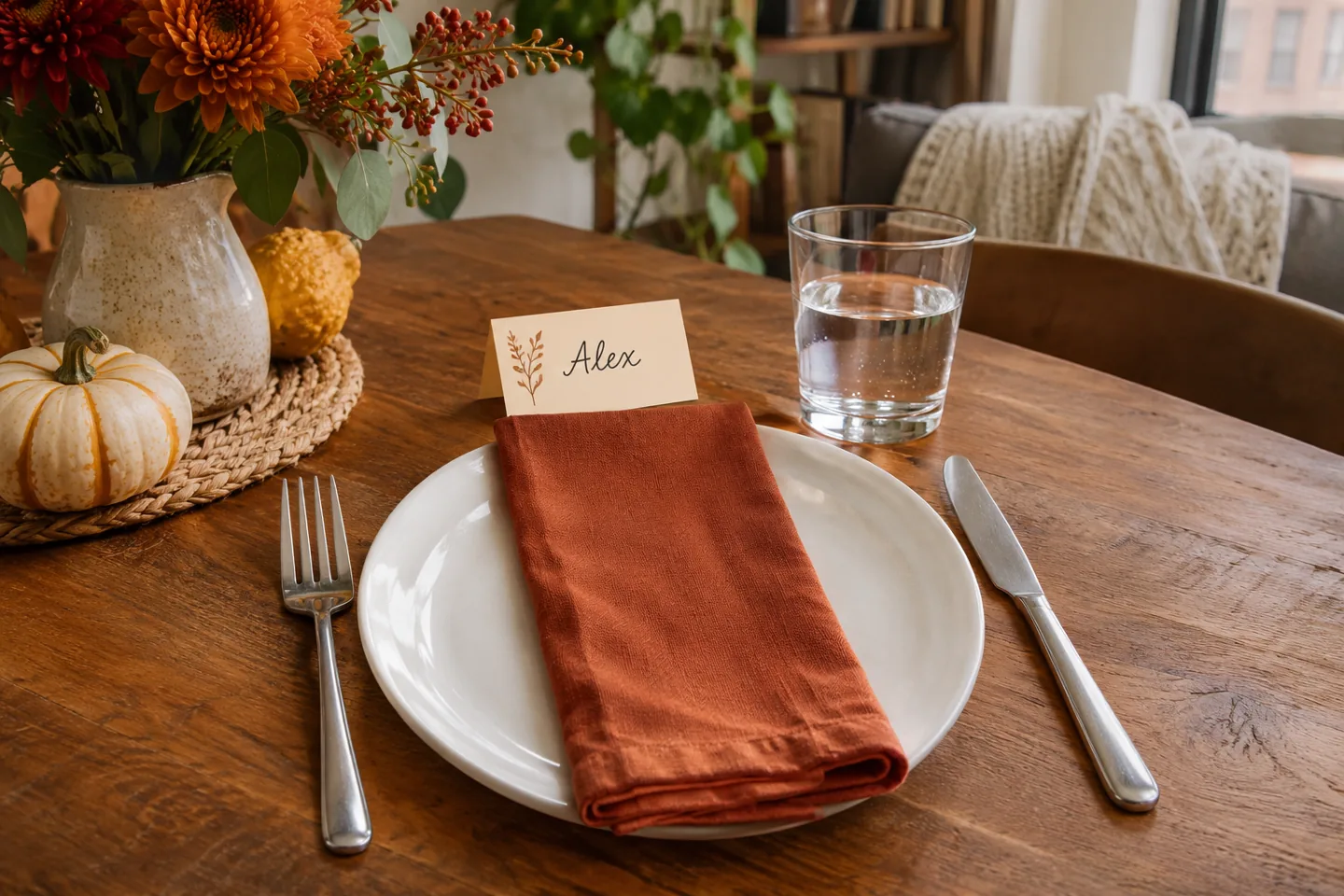
For a casual dinner, a plate, the necessary utensils, a napkin, and one drinking glass may be all each person needs. Bring out dessert plates and mugs later. That leaves the table less crowded and means fewer items waiting to be knocked over.
Make place cards from folded cardstock or clean kraft paper. They are especially helpful when one chair is easier to access, a guest needs extra space, or you want to place two friends together. Keep the arrangement flexible and explain that guests can switch if needed.
Make it personal: Write one short, specific thank-you on the back of each card. It adds more warmth than an expensive favor and takes up no extra table space.
11. Put drinks away from the food line
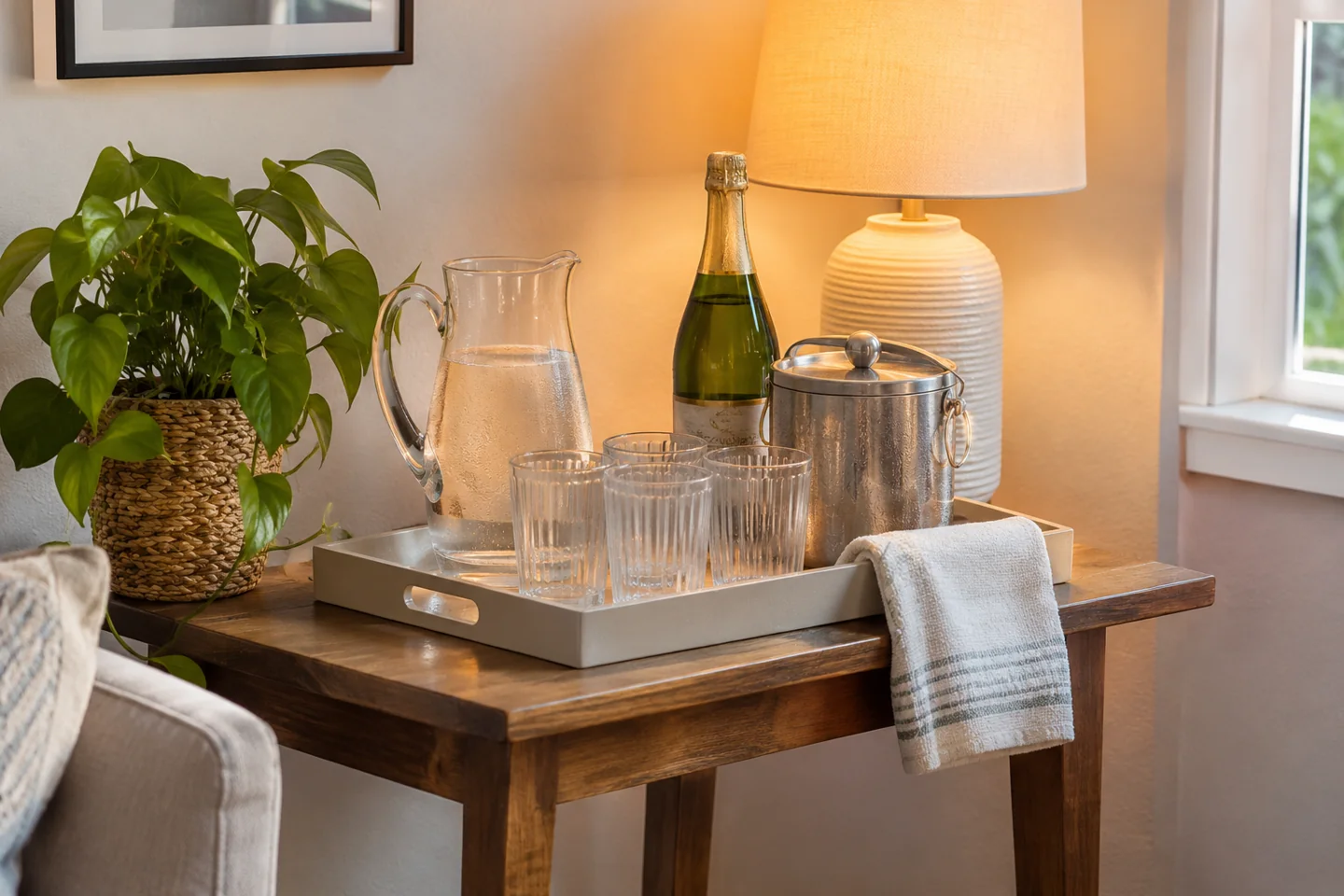
A water pitcher, glasses, a coaster or waterproof tray, and one additional drink option can make a complete drinks station. You do not need a bar cart. An existing stable console or side table works if guests can reach it without standing in front of the kitchen entrance.
Put a small towel nearby for drips and keep spare drinks in the refrigerator rather than displaying every bottle. Choose a location away from electronics and anything that could be damaged by a spill.
For a very small room: Fill water glasses just before dinner and place a manageable pitcher on the table. That can be simpler than creating another station people must walk around.
12. Give arriving potluck dishes a landing spot
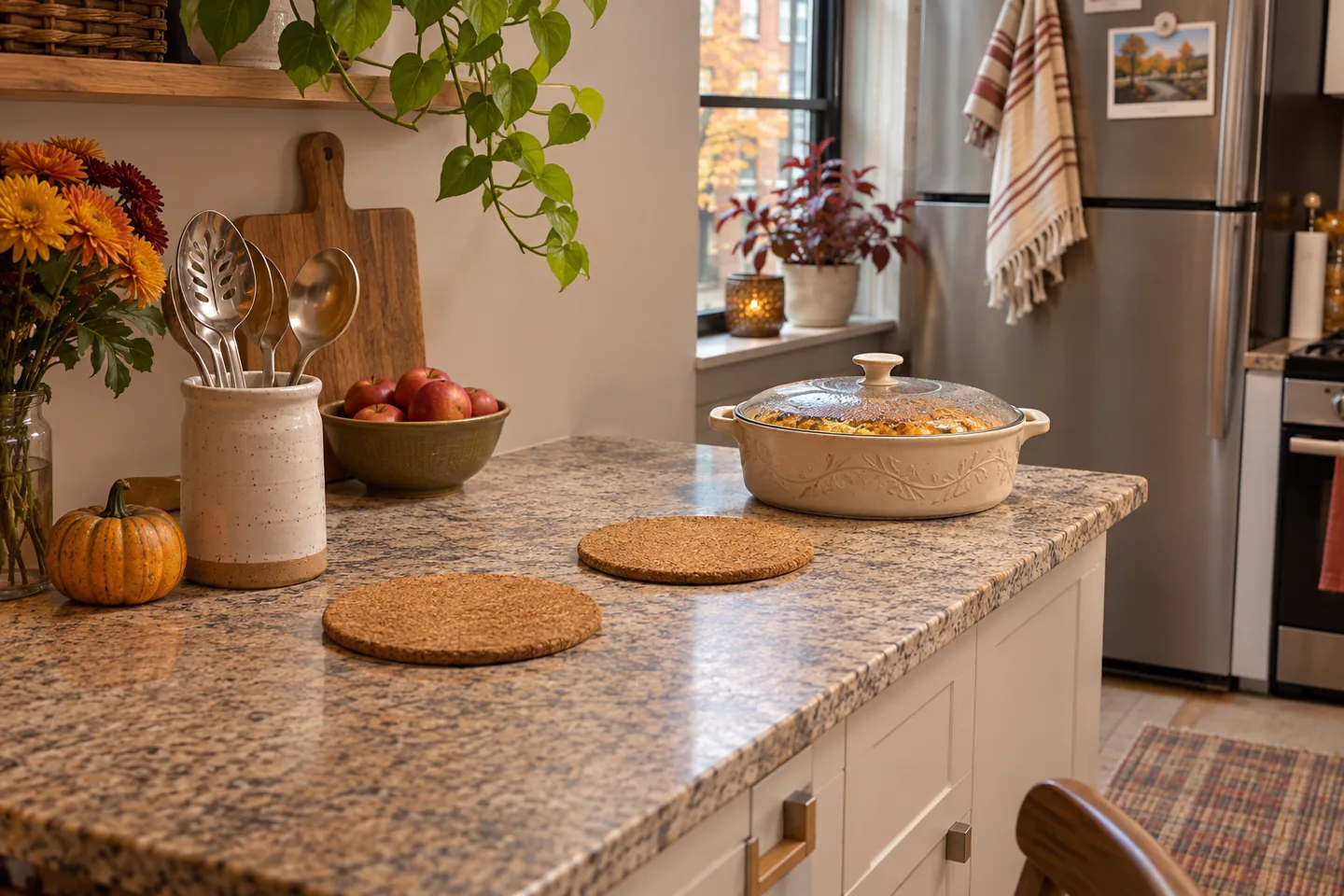
Reserve one clear section of counter for guests to put down their contributions. Keep trivets and serving utensils nearby. Otherwise, a hot casserole may arrive at the exact moment every surface is covered with appetizers and decorations.
Ask guests beforehand what they are bringing, how it should be held, and whether it needs oven or refrigerator space. A dish that requires last-minute assembly needs a different plan from a ready-to-serve salad. Avoid promising oven time to several people at once.
Useful message: “Please bring your dish in its serving container, with a serving spoon and an ingredient note. Let me know if it needs reheating.” This small request prevents a surprising amount of kitchen reshuffling.
13. Label dishes without turning labels into guarantees
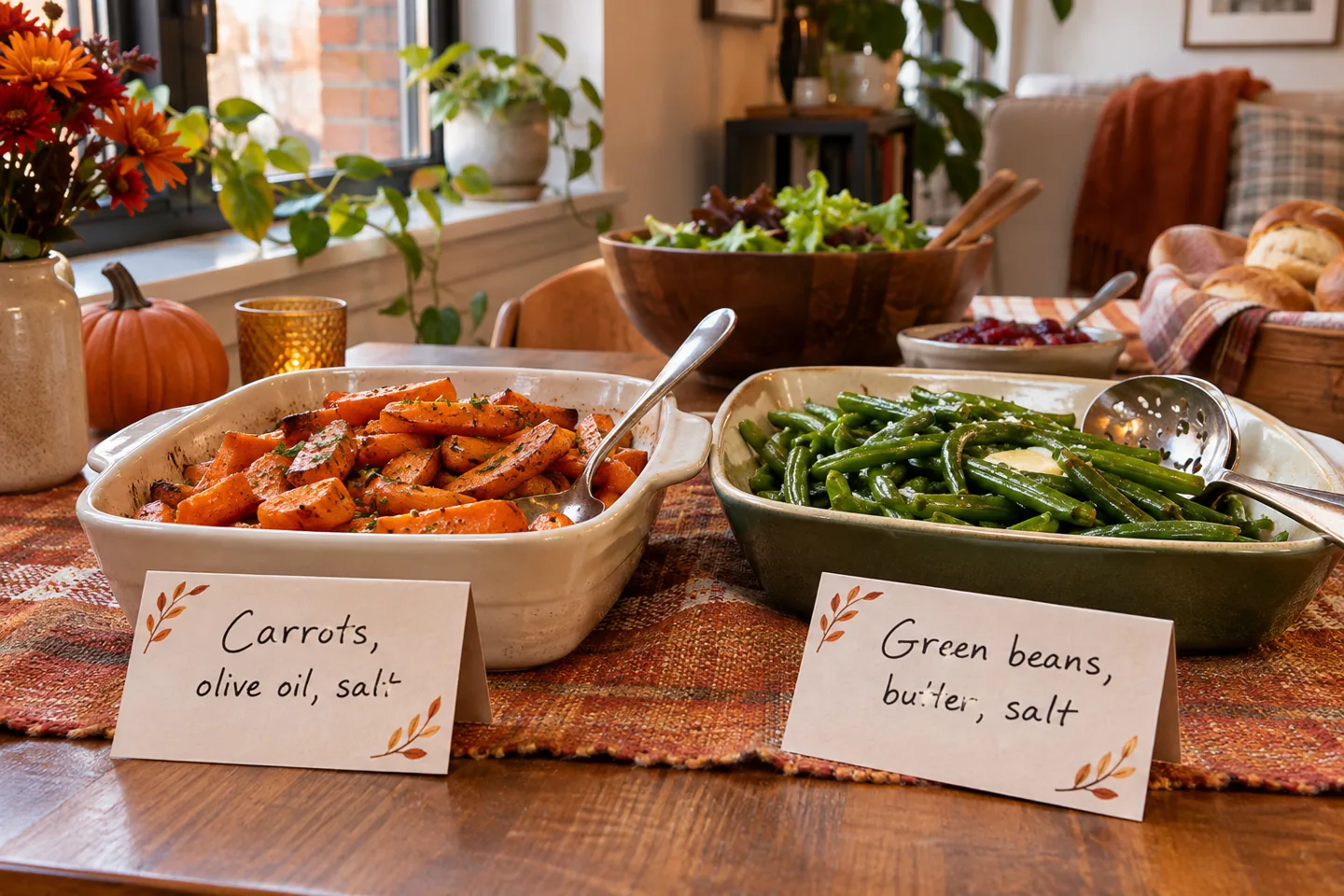
Fold small cards beside the serving dishes so guests can tell what they are choosing. Ask each contributor to list ingredients or bring the recipe, especially when friends have dietary restrictions. Keep the original packaging for store-bought food available to check.
Use separate serving utensils and place them where guests will not accidentally swap them between dishes. Do not call something allergy-safe unless you can support that claim, including how it was prepared. Guests with allergies should be able to speak directly with the person who made the food.
Keep it readable: Dark writing on a plain light card works better than tiny decorative script. Leave the labels with the dishes if you move the buffet during dinner.
14. Use the lamps you have for a cozy evening
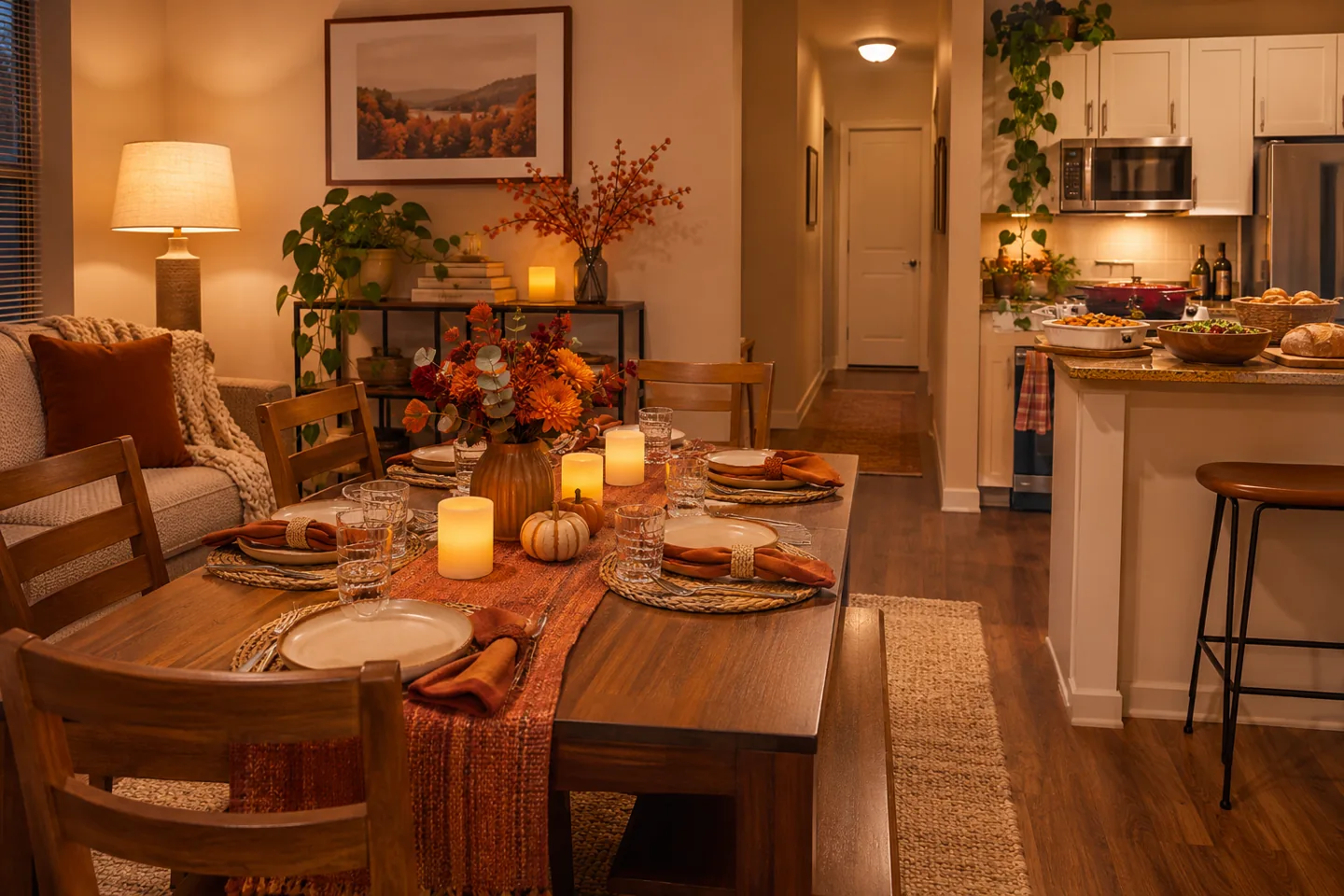
Turn on a table lamp near the living area and keep enough overhead or kitchen light for guests to serve themselves comfortably. Aim for a warm atmosphere without making the room so dim that people struggle to see steps, chair legs, or food labels.
Battery-operated candles can add a soft glow without an open flame near napkins and flowers. Place them in stable holders and keep small batteries secured away from children. Avoid running new cables across the floor for one evening.
Before dinner: Check the room after dark. Daylight can hide a corner that becomes awkward to navigate at night. A practical, well-placed lamp is often a better improvement than another string of decorative lights.
15. Create one small photo corner
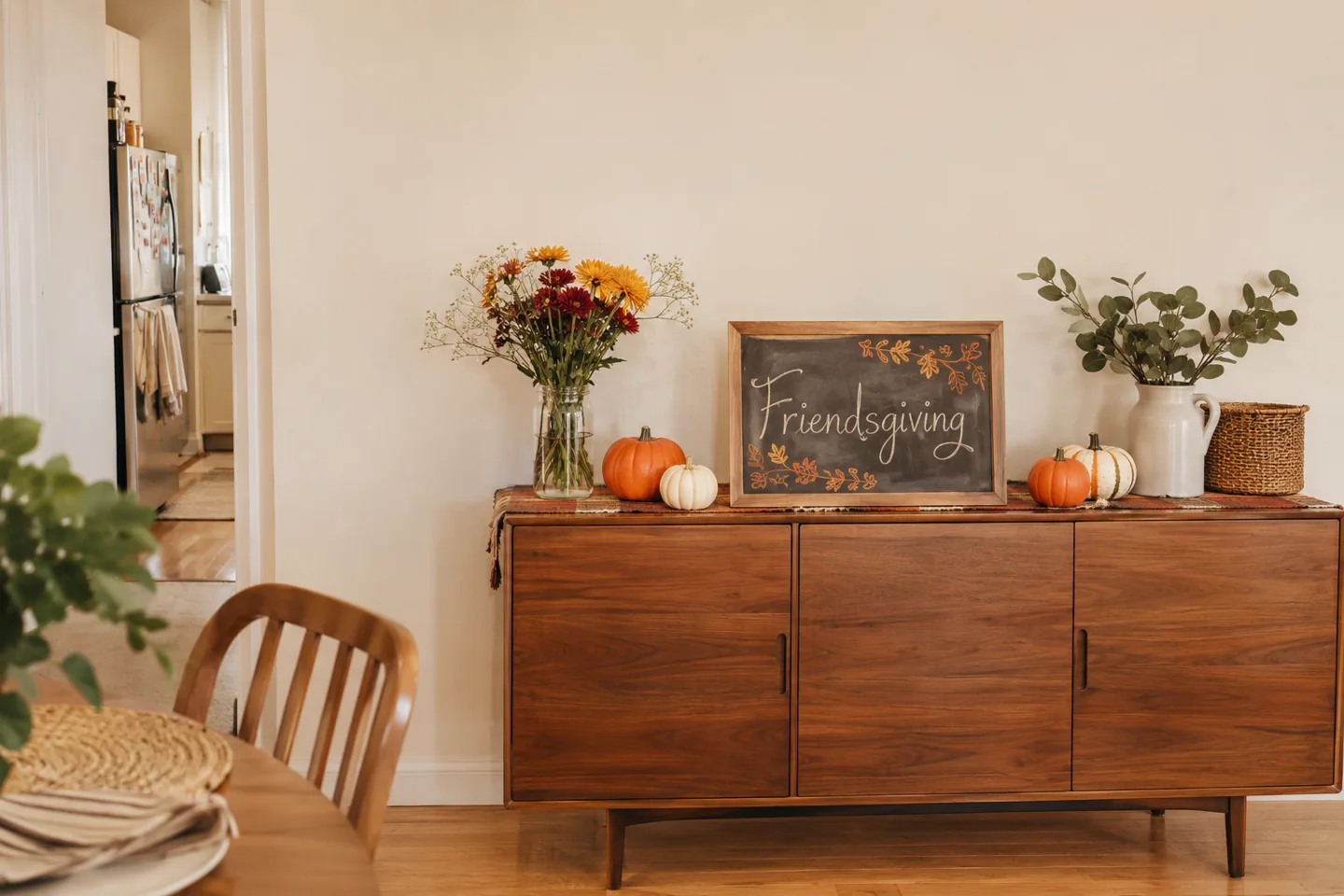
Choose an existing uncluttered wall, a bookshelf, or the end of the dining table as the photo spot. A small arrangement of pumpkins and a simple freestanding sign can provide a seasonal background without covering the whole apartment in decorations.
If you rent, avoid treating adhesive hooks as automatically damage-free. Check the product’s surface requirements and your lease before attaching anything. You can usually place decor on existing furniture instead of sticking it to the wall.
Keep dinner moving: Take room photos before guests arrive, then offer a quick group picture when everyone is ready. Do not place the photo corner where people need to stand to reach the buffet or bathroom.
16. Give gratitude a place at the table
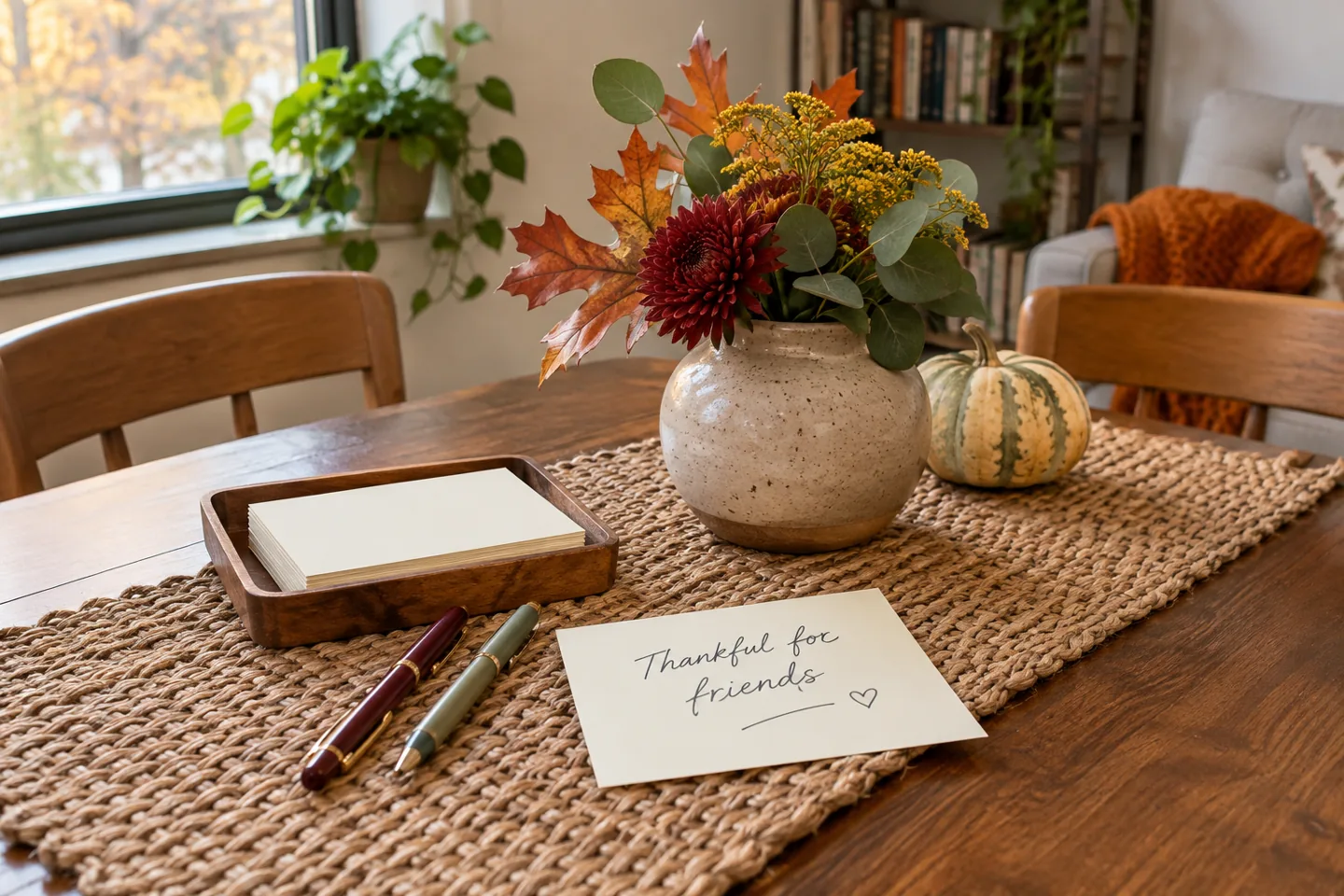
Set a few blank cards and a pen on a small tray. Guests can write something they appreciated this year, a favorite shared memory, or a thank-you to someone in the group. Offer to read the notes after dinner, and let people pass without explanation.
This works particularly well at Friendsgiving because it creates a moment together without requiring a large game area or lots of supplies. It also gives early arrivals something gentle to do while the meal comes together.
Make room: Keep the card tray off the dining table until you need it. Once plates are cleared, bring it over with dessert. An activity does not need to occupy valuable eating space for the entire evening.
17. Bring out dessert after the dinner dishes move
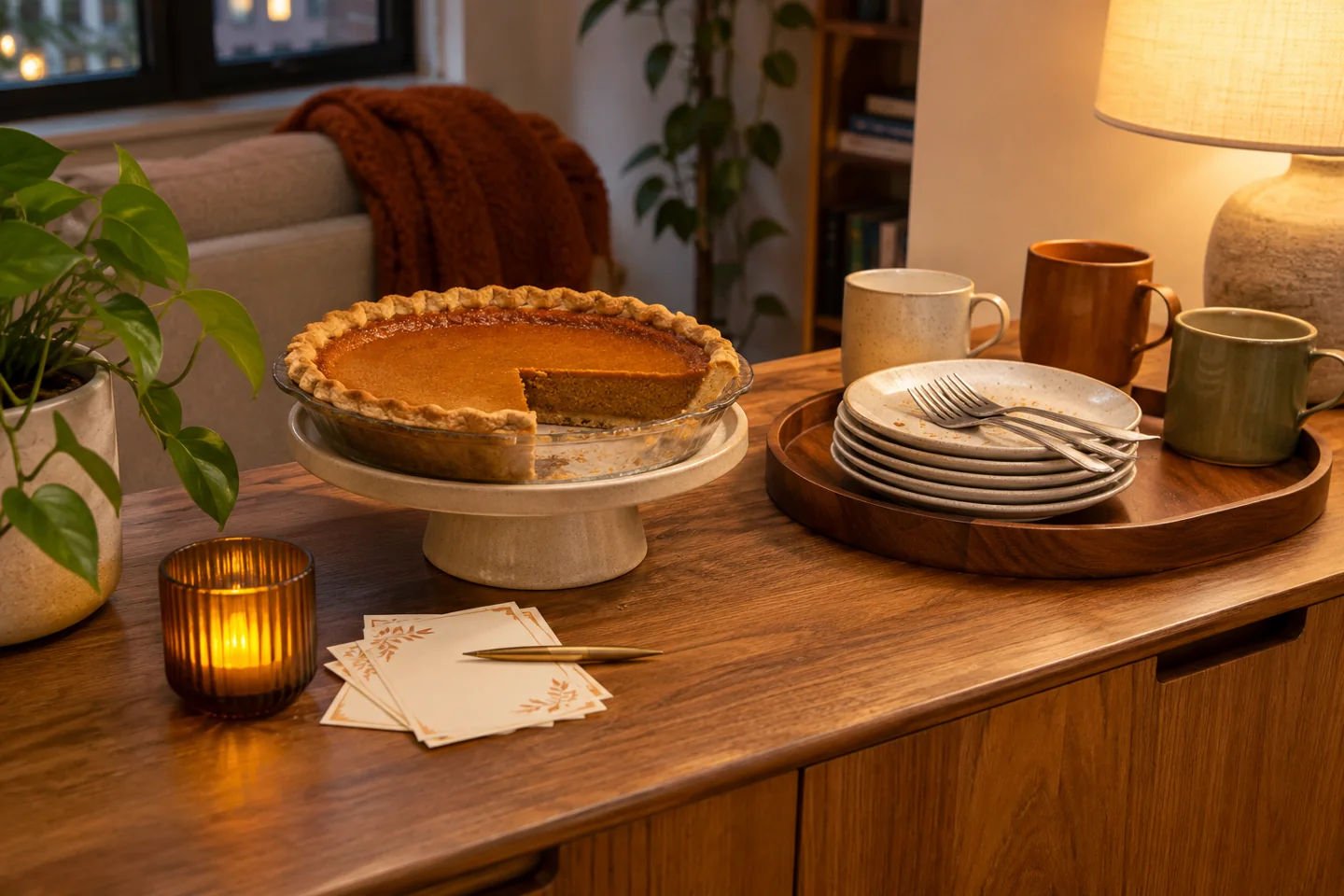
Keep dessert plates, forks, and mugs together on a tray, ready to bring out later. Store the food as its recipe or packaging requires rather than placing every dessert on display before dinner begins. Refrigerated desserts should stay refrigerated until serving time.
When the main course is finished, clear the buffet and turn that same surface into the dessert station. A pie and a stack of small plates can feel generous without a separate dessert table. Serve coffee where people can reach it without leaning over seated guests.
Easy reset: Move the centerpiece to the sideboard, wipe the dining table, and bring back the gratitude cards. The room feels ready for the next part of the evening without adding furniture.
18. Plan the cleanup corner before you need it
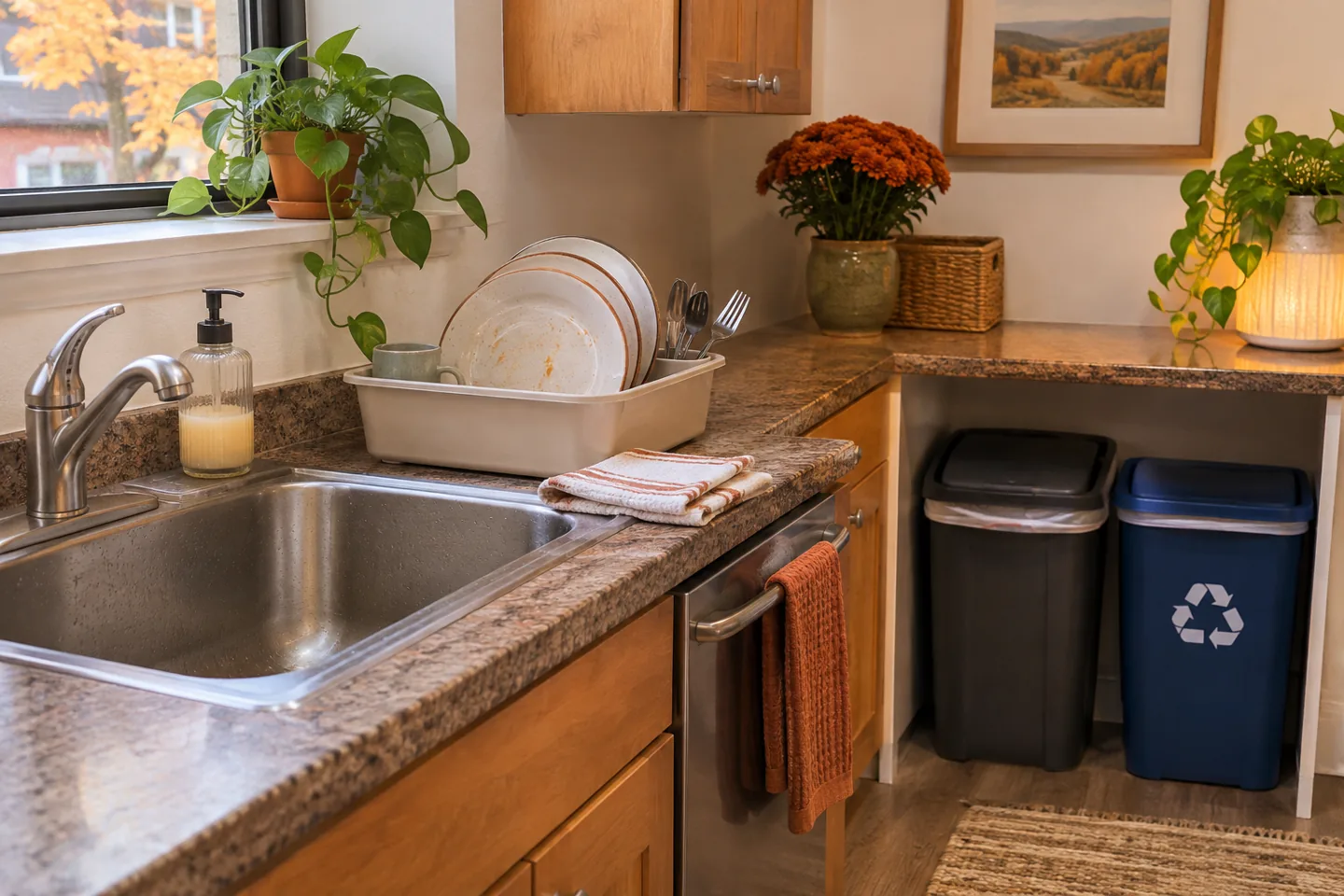
Empty the trash and recycling before the party and make the bins easy to find. Clear a sink or dishwasher area for used plates. If you put out a dish tub, keep it on a stable surface away from fresh food and avoid stacking heavy dishes too high.
Choose one helper for a quick dinner-to-dessert reset instead of having four friends squeeze into the kitchen. Everyone else can stay seated or move to the living area while plates are collected.
For borrowed dishes: Mark containers discreetly with their owners’ names before they get mixed together. Keep lids in one designated spot. This makes the end of the evening calmer and prevents a bag of unidentified serving pieces from living in your apartment all week.
19. Prepare leftovers while there is still counter space
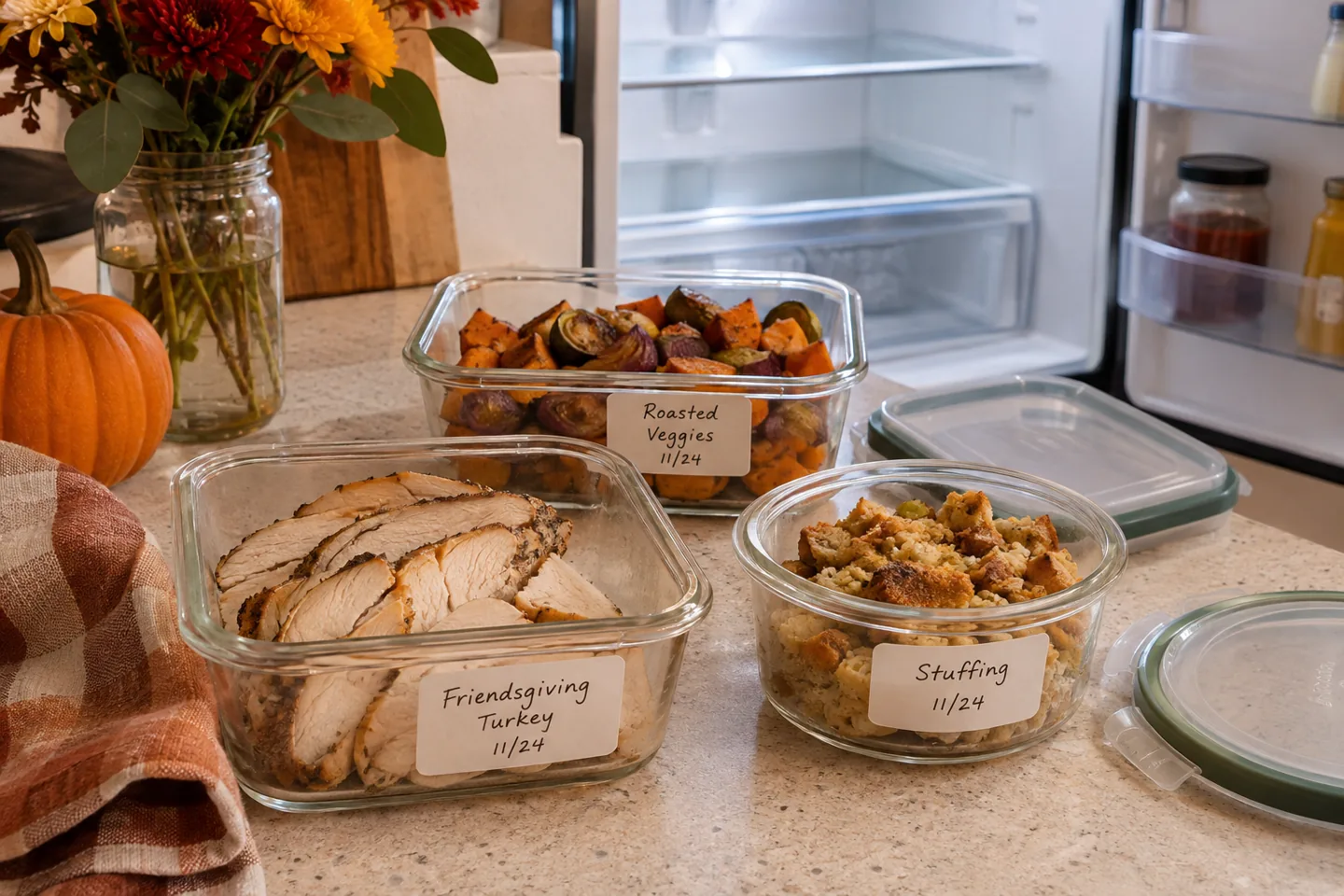
Set out clean, food-safe containers and clear refrigerator space before guests arrive. Package leftovers promptly rather than waiting until the last conversation ends. Small, shallow containers are more useful than one deep container filled with everything.
According to USDA guidance on handling leftovers, refrigerate perishable leftovers within two hours, or one hour when the temperature is above 90°F. Divide large amounts into shallow containers and keep the refrigerator at 40°F or below. Discard perishable food that has been left out beyond the safe time limit.
For guests taking food home: Label the containers and discuss the trip home; a long journey needs a way to keep perishable food cold. Decorative paper favor bags are suitable for some packaged treats, not a substitute for proper leftover containers.
A six-person setup you can adapt
For an apartment with a small dining table, a sofa, one kitchen counter, and one side table, try the arrangement below. This is a planning example, not a guarantee that six seats fit every apartment. Test your furniture with the chairs pulled out before confirming the guest list.
| Area | Before dinner | After dinner |
|---|---|---|
| Dining table | Six usable settings, water glasses, one low centerpiece. | Dessert plates and gratitude cards. |
| Kitchen counter | Buffet plus a clear landing spot for arriving dishes. | Leftovers packed and chilled; surface wiped for dessert if suitable. |
| Side table | Water pitcher and one other drink option. | Coffee mugs or a tray of drinks. |
| Living area | Seats free of coats and bags. | A comfortable place to keep talking. |
| Entry or closet | Designated space for belongings. | Bags and coats easy to retrieve. |
If you cannot fit six comfortable dinner seats, invite fewer people or change the gathering to a clearly described dessert-and-drinks evening. There is no need to force a full sit-down meal into a layout that does not support it.
Spend on the gaps, not a whole new theme
Take an inventory of plates, glasses, serving spoons, chairs, and food containers first. Then borrow what is missing before buying decorative extras. If you have a fixed setup budget, use the following example to decide what matters; these are spending allocations, not current store prices or a complete dinner budget.
| Example setup budget | Suggested priority | What to skip |
|---|---|---|
| $0 extra | Borrow chairs and serving pieces, use everyday dishes, rearrange existing lamps. | Favors, new linens, and a photo backdrop. |
| $25 cap | Set aside up to $15 for practical missing supplies and up to $10 for one decorative accent. | Matching seasonal dinnerware. |
| $50 cap | Allow up to $30 for reusable practical items, $10 for one accent, and keep $10 unspent for gaps. | A new furniture purchase solely for one dinner. |
Food and drinks are separate. Borrowed furniture can keep the setup affordable, but only use pieces in sound condition. A useful serving spoon or leftover container is a better purchase than a second centerpiece when those essentials are missing.
A simple Friendsgiving setup timeline
- Five to seven days before: Confirm the guest count, ask about dietary and access needs, choose the dinner format, and assign potluck contributions.
- Two to three days before: Test the furniture arrangement, borrow missing items, check serving dishes, and make a short supply list.
- The day before: Clear storage for coats, label serving dishes with temporary notes, prepare place cards, and make refrigerator space.
- Two hours before arrival: Set the table, arrange the drinks area, clear the potluck landing spot, and empty bins.
- Thirty minutes before: Check the bathroom, turn on lamps, put music at conversation level, and walk every guest route once more.
- During the meal: Keep track of food holding times, replenish thoughtfully, and leave the kitchen route open.
- After dinner: Package and chill leftovers promptly, clear the table, and bring out dessert supplies.
Your last ten-minute walkthrough
- Every guest has a stable seat appropriate for the meal.
- Chairs can move without blocking the exit.
- The oven, refrigerator, and bathroom doors open properly.
- Coats and bags have a home away from dining chairs.
- Each dish has a serving utensil and clear information.
- Drinks will not spill onto electronics or a power strip.
- Trash, recycling, hand towels, and toilet paper are easy to find.
- Leftover containers and refrigerator space are ready.
Questions about hosting Friendsgiving in a small apartment
How many people should I invite?
Work backward from comfortable, usable seats and the space needed to move around them. Include yourself and anyone living with you in the count. Apartment square footage alone does not tell you how many people can comfortably eat there; furniture, door positions, and individual access needs matter.
Can I host Friendsgiving without a dining table?
Yes, if you plan the meal around your actual setup. A borrowed table may work when there is room for chairs and circulation. Otherwise, provide stable eating surfaces and choose easy-to-manage food, or host dessert instead. Tell guests the format in advance and check whether the seating suits them.
What is the easiest Friendsgiving theme on a budget?
A theme based on your existing dishes is usually the simplest to execute. Cream plates, warm-colored napkins, and a few mini pumpkins can create a cozy autumn table. If your dishes are colorful, repeat one of those colors instead of buying an entirely different palette.
Should food go on the dining table or a buffet?
A separate buffet often gives a small table more usable space. Keep a little bread or a water pitcher at the table if there is room, and serve larger dishes elsewhere. If the counter is too far away or difficult for someone to access, offer to serve their plate or adapt the arrangement.
Do I need matching dishes and chairs?
No. Repeat one element, such as napkins or place cards, and let the rest vary. Prioritize clean dishes, stable furniture, comfortable seat heights, and enough space for everyone to eat.
Choose your layout first, then pick three or four ideas that make it easier to host. A clear place to sit, a meal guests can reach, and a host who has time to join the conversation do more for Friendsgiving than a room full of decorations.
For more at-home gathering ideas, browse Parties & Celebrations. If your next gathering is a teen overnight, our sleepover ideas and full-night plan covers activities, food, and wind-down time.

1 comment