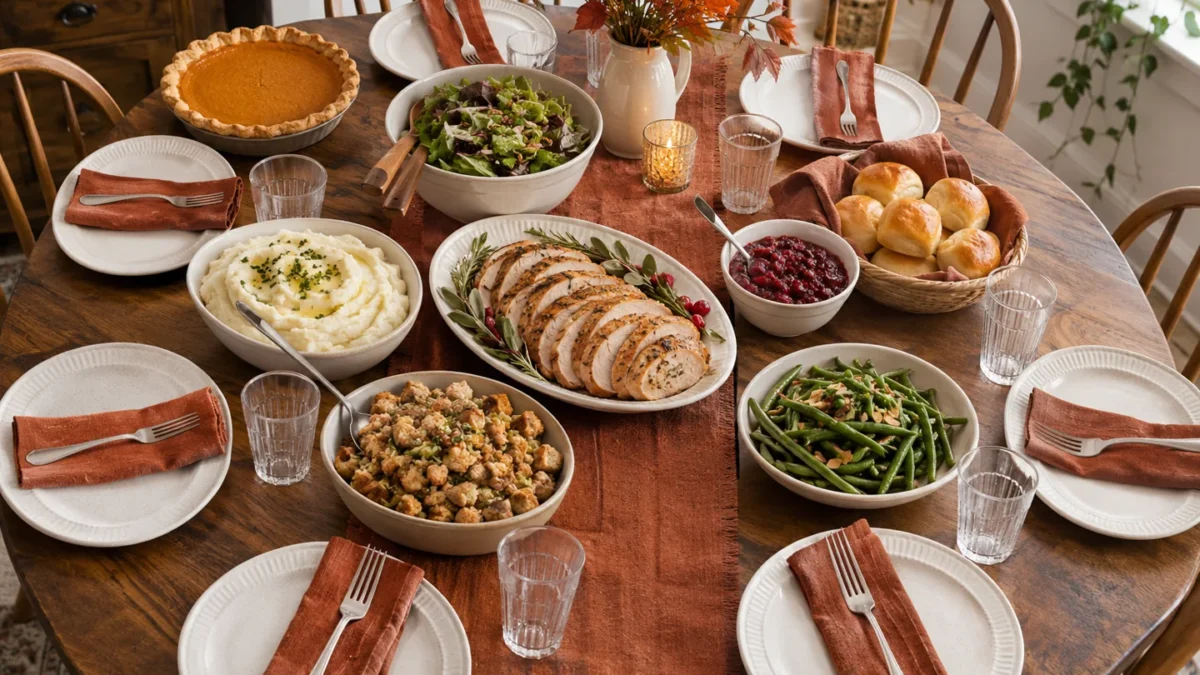
A Friendsgiving potluck menu for 8 works best when each person brings one clear contribution, the host controls the main dish, and nobody assumes there will be spare oven space. This plan includes a complete menu, practical quantities, seven guest assignments, and a timeline you can adapt to your kitchen.
The quantities below are planning estimates for eight adults total, including the host, eating a full dinner with several sides. They allow modest seconds, not a take-home meal for everyone. Adjust for appetites, dietary needs, and the recipes or package yields you choose.
Images are original AI-generated menu illustrations, not photographs of tested recipes. This is a hosting and portion-planning guide; use a reliable recipe or the package instructions for each dish.
1. Start with this complete Friendsgiving menu for 8
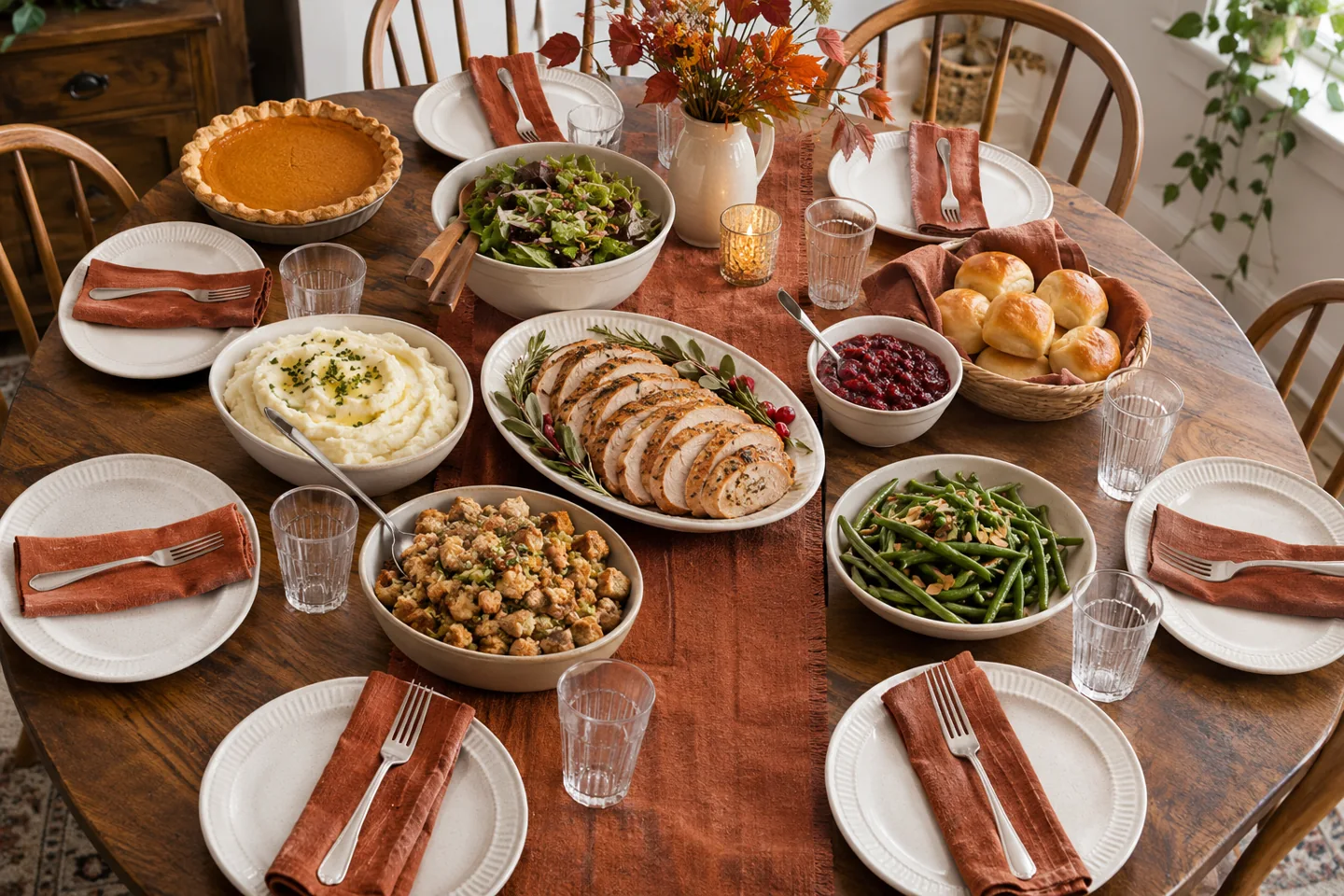
Keep the menu focused: one main, two substantial starches, a cooked vegetable, a fresh salad, bread, a condiment, and dessert. You can make the evening feel generous without asking eight people to bring eight large casseroles. Too many dishes create refrigerator, reheating, and leftover problems before they add much variety.
| Dish | Planning quantity for eight | Serving plan |
|---|---|---|
| Boneless turkey breast | About 4–5 lb raw, unstuffed boneless turkey breast in total | Check the package yield; aim for roughly 3 lb cooked edible meat. |
| Gravy | 2–3 cups prepared | Serve in a small pitcher and refill safely as needed. |
| Mashed potatoes | 3 lb raw potatoes; roughly 6–8 cups prepared, depending on the recipe | One generous serving bowl. |
| Bread stuffing | 6 cups cooked | One casserole sized for the chosen recipe. |
| Green beans | 2 lb raw, before trimming | One vegetable side for all eight. |
| Apple and green salad | 8–10 loosely packed cups of greens plus 2 apples | Keep dressing separate until serving. |
| Dinner rolls | 12 small rolls | One each, with four extras. |
| Cranberry sauce | 1½–2 cups prepared | One small bowl with a spoon. |
| Pumpkin pie | One standard 9-inch pie cut into eight slices | Add another dessert only if you want larger portions or choice. |
| Drinks | About 3 liters of nonalcoholic drinks, plus freely available water | A starting allowance for a short dinner; increase for a longer gathering. |
The raw turkey amount assumes an actual boneless breast, not a bone-in breast or a roast whose listed weight includes substantial gravy. Cooking loss varies. If you buy prepared turkey instead, order by its cooked serving yield and confirm that it covers eight main-course portions.
Skip an elaborate appetizer board unless dinner will be much later than arrival. A small bowl of crackers or a light snack can bridge a short wait, but it should not become an unplanned second meal.
2. Give the host and each guest a specific assignment
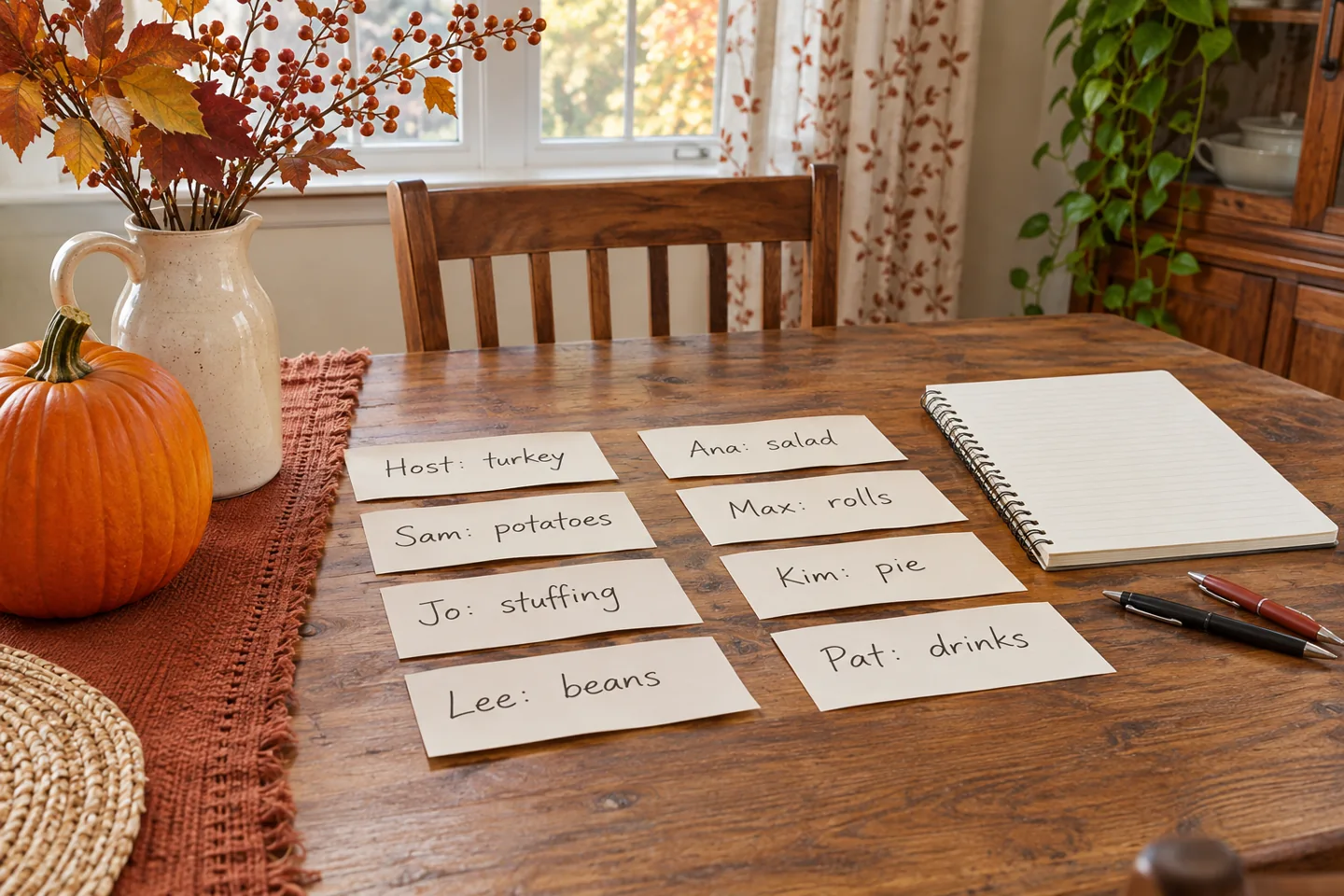
The host takes turkey and gravy because these determine the cooking schedule. The seven remaining adults each take one manageable assignment. Names in the example below are placeholders; swap them for your group and confirm contributions rather than assuming everyone can cook or spend the same amount.
| Person | Contribution | Bring it with |
|---|---|---|
| Host | Turkey, gravy, water, tableware, and leftover containers | A food thermometer and a plan for oven space. |
| Guest 1 | Mashed potatoes made from about 3 lb potatoes | Lidded serving container and serving spoon. |
| Guest 2 | 6 cups cooked stuffing | Covered casserole and serving spoon. |
| Guest 3 | Green beans using about 2 lb raw beans | Container and tongs. |
| Guest 4 | Greens, apples, and dressing for eight side salads | A chilled bowl, separate dressing, and salad servers. |
| Guest 5 | 12 rolls, butter, and 1½–2 cups cranberry sauce | A bread basket or bag and a spoon for the sauce. |
| Guest 6 | One 9-inch pumpkin pie | Pie server and storage instructions. |
| Guest 7 | About 3 liters of nonalcoholic drinks and ice | Drinks chilled when appropriate. |
If two guests share a household, they can combine assignments. They do not both need to arrive with a separate casserole. Equally, someone coming straight from work can buy rolls or pie rather than agree to a dish they have no realistic time to prepare.
Message to send: “Friendsgiving dinner is at 6:00, and there will be eight of us including me. Could you bring [dish and quantity]? Please include a serving utensil and the ingredients or packaging. Let me know whether it needs chilling, reheating, or any last-minute prep so I can plan the kitchen.”
Decide privately whether to share the cost of the main dish. Equal numbers of dishes do not mean equal expense; turkey, drinks, and a homemade side can have very different costs.
3. Keep turkey and gravy with the host
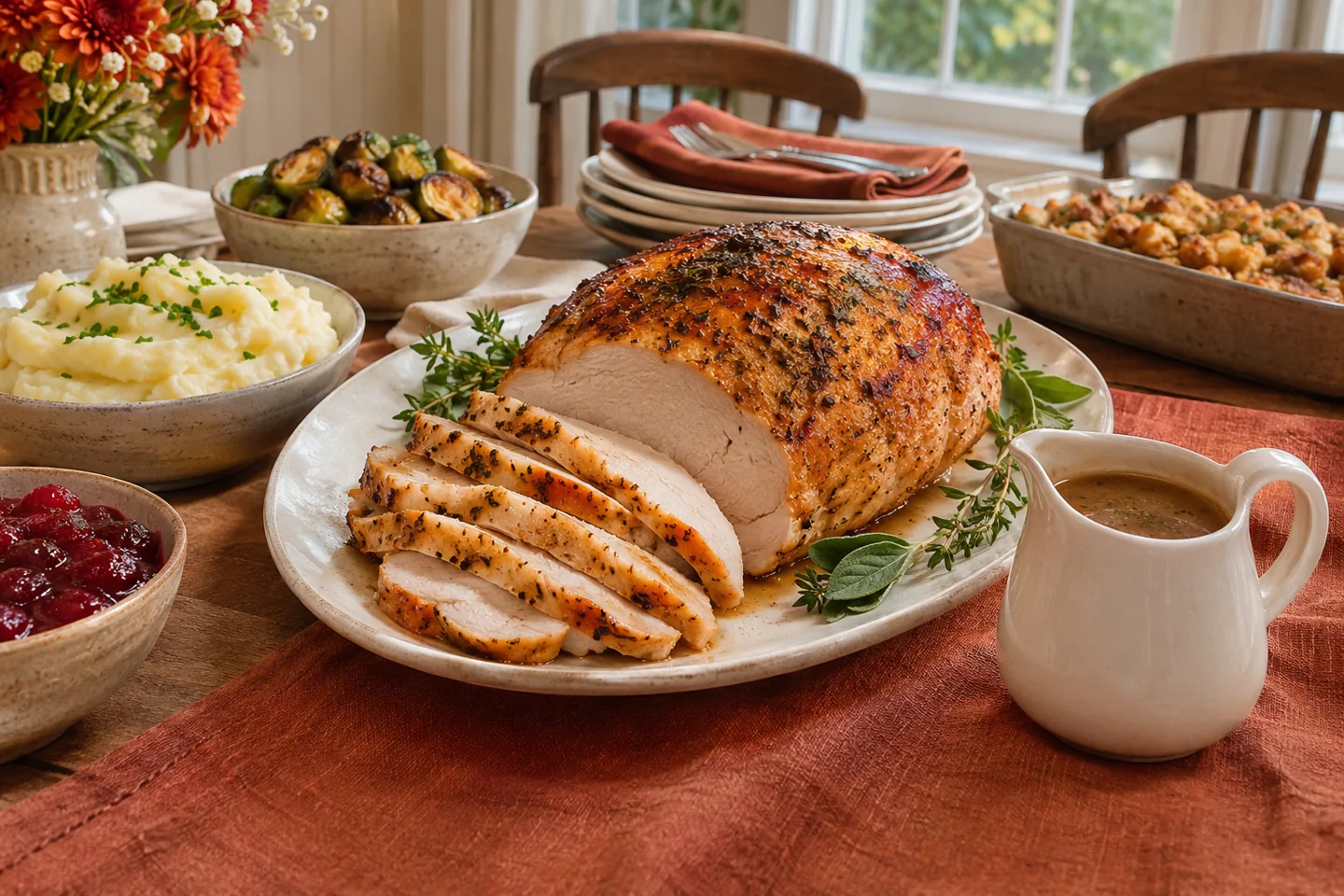
For this menu, about 4–5 pounds of raw boneless turkey breast is a useful starting shopping range. After cooking, the goal is roughly 3 pounds of edible meat: about 6 ounces per person alongside the sides. This is a portion estimate, not a promise about a particular product’s yield. Choose the upper end for bigger appetites, or buy additional turkey if generous leftovers are part of the plan.
Read the label before choosing a recipe. A pre-seasoned roast, a netted breast, and an unseasoned breast may have different handling and cooking instructions. Follow the directions for removing or retaining netting, and do not use a whole-turkey timing chart as if it were exact for every boneless roast.
Use a food thermometer in the thickest part. CDC turkey guidance specifies a safe internal temperature of 165°F. Color, clear juices, and a browned surface cannot replace that check. Do not rinse raw turkey, and keep its juices away from salad ingredients and ready-to-eat food.
If frozen, allow time for refrigerator thawing; CDC gives an approximate guide of 24 hours per 4–5 pounds, with refrigerator-thawed turkey usable within one to two days after thawing. Keep it in a leak-catching container and follow any product-specific directions. Never make countertop thawing part of the dinner schedule.
Prepare 2–3 cups of gravy from a trusted recipe or a purchased product. Having some prepared gravy available removes the pressure to produce enough pan drippings at the last minute. Keep it separate so guests can decide how much they want.
4. Ask one guest for a generous bowl of mashed potatoes
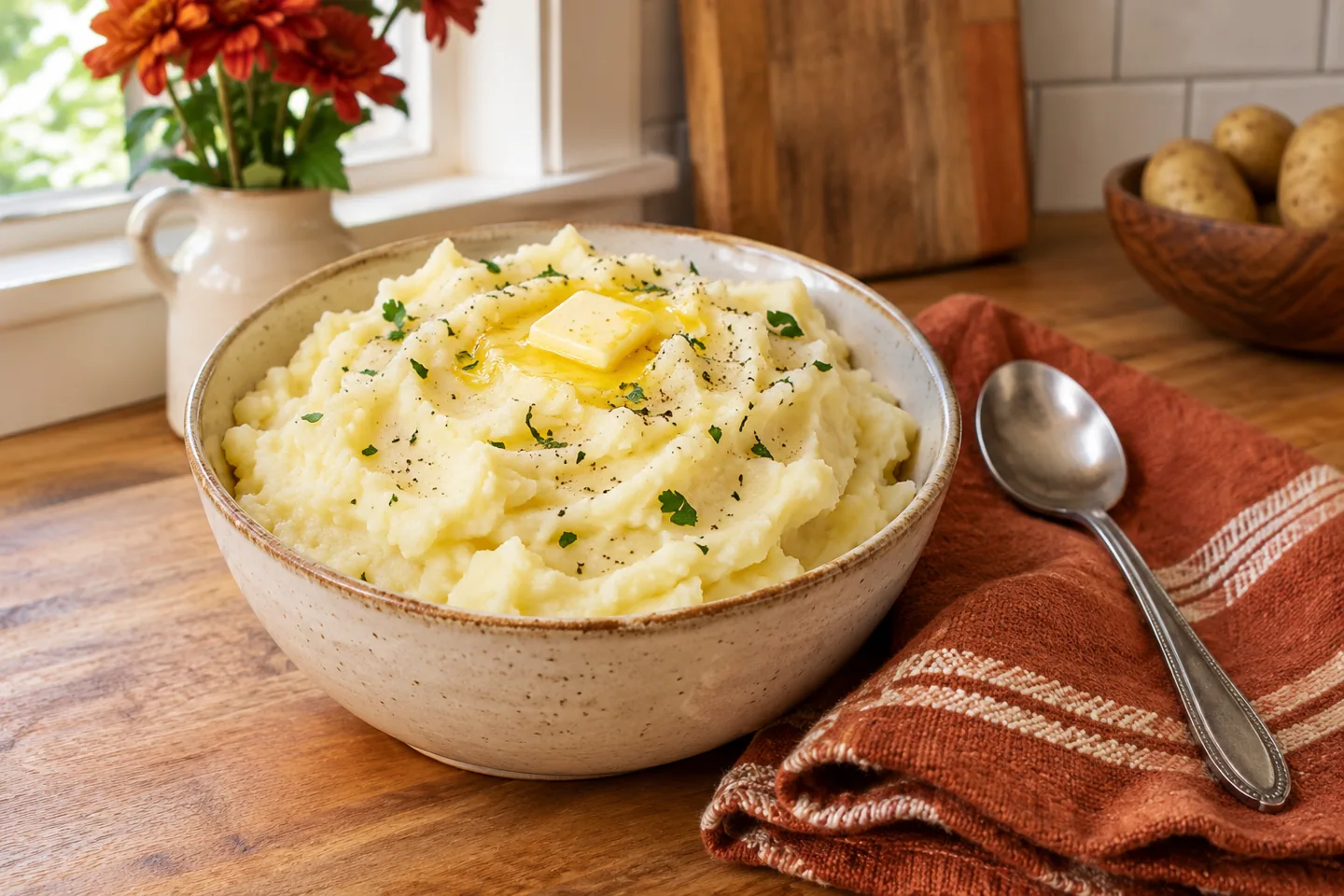
Three pounds of potatoes is a sensible starting amount when the meal also includes stuffing and rolls. Depending on peeling and the recipe’s additions, that may produce roughly 6–8 cups of mash. Confirm the recipe’s stated yield and aim for eight side-dish portions with a little room for seconds.
The guest making the potatoes should bring them finished, along with the serving spoon. “I’ll mash them at your place” sounds small but can take a burner, a saucepan, a colander, and counter space while the host is trying to carve turkey.
For transport, agree whether the potatoes will arrive safely hot for immediate service or chilled for an assigned reheating slot. A wrapped container is not proof that food is still at a safe holding temperature. Check with a thermometer and plan the journey and waiting time together.
If the potatoes are made ahead and chilled, reheat them thoroughly to 165°F before serving. Follow a recipe’s reheating method to restore their texture. A splash of the recipe’s appropriate liquid may help, but do not keep adding ingredients without checking the dietary needs of the group.
Useful substitution: If your group prefers roasted potatoes, replace the mash rather than adding a second potato dish. Confirm oven arrangements because roasting on arrival is much harder to accommodate than a finished side.
5. Make stuffing a separate casserole
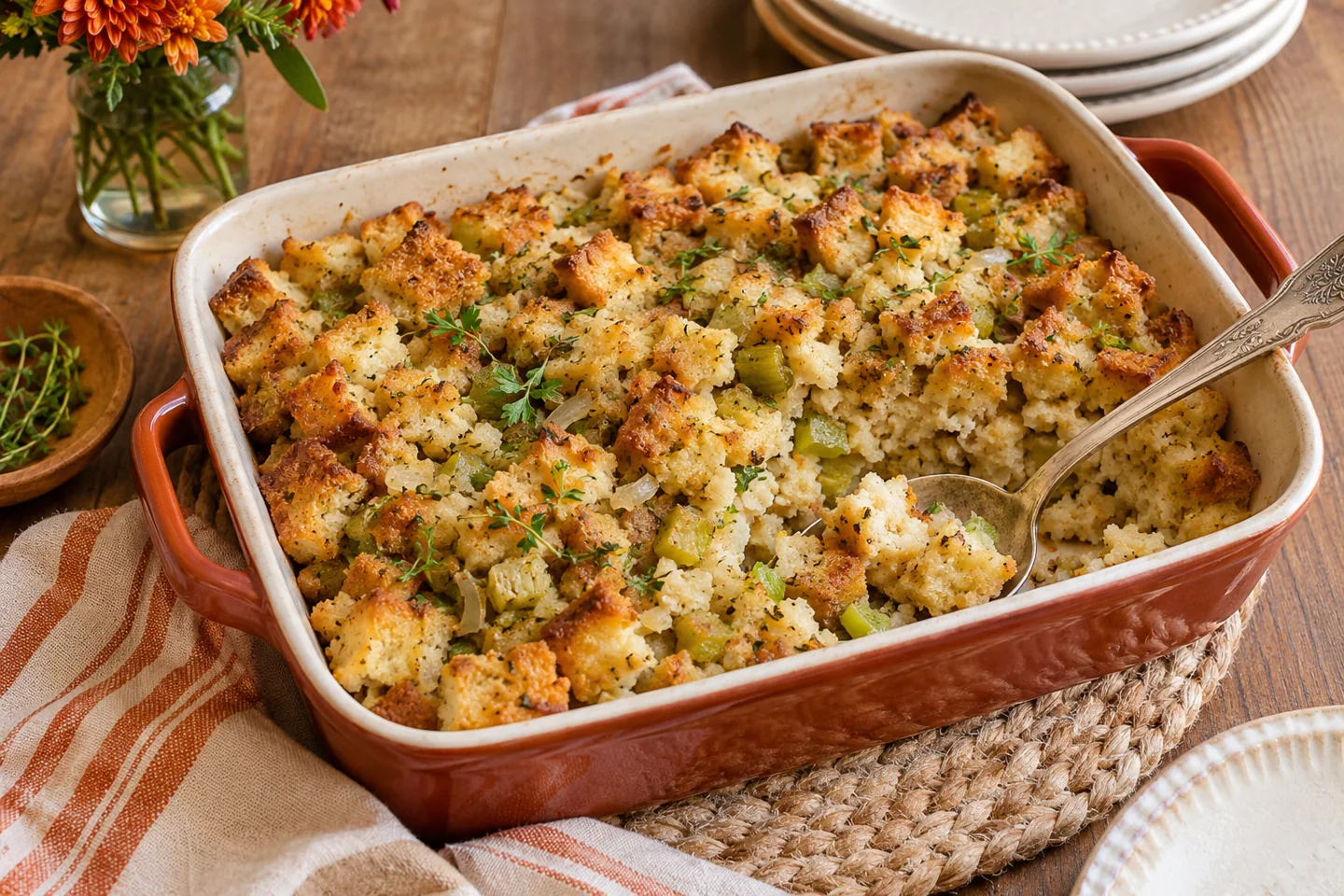
Plan for about 6 cups of cooked stuffing, or roughly three-quarters of a cup per person. That amount complements the potatoes without requiring everyone to take two large servings of starch. Use the chosen recipe’s yield to work backward to bread, stock, vegetables, and baking-dish size.
Baking stuffing separately makes the host’s turkey plan easier and allows more control over ingredients. A vegetable-stock version can suit some vegetarian guests, provided every other ingredient fits their needs. Stuffing still needs to be substantial and flavorful, but it should not be mistaken for a complete vegetarian main course.
Ask the contributor whether the dish contains eggs, dairy, sausage, or nuts, and record that information. If eggs or other perishable ingredients are included, follow the recipe’s safe preparation and storage directions rather than assembling it far ahead and leaving it out.
The FDA’s holiday food guidance says stuffing should reach 165°F whether cooked inside or outside the bird. A crisp top does not establish the temperature in the center. Make sure the person preparing it has a thermometer or can use the host’s clean one.
Oven-space rule: Reserve the reheating time in advance. “It only needs a few minutes” is not a usable schedule if the center starts refrigerator-cold.
6. Choose one cooked vegetable that does not need finishing at the party
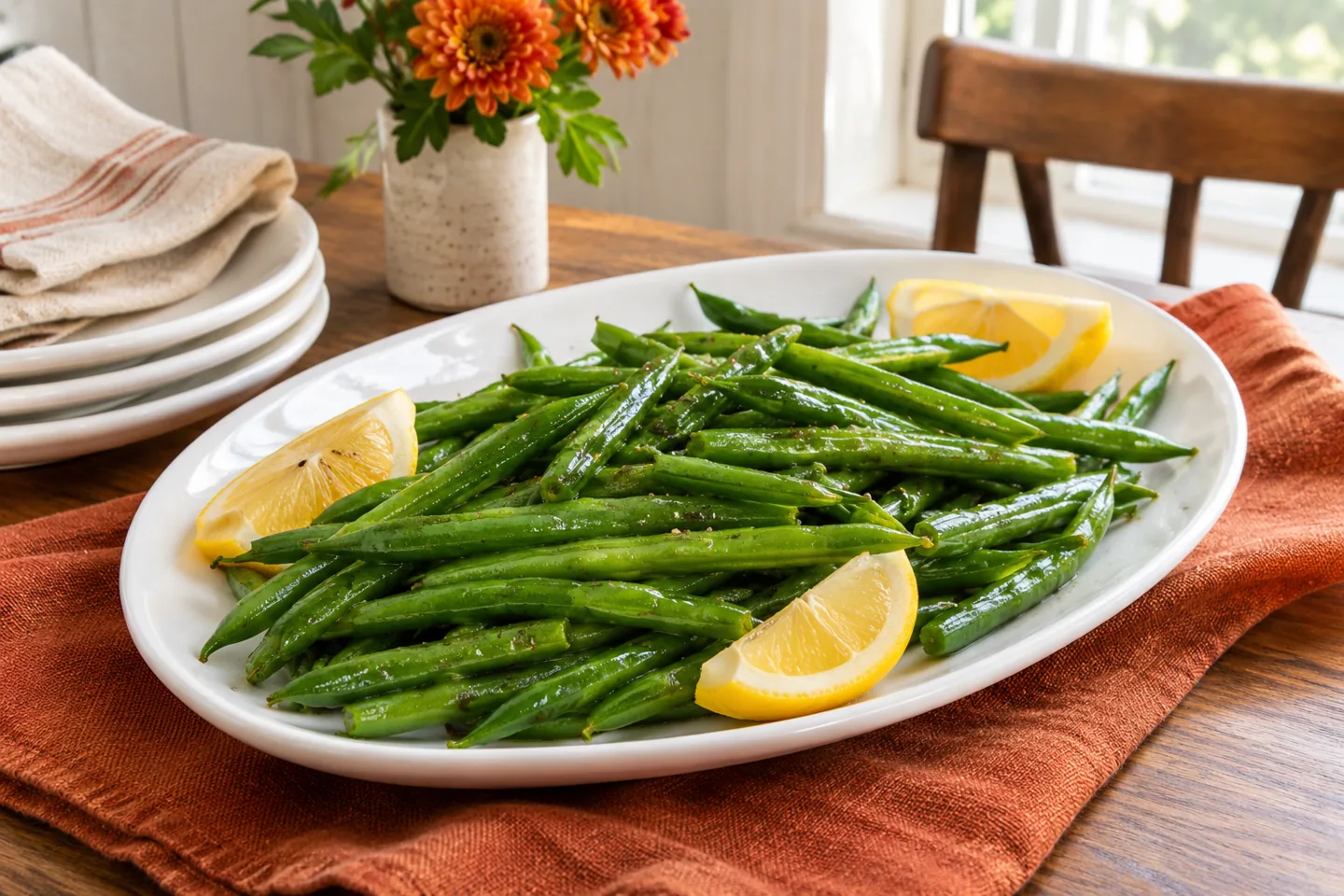
Two pounds of raw green beans, before trimming, is a practical vegetable allowance for eight people eating this menu. A simple lemon-and-olive-oil preparation offers contrast to the rich potatoes and gravy. Avoid a last-minute skillet sauce or several toppings if the contributor needs to travel.
Have the guest choose a reliable recipe and decide how it will travel. Beans intended to be served hot need the same temperature attention as the other cooked dishes. A cooked vegetable is not automatically safe to leave in a car or on the counter for hours because it contains no meat.
Keep optional additions separate where possible. Nuts, cheese, bacon, and butter change both the flavor and who can eat the dish. Plain does not mean unfinished: lemon, herbs, seasoning, and the right cooking method can make a simple side fit the rest of the meal.
If your group dislikes beans: Replace them with a comparable side of carrots or another vegetable using a recipe that serves eight. Do not add another dish just to avoid deciding. A complete but manageable menu is easier to serve well.
7. Add a fresh salad with the dressing on the side
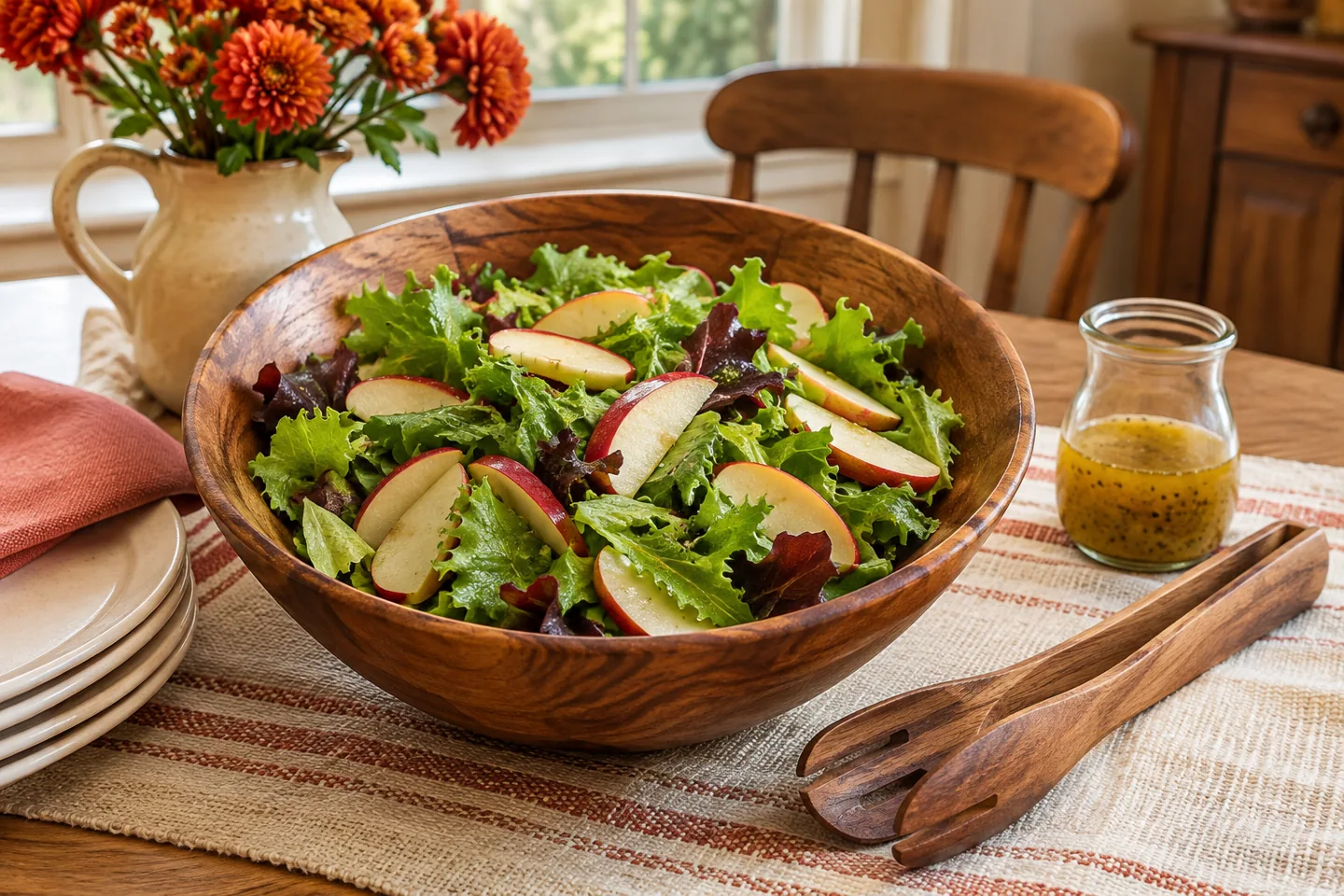
Use 8–10 loosely packed cups of greens and two sliced apples as a starting point for eight modest side salads. Greens compress differently, so buy according to the bag’s serving guidance and the size of your bowl rather than treating cups as an exact shopping weight.
Bring the dressing separately. The salad contributor can wash and dry produce as appropriate, prepare the other components, and combine them shortly before dinner. If using packaged greens labeled ready to eat, follow the label. Keep the salad refrigerated or in a properly chilled carrier until serving.
A simple apple salad gives the plate something fresh alongside the turkey and starches. Cheese, nuts, and dried fruit are optional additions, not requirements. Discuss allergies before offering a separate topping bowl; keeping an allergen on the side does not by itself prevent cross-contact.
Transport detail: The bowl needs a secure cover, and the contributor should bring salad servers. A beautiful oversized bowl is not useful if it cannot fit in the refrigerator or on the buffet. Ask about the container’s size before arrival if storage is tight.
8. Combine rolls, butter, and cranberry sauce into one easy assignment
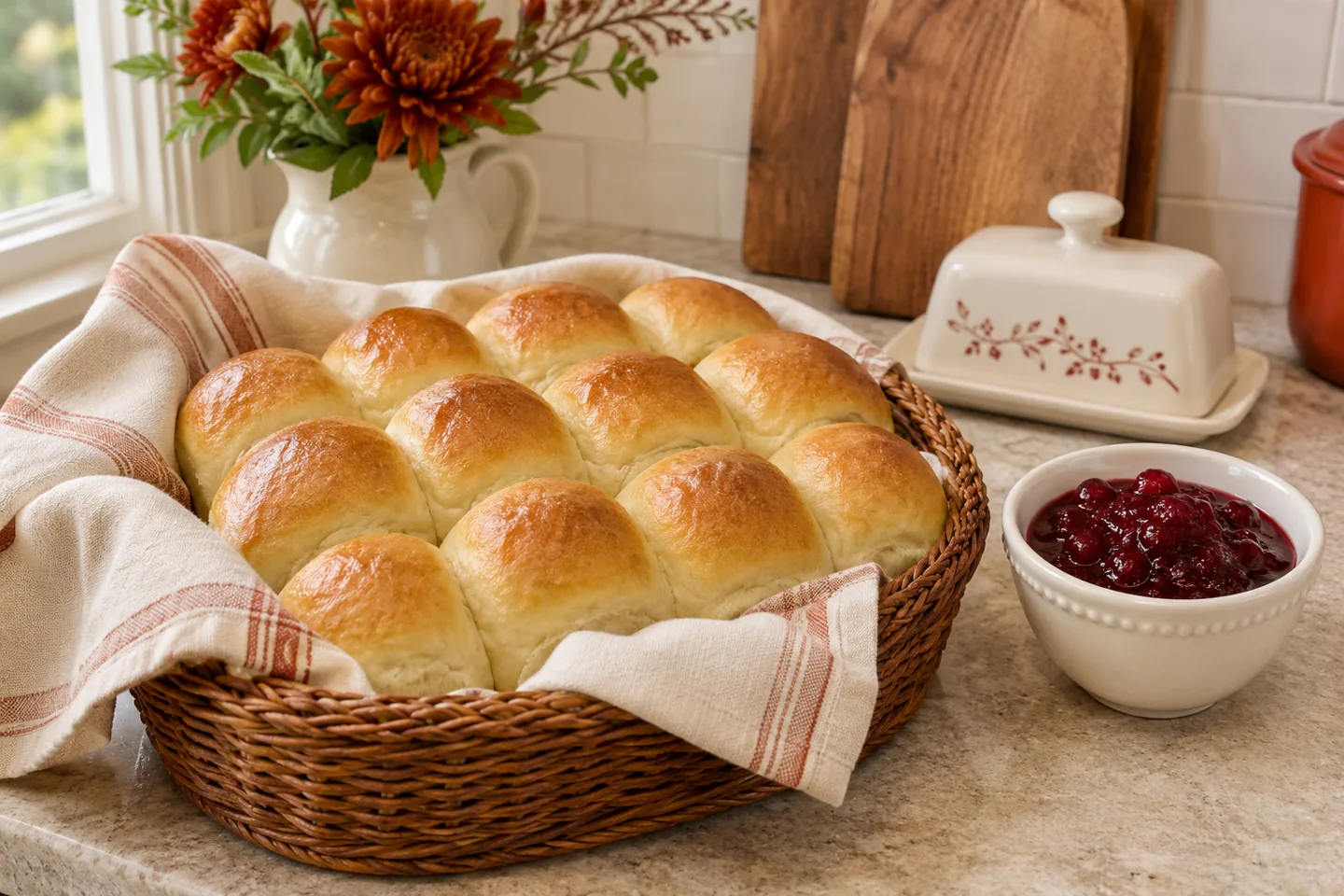
Ask one guest for 12 small rolls, a suitable amount of butter or another agreed spread, and 1½–2 cups of cranberry sauce. This is a useful assignment for a guest who does not cook or has limited preparation time. Bakery or supermarket options are completely appropriate.
Twelve rolls give each diner one with four extra to share. If your group loves bread, increase the count deliberately rather than relying on guests to guess. Remember that this menu already has potatoes and stuffing, so a large bread basket is not essential for fullness.
Check whether the rolls actually need warming. Room-temperature bread can simplify the final half hour, while bake-from-frozen rolls create another oven commitment. If warming is preferred, use the manufacturer’s instructions and schedule it after any food that requires more substantial reheating.
Serve cranberry sauce in a small bowl with its own spoon. Follow package or recipe storage directions; do not assume all homemade and commercially packaged versions have identical storage requirements. Bring labels or ingredient details for the rolls, sauce, and spread.
9. Choose one dessert that reliably gives everyone a portion
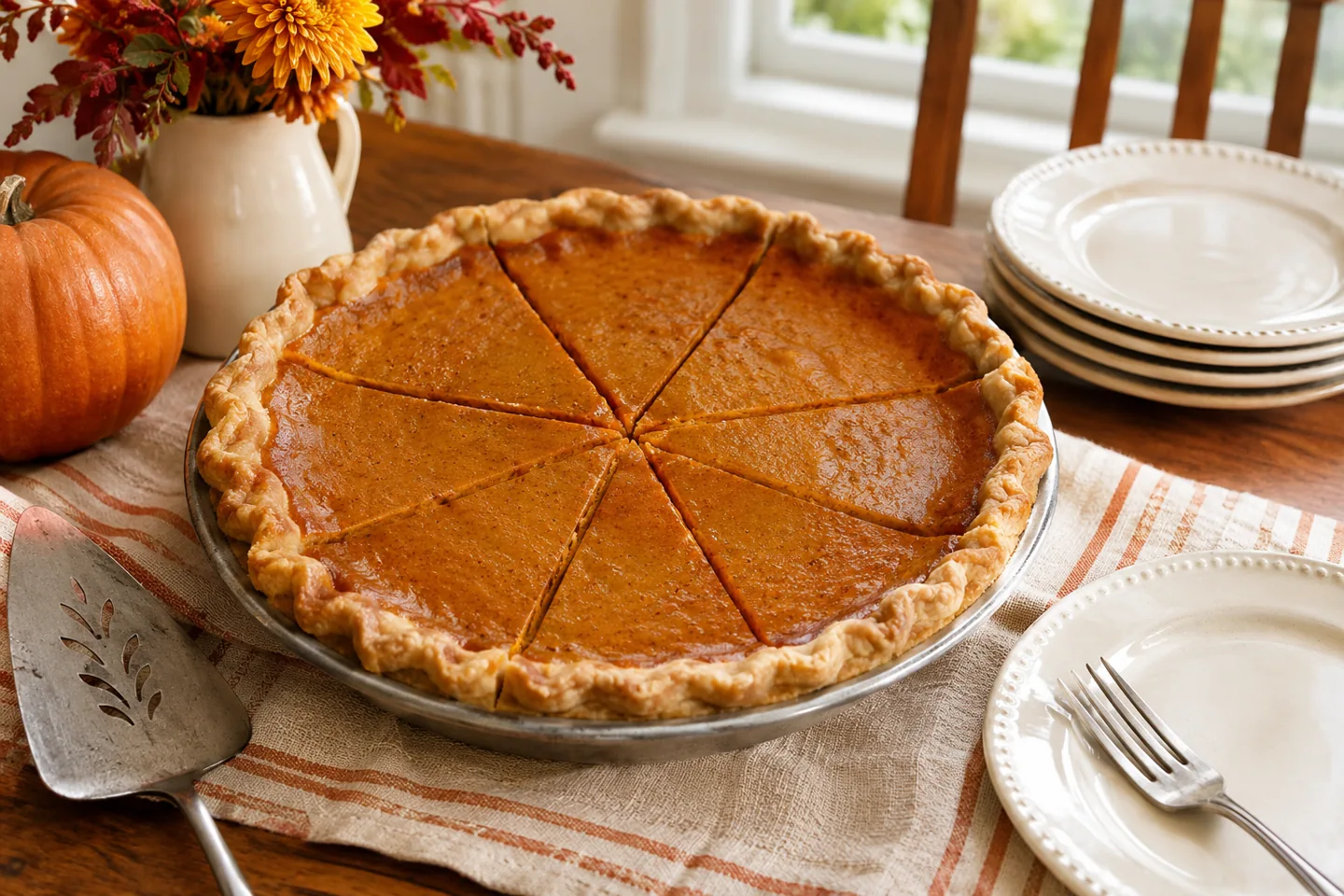
A standard 9-inch pumpkin pie cut into eight slices provides one dessert portion per person. That is enough for a simple dinner, but not for large slices plus seconds. Ask the dessert guest to confirm the actual size: a mini pie or a shallow specialty tart may not have the same yield.
If dessert is the part everyone looks forward to, add a second dessert by agreement. One pie plus a small batch of cookies offers choice without committing to two large pies. Adjust for dietary needs so every guest has something they can eat rather than creating abundance that excludes one person.
Keep whipped cream or other toppings separate and chilled as directed. Homemade pumpkin pie generally requires refrigeration; commercially prepared products can have different storage instructions, so follow the recipe or label. Dessert should not sit on display throughout a long afternoon simply to complete the table photo.
Bring a pie server and tell the host whether the dessert needs refrigerator space. Put it out when dinner plates are cleared. This leaves the buffet available for the main meal and keeps the final course feeling fresh.
10. Give drinks their own assignment and serving spot
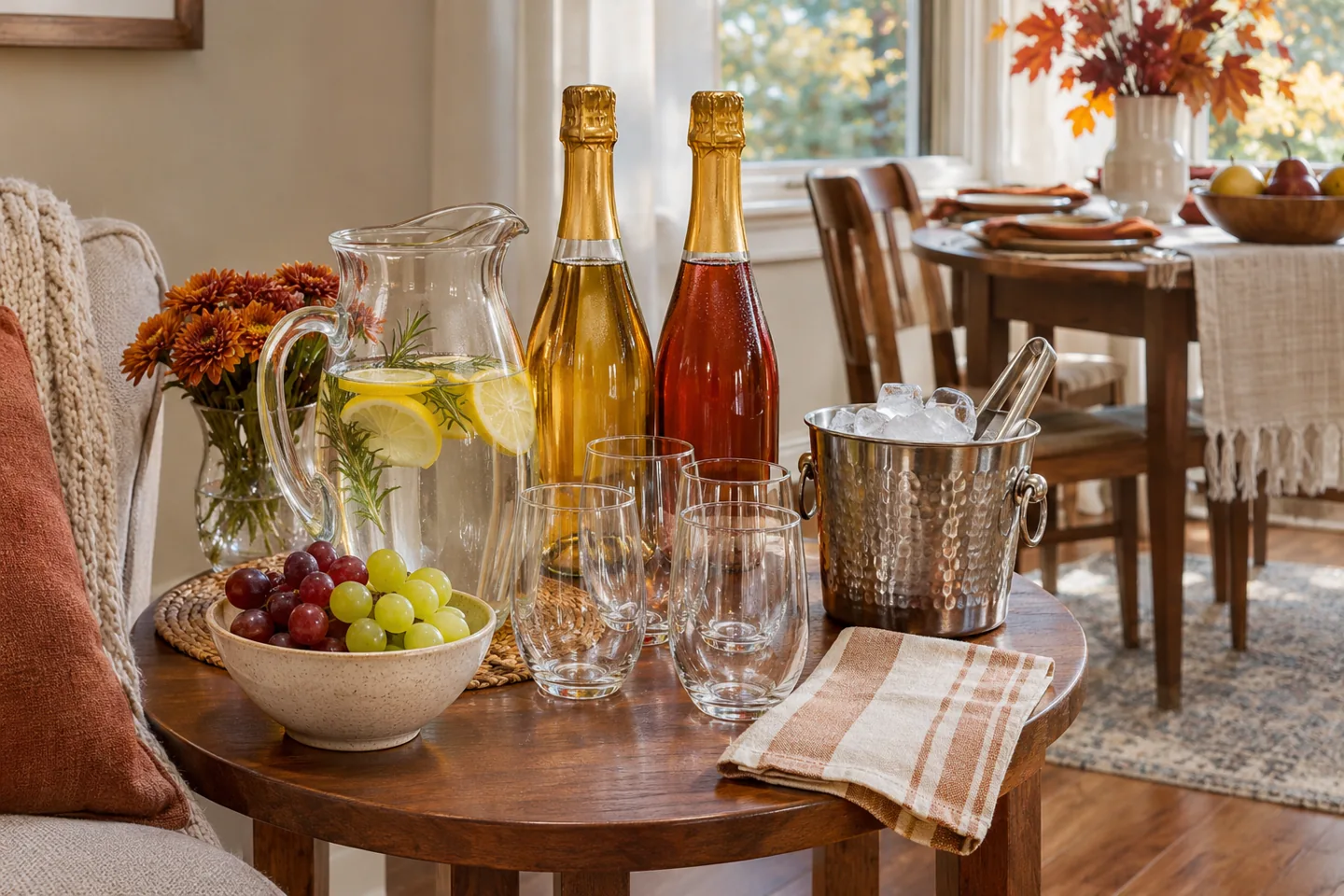
For a short dinner, about 3 liters of nonalcoholic beverages plus freely available water is a reasonable planning starting point. Increase that for a longer gathering or a group that prefers soft drinks. It is not a hydration target or a guarantee of what every group will consume.
Ask the drinks guest to bring beverages chilled when appropriate, along with ice if you have a place to store it. Sparkling cider, sparkling water, and a still option cover several preferences without requiring a cocktail station. Alcohol is optional and should never be the only interesting choice.
Use a side table or a separate counter section for drinks so a person refilling water does not block the food line. Keep an ice scoop or clean tongs available rather than having guests use their drinking glasses in the ice container.
If you are also working out the room arrangement, use our 19 Friendsgiving setup ideas for a small apartment to plan seating, the buffet, and the drinks station before guests arrive.
11. Make dietary changes before you divide the menu

Ask every guest about dietary restrictions and allergies before assigning dishes. It is much easier to choose suitable stock, bread, dressing, and a main-course alternative now than to improvise when dinner is ready. Ask what they can comfortably eat and how preparation needs to be handled.
| Need | A practical menu adjustment | What to verify |
|---|---|---|
| Vegetarian guest | Provide a substantial lentil-and-roasted-squash main portion; use suitable stock in shared sides. | Stock, gravy, stuffing, and any meat-based additions. |
| Dairy-free guest | Choose a compatible potato recipe and keep butter, cheese, and cream separate where feasible. | Bread, packaged stock, gravy, dessert, and ingredient labels. |
| Gluten-free guest | Plan suitable stuffing or another substantial side, and a compatible gravy and dessert. | Ingredients, utensils, preparation surfaces, and cross-contact needs. |
| Food allergy | Agree on a specific safe plan directly with the guest and each contributor. | Full ingredients and preparation; a small buffet label alone is insufficient. |
For one or two vegetarian diners, use a recipe yielding one or two complete main-course portions of the lentil-and-squash dish; a spoonful taken from a shared side is not enough. If everyone wants to try it, prepare additional portions. Reduce turkey only after confirming who will eat it.
Do not describe a homemade potluck dish as “allergy-safe” simply because it omits an ingredient. Keep packaging available, use separate utensils, and respect a guest’s preference to bring their own food. The host can still make that person feel included with a clearly planned place and a meal served at the same time.
12. Turn the menu into a shopping and budget checklist
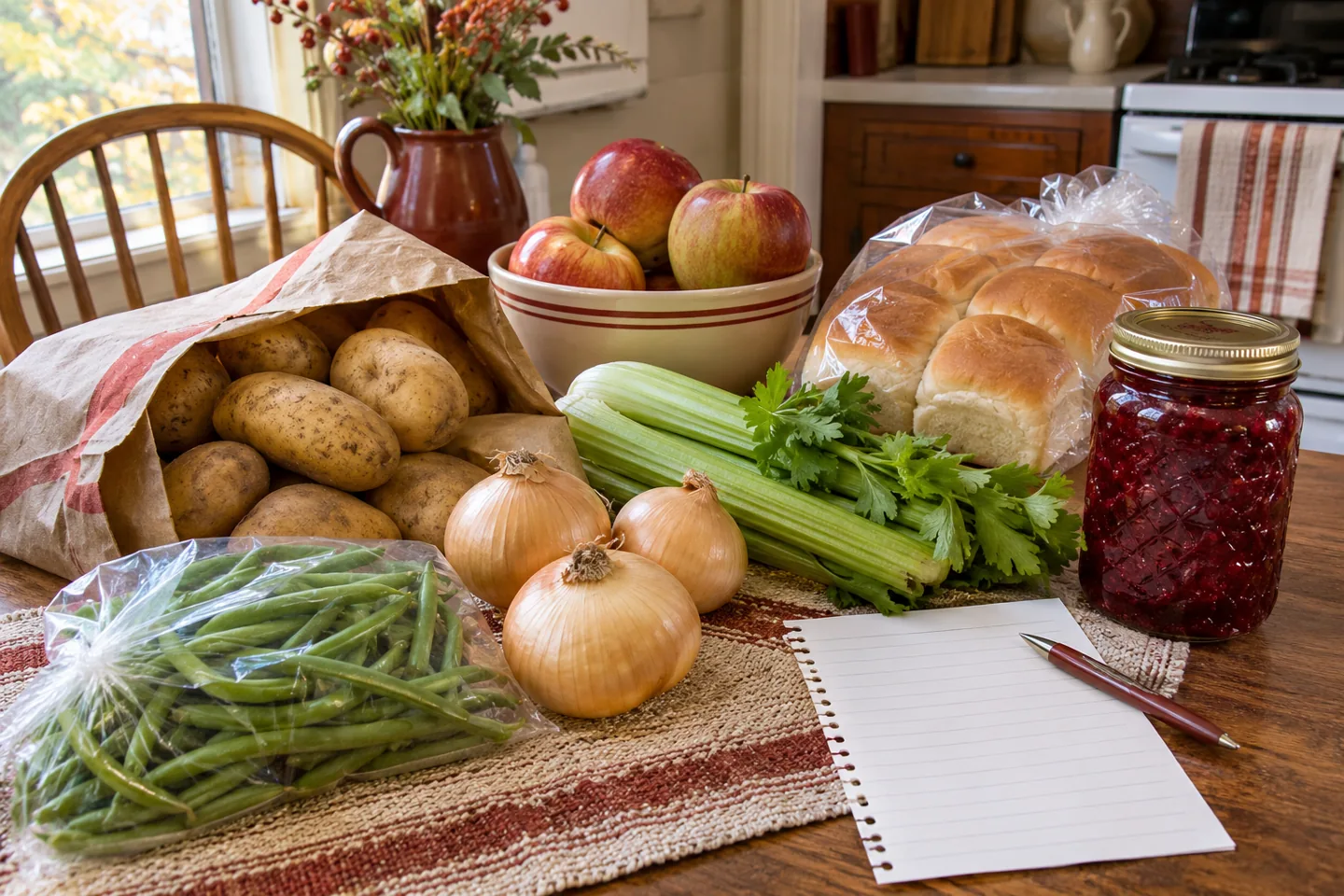
Each contributor buys ingredients for their own assignment, so send the quantity and serving expectations with the dish name. A shared list helps avoid duplicate purchases while leaving room for people to choose familiar recipes. The checklist below covers the core menu; recipe-specific seasonings and additions must be added by the cook.
- Host: 4–5 lb total raw boneless turkey breast, ingredients or product for 2–3 cups gravy, drinking water, thermometer, food-safe containers, and needed tableware.
- Potato guest: 3 lb potatoes plus the milk, butter, stock, or other additions required by the selected recipe.
- Stuffing guest: Ingredients for a recipe yielding 6 cups cooked stuffing; confirm the stock and any eggs or dairy.
- Vegetable guest: 2 lb green beans before trimming, plus recipe ingredients such as lemon and olive oil.
- Salad guest: Enough greens for 8–10 loosely packed cups, 2 apples, and dressing.
- Bread guest: 12 small rolls, a suitable spread, and 1½–2 cups prepared cranberry sauce.
- Dessert guest: One 9-inch pie or ingredients for an equivalent eight-portion dessert.
- Drinks guest: About 3 liters of agreed nonalcoholic drinks, plus ice if requested.
Ask people to check their pantry before buying large containers of ingredients for a single dish. If several recipes use stock or herbs, coordinate who already has them. Do not buy new serving dishes just because the plates do not match.
Set a comfortable contribution range together rather than claiming a fixed per-person price. Store prices, location, dietary substitutes, and whether people already own pantry staples all change the total. If the host’s main dish costs much more than the side assignments, discuss a shared contribution before shopping.
For larger appetites, increase the items people actually want: more cooked turkey, potatoes, or a second dessert. Doubling every side for eight diners usually creates more storage and reheating work than necessary.
13. Build the timeline around one oven and a 6 p.m. dinner

This schedule assumes dinner is served at 6:00 p.m. and guests arrive around 5:30. It is a coordination template, not a fixed turkey cooking timetable. Work backward from the specific turkey product and recipe, allowing time for cooking, temperature checks, any prescribed resting time, and carving.
| When | Host task | Guest task |
|---|---|---|
| 5–7 days before | Confirm eight diners, dietary needs, and the final menu. | Accept an assignment and state any equipment or reheating needs. |
| Several days before, as needed | Shop and begin refrigerator thawing according to the product’s size and instructions. | Choose a recipe with the agreed yield. |
| Day before | Clear refrigerator space, count tableware, and assign reheating slots. | Prepare only components suitable for making ahead; chill as required. |
| Dinner day, recipe-dependent | Start turkey early enough for a safe finish and carving before 6:00. | Prepare dishes and arrange safe hot or cold transport. |
| Before 5:30 | Finish table setup and prepare the buffet landing area. | Tell the host about delays before leaving. |
| 5:30–5:50 | Check arrivals, chill cold food, and execute prearranged reheating. | Identify ingredients and hand over serving utensils. |
| Around 6:00 | Serve once turkey and all hot dishes meet their required temperatures. | Help move dishes to the buffet without crowding the kitchen. |
| After dinner | Chill leftovers promptly and set out dessert. | Collect labeled containers and help with a small cleanup task. |
Do not promise every contributor the same final 20-minute oven slot. One casserole may need much longer to reheat thoroughly, and several cold dishes placed together change how quickly the oven recovers. If your plan depends on reheating, use known methods and assign enough time before dinner.
A working compromise is for the host to roast turkey, one guest to use the reserved oven slot for stuffing, and another to use a compatible stovetop or microwave method for potatoes. The beans can arrive safely hot for prompt service, while salad, rolls, and sauce need little finishing. Choose the exact arrangement with the cooks, not after they arrive.
If food is behind schedule, serve a small snack and delay dinner. The printed time never takes priority over cooking and reheating temperatures.
14. Agree on safe transport, reheating, and buffet service

Every contributor should tell the host whether their dish is arriving hot or cold. Use appropriate insulated carriers, ice packs, secure lids, and stable containers, but remember that insulation slows temperature change; it does not prove that food remains safe. Plan around travel, waiting, and buffet time together.
USDA reheating guidance says previously cooked and cooled food should reach 165°F. Use a suitable stovetop, oven, or microwave method and check the center. USDA advises against reheating leftovers in slow cookers or chafing dishes because they may warm too slowly. Gravy should be brought to a boil when reheating.
For holding food at the buffet, FDA guidance specifies 140°F or warmer for hot food and 40°F or colder for cold food. A warmer must actually maintain that temperature; check it rather than relying on the word “warm” on a switch.
Without safe temperature control, discard perishable food left out for more than two hours, or one hour above 90°F. Count time out during transport and preparation as well as on the table. Reheating is not a way to rescue food that has already been held unsafely.
Serve smaller amounts and replace dishes with clean, freshly filled ones rather than topping up old food. Keep a dedicated utensil with each dish and let guests take modest first portions so all eight people can try the menu before seconds.
15. Plan leftovers before everyone asks for a container

Put a few clean, shallow food-safe containers beside a clear packing area and make refrigerator space before dinner. A potluck for eight does not automatically produce eight leftover meals. Offer small portions after everyone has eaten, and keep the vegetarian or other special main portions available for the guests who need them.
USDA leftover guidance recommends prompt refrigeration, no more than two hours out of temperature control, and shallow containers for quicker cooling. The limit is one hour above 90°F. Refrigerate at 40°F or below, and use refrigerated leftovers within three to four days or freeze them for longer storage. Follow a product’s shorter storage instructions when applicable.
Label containers with the food and date. A guest with a long journey needs a way to keep perishable food cold on the trip home; an uncovered plate wrapped in a napkin is not a travel plan. If safe transport is not practical, keep the food refrigerated rather than sending it out simply to empty the kitchen.
Return borrowed serving dishes clean when possible, but do not delay chilling food to wash every casserole. Agree on a later return if needed. A small amount of organized cleanup now leaves you with usable leftovers instead of a counter full of dishes whose holding times nobody remembers.
Friendsgiving potluck questions
Does “for 8” include the host?
Yes. This plan is for eight adults total: one host plus seven guests. If you mean eight guests plus yourself, plan for nine diners and adjust portions before sending assignments.
What if a guest brings nothing?
Confirm contributions ahead of time and keep the meal realistic for your group. Someone may contribute through setup, cleanup, or another agreed task instead of food. If an essential dish falls through, choose a simple replacement rather than asking everyone to improvise at the last minute.
Can I replace turkey with a vegetarian main for everyone?
Yes. Choose a substantial main recipe that serves eight, such as a lentil-based bake or a hearty bean-and-squash dish, and adjust shared sides to suit the group. Turkey portions are not a direct weight conversion for vegetarian food, so use the new recipe’s main-course yield.
How do I keep the meal affordable?
Assign one contribution per person, use existing serving dishes, and skip duplicate casseroles, favors, and a large appetizer board. Agree on spending expectations before shopping. A purchased pie or a bag of rolls is a useful contribution when it fills a real place in the menu.
Should everyone bring enough of their dish for eight?
For the shared menu here, yes, but as side portions rather than eight standalone meals. The potatoes, stuffing, vegetables, salad, and bread all share the same plate. A dietary alternative may need fewer portions if only one or two people will eat it; confirm that separately.
What should I send in the group chat?
Send the dinner and arrival times, the final headcount, each assignment and quantity, parking or entry instructions, and a request for ingredient information and serving utensils. Ask people to flag refrigeration, reheating, and dietary issues privately before the day.
Once the assignments are confirmed, resist adding dishes just because another idea looks appealing. A coordinated meal with enough food, clear responsibilities, and space to sit together is the goal. For the room itself, pair this menu with our small-apartment Friendsgiving setup guide.