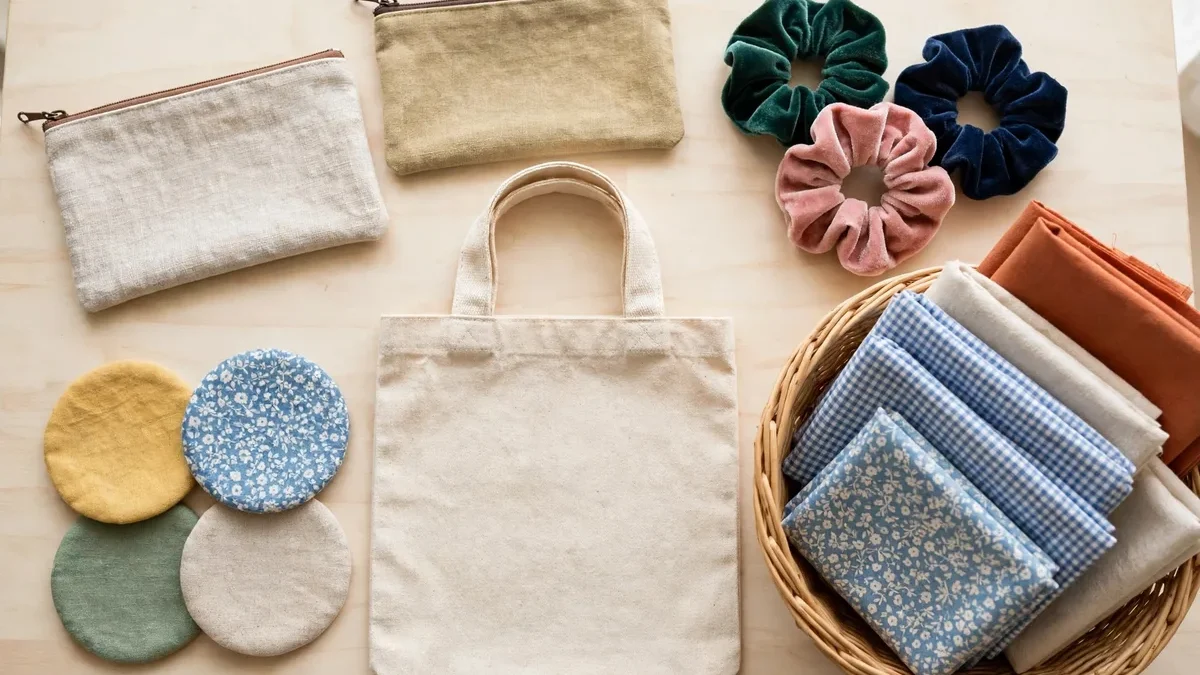
Sewing Projects to Make and Sell: 25 Ideas That Are Useful, Giftable, and Repeatable
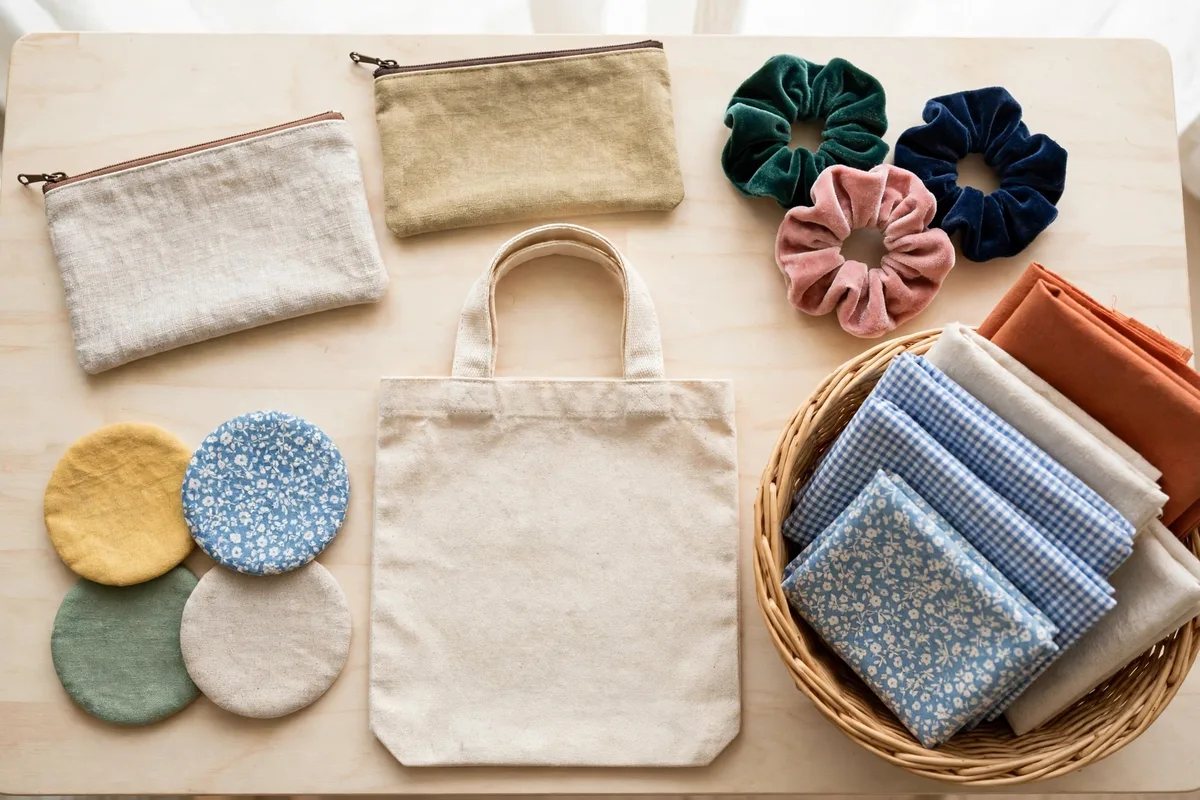
The best sewing projects to make and sell are rarely the most impressive ones. A bowl cozy, a zipper pouch, or a set of cloth napkins will usually outsell a complicated garment, because a buyer understands them in one glance. They know what the item is, who it is for, and why they would use it today. That is the whole secret, and it is good news for beginners: you do not need advanced skills to make something people want to buy. You need a useful item, neat sewing, and a plan for making it more than once.
This guide gives you 25 sewing projects to make and sell, grouped so you can pick a lane instead of trying everything at once. It also covers the parts most idea lists skip: how to choose your first few products, how to price them without guessing, where to sell them, how to sew in batches, and the safety and pattern rules to check before you list anything. There are no income promises here. Sewing can bring in extra money, but how much depends on your prices, your time, where you sell, and how consistently you show up. What this guide can do is help you start with products that give you a fair chance.
What Makes a Sewing Project Actually Sell?
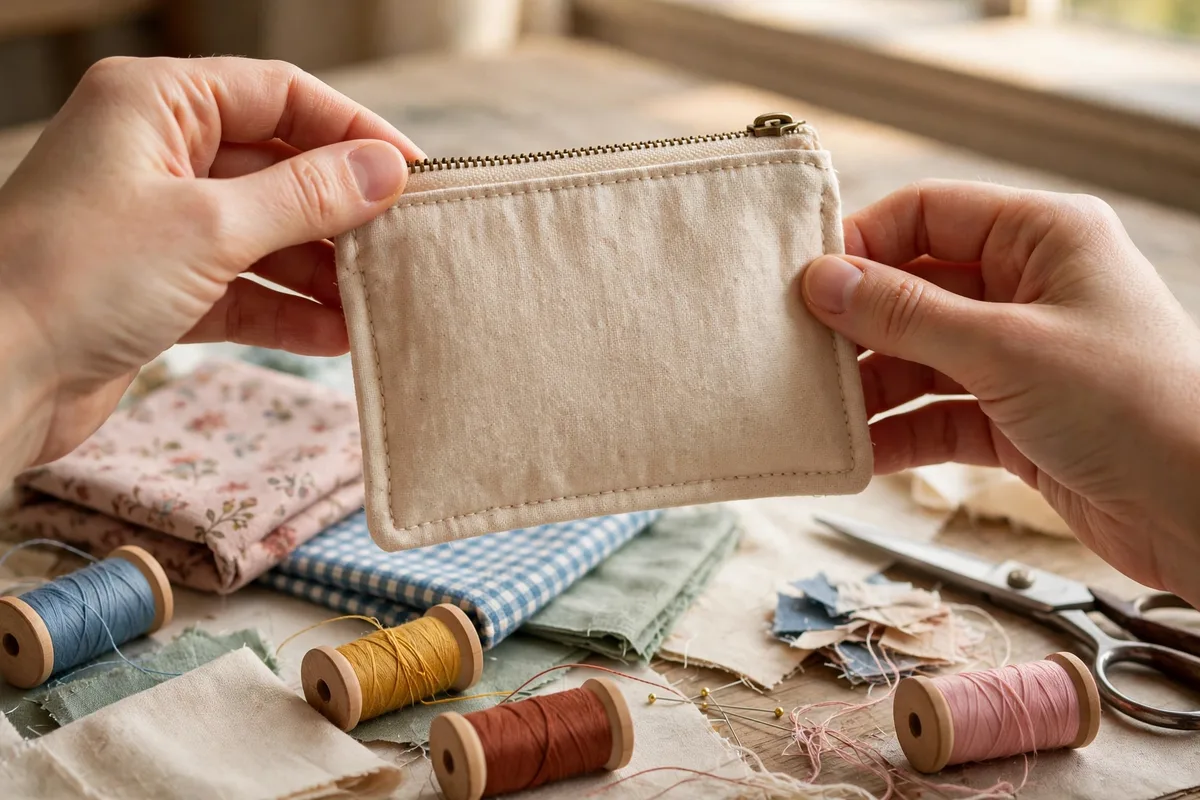
Before you cut a single piece of fabric, run every idea through four questions. If an idea passes all four, it is worth testing. If it fails two or more, put it aside for now.
Is it useful? A buyer should be able to picture using it the same day. A zipper pouch holds earbuds and lip balm. A bowl cozy protects hands from a hot bowl. A pet bandana goes on the dog before the next walk. Usefulness is what turns a pretty object into a purchase, because the buyer does not have to talk themselves into it.
Is it giftable? Many handmade purchases are gifts. Baby bibs go to baby showers, fabric gift bags wrap a present, lavender sachets tuck into a birthday card. If an item looks finished, feels pleasant to hold, and needs no explanation, it works as a gift. That matters even when the buyer keeps it for themselves, because giftable items photograph well and read as thoughtful.
Is it repeatable? You will make money, if you make any, by making the same good item many times, not by inventing a new one every evening. A scrunchie uses the same rectangle every time. A tote bag uses the same seams. Ask yourself: could I make ten of these in a week without dreading it? If the answer is no, the project may be a lovely hobby piece and a poor shop product.
Is it easy to ship and store? Small, flat, light items cost less to post, pack faster, and fit on a craft fair table in rows. That is why pouches, coasters, headbands, and napkins appear on almost every selling list. A large quilt can sell for more, but it takes more fabric, more time, more storage, and more postage. Neither is wrong. Just know the trade-off before you commit.
Keep those four questions beside you as you read the list below. The projects are grouped by type, and each one notes who buys it, what makes it sell, and one practical tip for making it well.
Start Here: Pick Your First 3–4 Products

The biggest mistake new sellers make is launching with twenty products. Twenty listings mean twenty fabrics to buy, twenty photos to take, and twenty sets of instructions to remember. A better start is three or four products that share fabric, skills, and buyers.
Try this: pick one group from the list below and choose three items inside it. If you love kitchen sewing, start with bowl cozies, cloth napkins, and pot holders. If you love small accessories, start with scrunchies, zipper pouches, and key fob wristlets. If you love baby gifts, start with bibs, burp cloths, and a small blanket. Each group shares customers, so one buyer can easily buy two items, and each group shares skills, so your sewing gets faster with every batch.
A useful trick is the one-fabric capsule. Buy two or three coordinating fabrics — for example, a floral, a stripe, and a solid that matches both — and make your whole first line from them. A zipper pouch in the floral, a scrunchie in the stripe, and a coaster set in the solid look like a collection, even though you only bought three fabrics. Shoppers notice a collection. It looks intentional, it photographs as a set, and it lets you offer a bundle without extra shopping.
Test before you invest. Make one of each product, use it yourself for a week, wash it the way a buyer would, and check the seams, the closure, and the fit. Then make five of your best seller and list those. Five finished items teach you more about selling than fifty ideas on a list.
25 Sewing Projects to Make and Sell
Quick Small Sellers
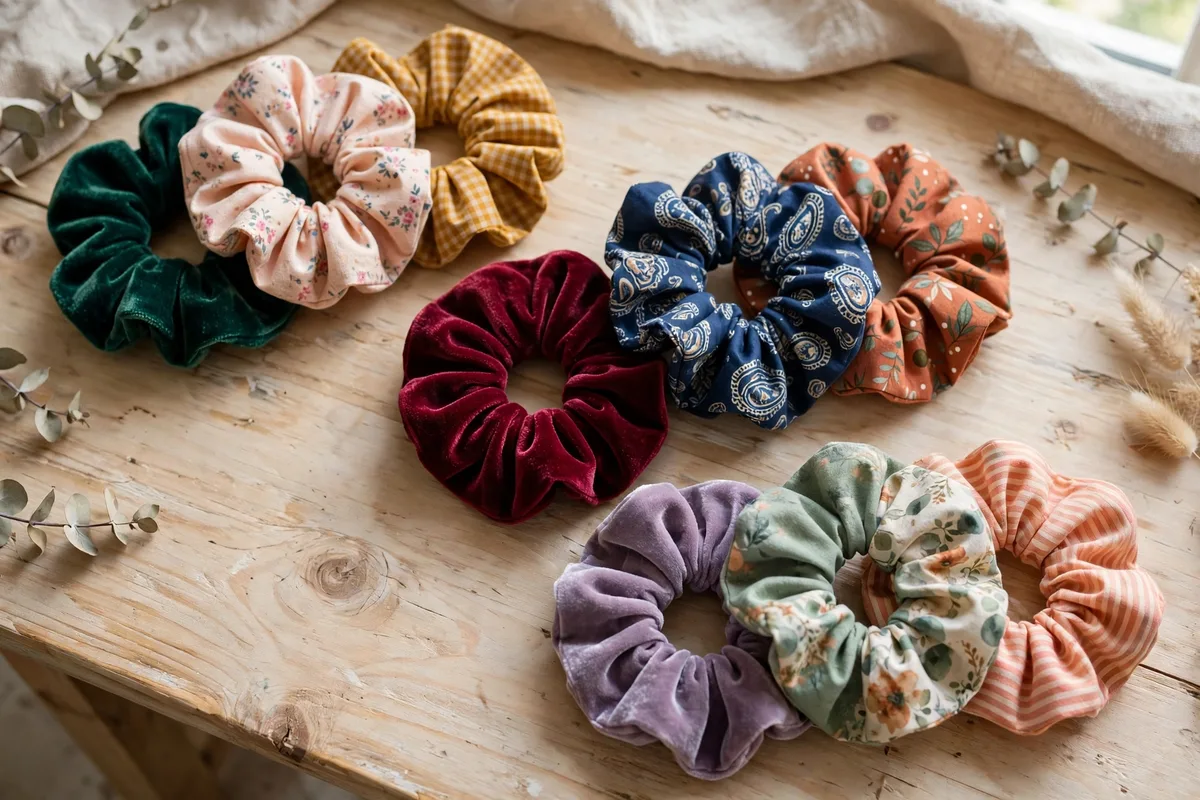
These are the fastest projects on the list. They use little fabric, sew up in one sitting, and work well as impulse buys, add-ons, and stocking fillers. Their price per item is modest, so they earn their place through volume and bundles, not through a single big sale.
1. Scrunchies
Scrunchies are the classic starter product for a reason. They need a strip of fabric, a short piece of elastic, and a straight seam, and most sewers finish one in about ten minutes once they have the rhythm. Buyers pick them up in sets of three or five, often to match an outfit or a season, and they lose them often enough to come back for more. Velvet, satin, and cotton prints all sell, but for different buyers: velvet reads as dressy, cotton prints read as everyday. Sell them in colour stories rather than one of everything, and offer a set price that is a little better than buying singles. A set feels like a small gift even when the buyer keeps it.
2. Zipper Pouches

A lined zipper pouch is the backbone of many small sewing shops. It holds makeup, pencils, cables, coins, or sewing notions, so almost every buyer already has a use for it. Zippers worry beginners, but a flat pouch is one of the gentlest ways to learn them: the shape is simple, the zipper is straight, and after two or three pouches the steps feel automatic. Offer three sizes if you can — a tiny coin pouch, a medium everyday pouch, and a larger one for pencils or cables — because buyers like choosing the size that fits their bag. A fun lining makes the inside feel considered, and a matching zipper pull is a small touch that makes the pouch look finished.
3. Key Fob Wristlets
A key fob wristlet is a short fabric loop with hardware at one end, and it solves a small daily annoyance: keys that sink to the bottom of a bag. It sews in minutes, uses scraps, and clips onto a bag or wrist so keys stay findable. Students, nurses, parents, and travellers all buy them, and they make excellent craft fair impulse buys because the price is low and the use is obvious. Make them in sets of three in coordinating prints, and place a few near the front of your table or at the top of your shop page. Strong stitching matters here more than decoration, because a wristlet is tugged every day. Test the hardware by pulling it firmly before you pack it.
4. Fabric Coasters

Fabric coasters protect a table and add colour to it, and a set of four tied with ribbon is already a gift. They are flat, light, and easy to post, and they use scraps that would otherwise go to waste. Quilted coasters feel sturdier and look more finished than a single layer, so add a layer of batting or a second fabric if you can. Round corners are easier to turn neatly than sharp square corners, and topstitching around the edge keeps the layers from shifting in the wash. Seasonal sets sell well — autumn leaves, snowy plaids, bright summer stripes — and a coaster set pairs naturally with a mug cozy as a gift bundle.
5. Fabric Bookmarks
Readers, students, and teachers all use bookmarks, and a slim fabric bookmark with a ribbon tail feels more personal than a paper one. Cut a narrow rectangle, add light interfacing if you want a little stiffness, sew around the edge leaving a gap for turning, then turn it right side out and topstitch. The skill to practise is the corners: trim them before turning so they sit sharp. Keep the bookmark slim, because a thick bookmark strains a book spine. Themed sets sell best — garden prints for gardeners, cat prints for cat lovers, plain linen with an embroidered initial for a gift — and neat stitching counts, because buyers look closely at small items.
6. Lavender Sachets
A lavender sachet is a small fabric pouch filled with dried lavender, tucked into a drawer, a wardrobe, or a gift box. It sells because it appeals to more than one sense: it looks pretty, feels soft, and smells calm. The sewing is simple — a small rectangle or square, sewn and filled — so this is a good project for using the smallest scraps. Use a tightly woven fabric so the filling stays inside, and stitch the opening closed firmly. Sell sachets in sets of three, and be honest on the label about what is inside and how long the scent usually lasts. They also make a natural add-on to a larger order, which is a gentle way to raise the value of each sale without pushing.
Kitchen and Home
Kitchen and home items are steady sellers because they are used every day and replaced often. They also photograph well on a real table, which helps online buyers picture them at home. Washability matters more here than anywhere else, so choose fabrics that survive the laundry and say so in your listing.
7. Bowl Cozies

A bowl cozy is a padded, darted fabric bowl that sits under a hot bowl of soup or porridge so hands stay comfortable. It is one of the most reliable kitchen sellers, especially in autumn and winter, and it is reversible, so each one shows off two prints. The sewing is straightforward once you have a pattern you trust, and the same pattern in different sizes covers soup bowls, cereal bowls, and small dessert bowls. Use only batting and fabric that the maker rates as suitable for microwave use if you describe the cozy as microwave-safe, and give clear care instructions. Sell them in pairs or sets of four, because families rarely need just one.
8. Mug Cozies and Coffee Sleeves
A mug cozy keeps a drink warm a little longer and gives hands something soft to hold, and a coffee sleeve does the same job for a takeaway cup. Both are quick, flat, and light, which keeps postage low. The shape is simple, so you can offer many fabric choices and let buyers pick a favourite. Teachers, coworkers, tea lovers, and people who work from home are all natural buyers. Add a button or a small loop closure that fits snugly, and check that the cozy slides on and off easily. A mug cozy plus a set of coasters makes a ready-made gift that needs no extra wrapping.
9. Cloth Napkins

Cloth napkins feel nicer at the table than paper ones, cost less over time, and look good at any meal. The sewing is four neat sides, with mitred corners if you want them to look sharp, and a yard of fabric usually gives four or five napkins. Cotton and linen blends wash well and iron quickly, which is what buyers care about most. Tie four or six together with twine, and offer seasonal sets: reds and greens in December, soft pastels in spring, warm checks in autumn. A short care note on a little tag helps the buyer feel confident, and once someone buys one set, they often come back for another season.
10. Pot Holders and Oven Mitts

Pot holders are small quilts for the kitchen: layers of cotton with heat-resistant batting, quilted in a grid or diagonal lines, and bound around the edges. They teach cutting layers accurately, quilting straight lines, and sewing on binding, and a set of four sews up faster than most beginners expect. Oven mitts take a little more care because of the curved shape, but one good pattern solves that, and insulated batting inside with tight stitching around the thumb is what makes a mitt worth buying. Always say which batting you used, so buyers know the heat protection is real, and test your own mitts before you sell them. Sell pot holders in pairs with a matching tea towel and you have a housewarming bundle.
11. Table Runners and Placemats
A table runner is a long rectangle with a nice edge, and a placemat is its smaller cousin. Both are easy sewing — two layers, sewn right sides together, turned, and topstitched — and both change the look of a table in seconds. Reversible placemats are a smart trick, because one side can be calm and the other bold, giving the buyer two looks for the price of one. Offer runners in a couple of lengths, since tables vary, and photograph them on a real table with a plate and a candle, because that is what shoppers picture at home. Seasonal designs do well here, and a set of four placemats with a matching runner is a natural higher-value listing.
12. Fabric Storage Baskets
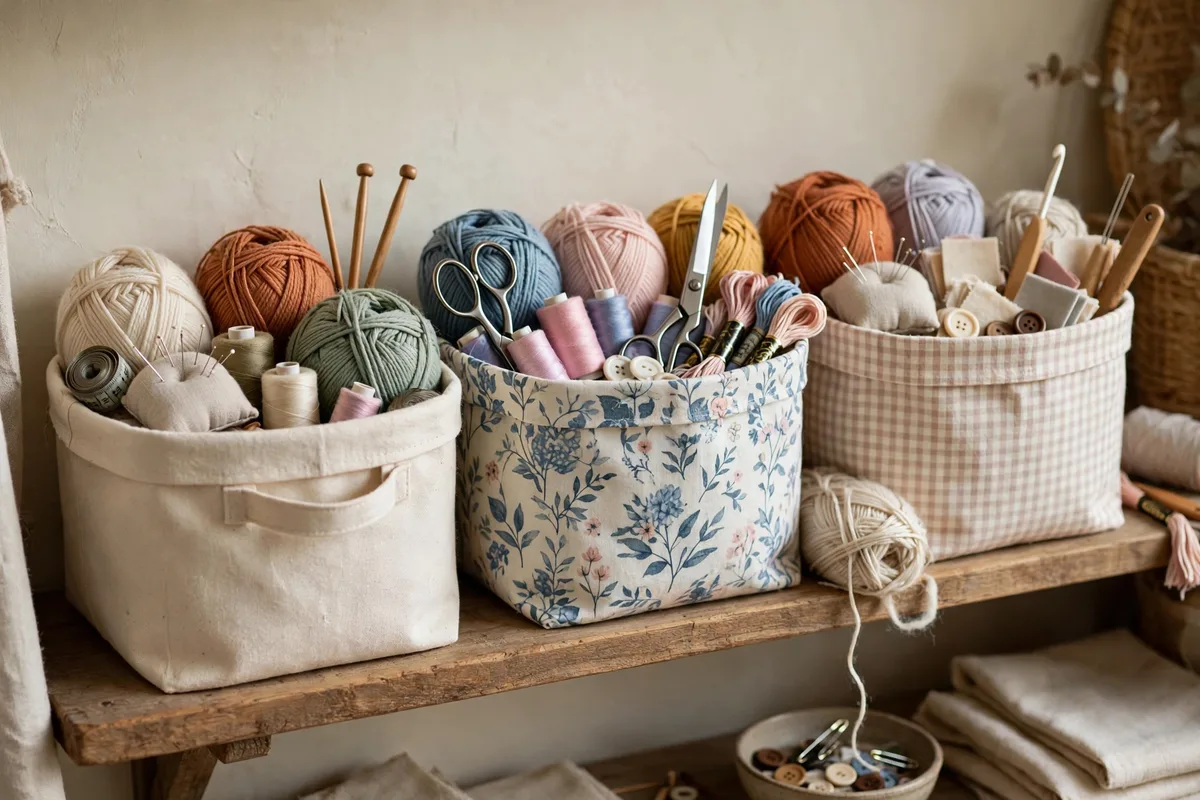
Fabric baskets hold yarn, toys, remote controls, plants, or sewing supplies, and they look tidier than a plastic box. They are basically a lined tube with a base, and once you have the size right, the same pattern repeats easily. Sturdy cotton or canvas holds its shape best, and a contrasting lining makes the basket feel finished. Offer two or three sizes, because buyers often want a small one for a desk and a larger one for a shelf. Fold the basket flat for posting if the fabric allows it, and show a photo of the basket in use, full of ordinary things, so buyers can judge the size at a glance.
Bags and Pouches
Bags carry the highest price per item on this list, because buyers can see and feel the work in them. They also take more fabric and more time, so start with small bags and work up to larger ones only when your seams and linings are reliable.
13. Tote Bags

Tote bags are used for groceries, work, school, and beach trips, so there is always someone who needs one. They use simple straight seams, and a confident sewer can finish one in under an hour. Scrap fabric and leftover pieces work well, which keeps costs low, and a sturdy strap with an inside pocket lets you charge a little more. Pick one fabric style and stick with it for your first line — bold prints, or soft neutrals — because buyers love a bag that looks like it belongs to a set. Reinforce the strap stitching with a small box of stitches, since straps carry the weight, and photograph the bag holding real things so buyers can see how much it fits.
14. Makeup Bags

A makeup bag needs one thing above all: a lining that cleans easily. Use a wipeable fabric inside, such as coated cotton, so a spill wipes off with a damp cloth. A boxy bottom, made by sewing little corners, gives the bag room to stand up on its own, and it sounds fancier than it is — it is one extra seam. Photograph the bag with a few real products tucked inside so buyers can picture their own things in it, and offer a set of two, one big and one small, as an easy upsell. These make lovely birthday and bridesmaid gifts, and a small embroidered initial adds a personal touch without much extra work.
15. Drawstring Gift Bags
Reusable fabric gift bags combine gift wrap and gift in one, which makes them easy to sell before holidays and birthdays. They are a simple tube with a cord or ribbon casing, so they sew up fast and use little fabric. Offer them in a few sizes — small for jewellery, medium for books and candles, large for clothing — and in seasonal prints as well as plain colours. Buyers who want to use less disposable wrapping paper are steady customers for these, and they often buy five or ten at a time. Tie a set with ribbon and add a small tag noting the size, so the buyer can choose without guessing.
16. Crossbody and Small Shoulder Bags
A small zippered crossbody is the most ambitious bag on this list, and the one to attempt after your pouches are selling well. It needs a zipper, a lining, a strap, and neat topstitching, but it also commands a higher price, because it reads as a bought product rather than a craft project. Start with one pattern, make it three times for yourself and friends, and only list it when the zipper sits flat and the strap feels secure. Offer it in two or three fabrics at first, and be clear about the size: list the width, height, and what fits inside, such as a phone, keys, and a card wallet. One well-made bag design, repeated in good fabrics, is worth more to a small shop than five half-finished bag ideas.
Baby and Kids
Baby items sell year-round because baby showers happen in every season, and grandparents and friends are always looking for a gift that feels personal. They also carry the strictest safety expectations, so read the safety section below before you list anything for babies or young children.
17. Baby Bibs
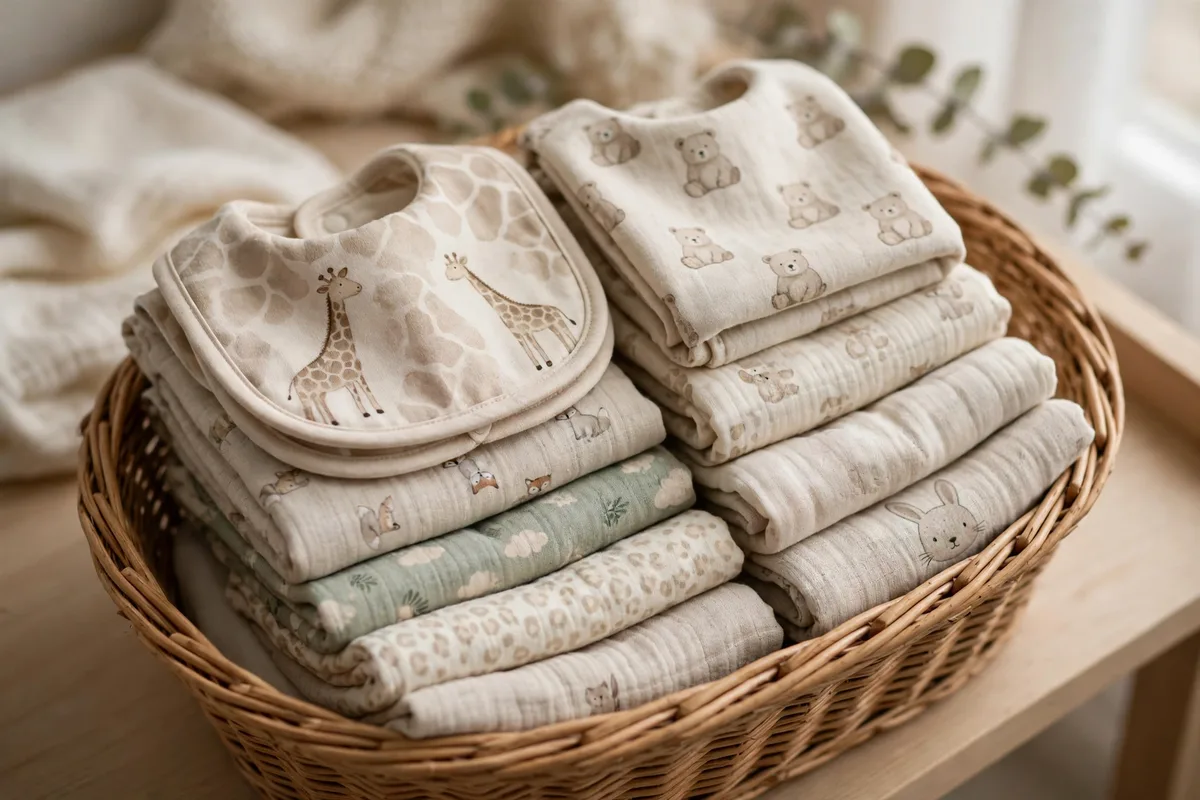
Baby bibs are small, which means they use almost no fabric, and they sell best in bundles of two or three in matching or mix-and-match prints. A cotton front with a terry cloth back and a snap or hook-and-loop closure is all the parts you need, and once you have a pattern you like, one bib sews up in about fifteen minutes. Soft neutral prints and gentle animal designs sell well to baby shower guests, and adding a baby's name to one bib in a set is a simple personalisation that buyers value. Tuck each set into a clear bag so buyers can see the prints, and wash the fabric first, then say so in your listing, since parents care about that.
18. Burp Cloths
New parents go through burp cloths faster than they expect, so having several on hand is normal, and that steady need is what makes them sell. Pair a soft flannel top with an absorbent cotton back, stitch around the edge, and turn it: the shape is a rectangle, and the sewing could hardly be simpler. Wrap three or four together with a ribbon, because that is how baby gifts are usually bought, and choose gentle prints that suit a nursery. Burp cloths pair naturally with bibs, so offering a bib-and-cloth set gives gift buyers one less decision to make.
19. Baby Blankets and Loveys

A soft, well-made baby blanket is a gift people remember, because babies drag blankets everywhere and parents often keep one for years. Two layers of soft cotton or flannel, stitched with a smooth edge, is all it takes, and a square or rectangle keeps the sewing simple. Flannel and minky are cosy, but test your machine on a scrap first, since minky likes to slide. Mention the size in your listing, because parents want to know whether it fits a stroller or a crib, and photograph the blanket folded in a basket or draped over a crib rail so buyers can picture it at home. A smaller lovey version, a soft square with a toy attached, uses less fabric and works well as an add-on to a blanket gift.
20. Baby Hats and Headbands for Little Ones
Baby hats are tiny, soft, and quick, and they take so little fabric that you can try different prints without worrying about waste. Make a few sizes to cover newborns through older babies, keep the seams smooth, and choose gentle, comfortable fabric, since a baby's skin is sensitive. A hat photographs beautifully, which helps if you share your work online, and buyers who find one they like often come back for the next baby shower. Soft knotted headbands for little ones follow the same idea: one long rectangle of soft knit, a knot or twist, and a snug elastic back. Keep decorations minimal for babies, and check every seam by hand before packing.
Pets, Wearables, and Accessories
Pet owners are loyal buyers, and they buy for holidays, birthdays, and photos as well as everyday use. Wearable accessories follow the same logic: small, visible, and easy to gift.
21. Pet Bandanas
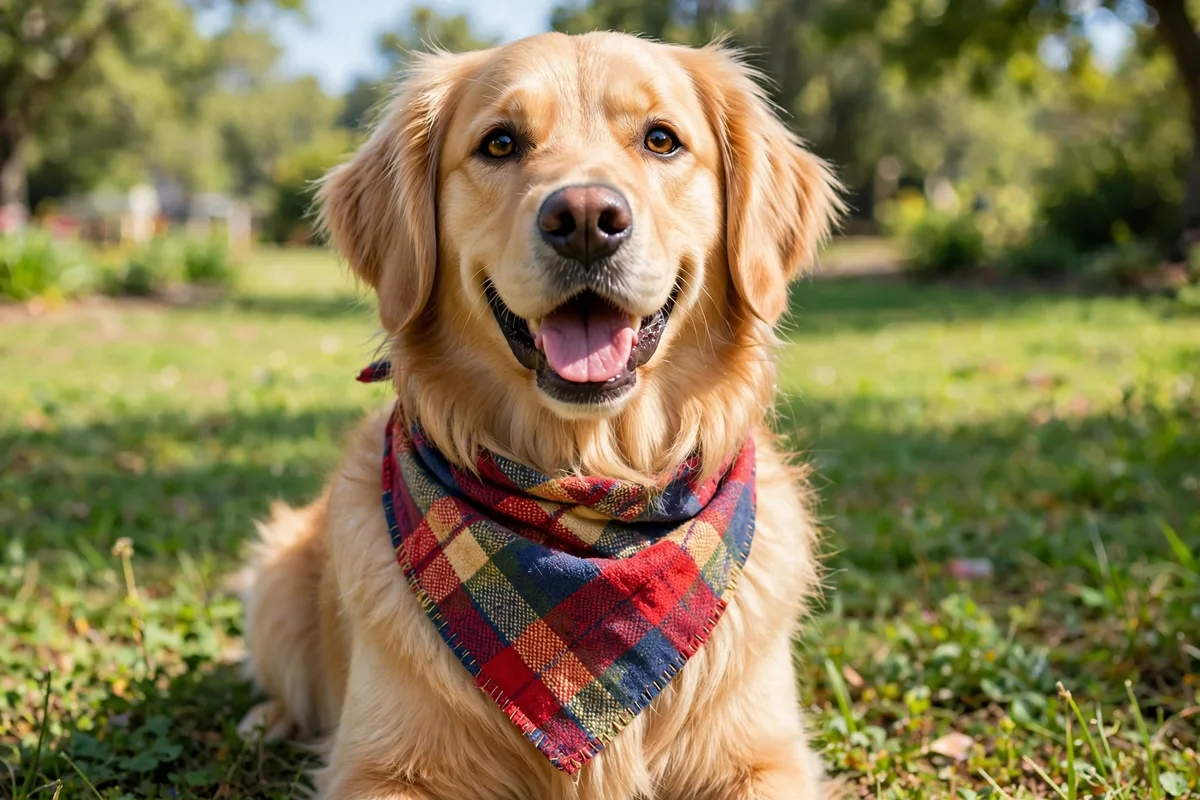
Pet bandanas are a small-fabric, big-smile item. Dog owners buy them for holidays, birthdays, and photos, and they come back for the next season's print. The shape is a triangle with a folded edge or a slip-on style that threads onto a collar, and the sewing is a few straight seams. Offer sizes for small, medium, and large dogs, and say clearly how each size is measured, because a bandana that is too small will not sell twice. Holiday prints — autumn leaves, snowflakes, spring florals — give people a reason to buy again, and a matching bandana for the owner, such as a scrunchie in the same print, makes a charming set for photos.
22. Fabric Headbands for Adults

Good headbands are hard to find: they slip, they pinch, or they look dull after a week. If yours stays put and looks nice, buyers notice right away. Knotted, twisted, and wide styles all come from one long rectangle of fabric, with a bit of elastic at the back to keep them snug. You can cut and sew a few in the time it takes to drink a cup of tea, and the small scraps from bigger projects are just enough. Put each one on a small card so it looks like a real shop item, mention the fabric on the card, and try seasonal prints — florals in spring, plaids in autumn — so buyers have a reason to return.
23. Sleep Masks and Eye Masks
A sleep mask is a small, curved piece of fabric with soft padding and an elastic strap, and it sells to travellers, shift workers, and anyone who wants a better night's sleep. The sewing is gentle: two layers, a little batting, and a strap that sits comfortably without pressing. Offer them in calming colours and fun prints, and pair a mask with a small lavender sachet as a sleep gift set. Fit matters here, so make the strap adjustable if you can, and test the mask yourself in a dark room before you list it. A mask that lets in light at the nose will not earn a second order.
Gifts and Seasonal
Seasonal sewing rewards planning. The buyers are shopping with a deadline — Christmas, a birthday, a baby shower — and they are less likely to hesitate than a casual browser. The trade-off is timing: you need stock ready weeks before the date, not on the day.
24. Fabric Gift Bags, Ornaments, and Stocking Fillers
Felt Christmas ornaments, small fabric hearts, and mini drawstring bags are charming hand-sewing projects that work well in themed sets. Felt ornaments need no hemming, so they are forgiving for beginners, and a set of six in one colour story feels like a complete gift. Fabric hearts can become ornaments, garlands, or gift tags, and they use the smallest scraps. The key is to make them in sets and to list them early: Christmas stock should be ready by late autumn, and Valentine's and Mother's Day stock should be ready weeks ahead. A set of ornaments with a gift bag in the same print is a ready-made present that a buyer can give without extra wrapping.
25. Aprons
An apron is one of the most useful things you can sew and sell, and it suits cooks, bakers, gardeners, and crafters. A simple full apron needs a body piece, a waistband, ties, and a pocket or two, and the sewing stays flat and forgiving. Offer a few styles — a half apron for quick kitchen jobs, a full apron for baking, a cross-back apron for people who dislike neck ties — and say clearly who each style suits. Seasonal prints sell well, and a matching oven mitt or pot holder turns a single apron into a kitchen gift set. Choose fabric that washes well and holds its colour, because an apron is washed more often than almost anything else on this list.
Quick Small Sellers vs Higher-Priced Pieces: What to Make First
Small items and bigger pieces serve different jobs in a shop, and most healthy small shops carry both. The table below is a summary; the detail is in the paragraphs that follow.
Small sellers — scrunchies, coasters, key fobs, bookmarks, sachets — cost little in fabric, sew in minutes, post in a padded envelope, and sell in sets. Their weakness is the price per item: you need volume, bundles, and repeat buyers to make the time worthwhile. They are the best place to start, because they let you practise listing, photographing, packing, and talking to buyers without much fabric at risk.
Higher-priced pieces — tote bags, crossbody bags, table runners, aprons, baby blankets, fabric baskets — cost more in fabric and time, need more storage, and cost more to post. Their strength is the value of each sale: one bag can be worth ten scrunchies, and a buyer who loves a bag is more likely to remember your shop. They are the best place to grow, once your small sellers are running smoothly and you know which fabrics and sizes your buyers prefer.
A practical mix for a beginner is three small sellers and one higher-priced piece. The small items bring in orders and reviews, the bigger piece raises the average order, and the bundle — a tote bag with a matching pouch, or an apron with a pot holder — gives buyers a reason to buy both. Do not add a second big piece until the first one sells steadily. A shop with four good products beats a shop with twenty half-finished ones.
How to Price Sewing Projects Without Guessing
Pricing is where many new sellers quietly lose money, usually by forgetting to count their time. A simple formula keeps you honest: materials plus your time plus selling costs, then compare the result with similar handmade items.
Start with materials. Add up the fabric, thread, zipper, elastic, batting, interfacing, and packaging for one item. If you bought fabric by the yard, work out the cost per item from the yardage you actually used. Keep a small notebook or spreadsheet for this, because guessing from memory is how costs creep up unnoticed. Buying fabric on sale helps, but price from the usual cost, not the sale cost, so a restock does not wipe out your margin.
Next, add your time. Decide on an hourly rate you are happy with — even a modest one — and multiply it by the time the item takes, including cutting, sewing, pressing, photographing, and packing. If a pouch takes thirty minutes and your rate is modest, that time is a real cost, and leaving it out means you are paying yourself nothing. Timing yourself on three items and taking the middle time is more honest than timing your fastest ever make.
Then add selling costs. A craft fair charges a booth fee, an online marketplace charges listing and payment fees, and postage and packaging cost money whether the buyer pays for shipping or you offer it included. Check the current fee schedule for the platform you use, because fees change, and build them into the price rather than discovering them after a sale.
Finally, compare. Look at similar handmade items in your area or on the platform you use, and check whether your price sits in a sensible range. If your price is far below everyone else's, you are probably undercharging for your time. If it is far above, you need a clear reason — better fabric, a lining, personalisation, a gift set — and you need to show that reason in your photos and description.
Sets and bundles help pricing work in your favour. A set of three scrunchies, a set of four napkins, or a pouch-and-coaster gift set lets you offer a small saving on the bundle while raising the total order. Buyers like a set because it feels like a deal and a gift at once. Personalisation — an initial, a name, a chosen fabric — also supports a higher price, because it takes extra time and cannot be bought off a shelf.
Do not copy another seller's prices without doing your own sums. Their fabric, their time, and their fees are different from yours. And do not promise yourself, or your buyers, a particular income. Some months will be quiet, some will be busy around holidays, and a fair price is one that covers your costs and pays you something for your hours, not one that guarantees a result.
Where to Sell: Etsy, Craft Fairs, Local Shops, and Your Own Shop
Where you sell changes what you make, how you price, and how much time you spend on tasks other than sewing. There is no single best place, and many sellers use two channels at once.
Online marketplaces such as Etsy give you buyers who are already searching for handmade items, and they handle payment and some of the shop setup for you. The trade-off is fees, competition, and the work of writing listings, taking photos, and answering messages. Small, light items that post in a padded envelope suit online selling best, and clear photos with a plain background matter more than a clever shop name. Read the platform's current rules and fee schedule before you list, and check what it requires for children's items and for items that go in a microwave.
Craft fairs and markets let buyers touch your work, which is a real advantage for fabric items. People pick up a pouch, feel the lining, and buy on the spot. The trade-off is the booth fee, the time spent setting up and standing at a table, and the fact that a rainy day can mean a quiet day. Small, colourful items at a range of prices do well at fairs, because browsers buy an impulse item and gift buyers buy a set. Bring a card reader or a simple way to take card payments, and bring a small sign that says what each item is for, because a table of unnamed fabric objects is easy to walk past.
Local shops and consignment mean a shop owner displays your work and takes a share of each sale. The advantage is that you do not have to stand at a table or manage an online shop. The trade-off is the share the shop keeps, and the need to keep stock topped up. Ask how the share works, when you are paid, and who handles a return, before you leave stock behind. Start with a small range and a clear written agreement, even with a shop you know well.
Your own website or social media shop gives you the most control over prices and presentation, and no marketplace fees on each sale. The trade-off is that you have to bring your own buyers, which takes time and consistent posting. This route suits sellers who already have an audience, or who are happy to build one slowly through photos, short videos, and word of mouth. If you go this way, keep the shop simple: a few products, clear prices, clear postage, and a way for buyers to contact you.
Whichever channel you choose, keep good records from the first sale: what sold, for how much, what it cost to make, and what the fees were. Those records are what turn a hobby that sometimes earns money into a small business you can actually plan around.
Batch Sewing: How to Make 10 Without Burning Out
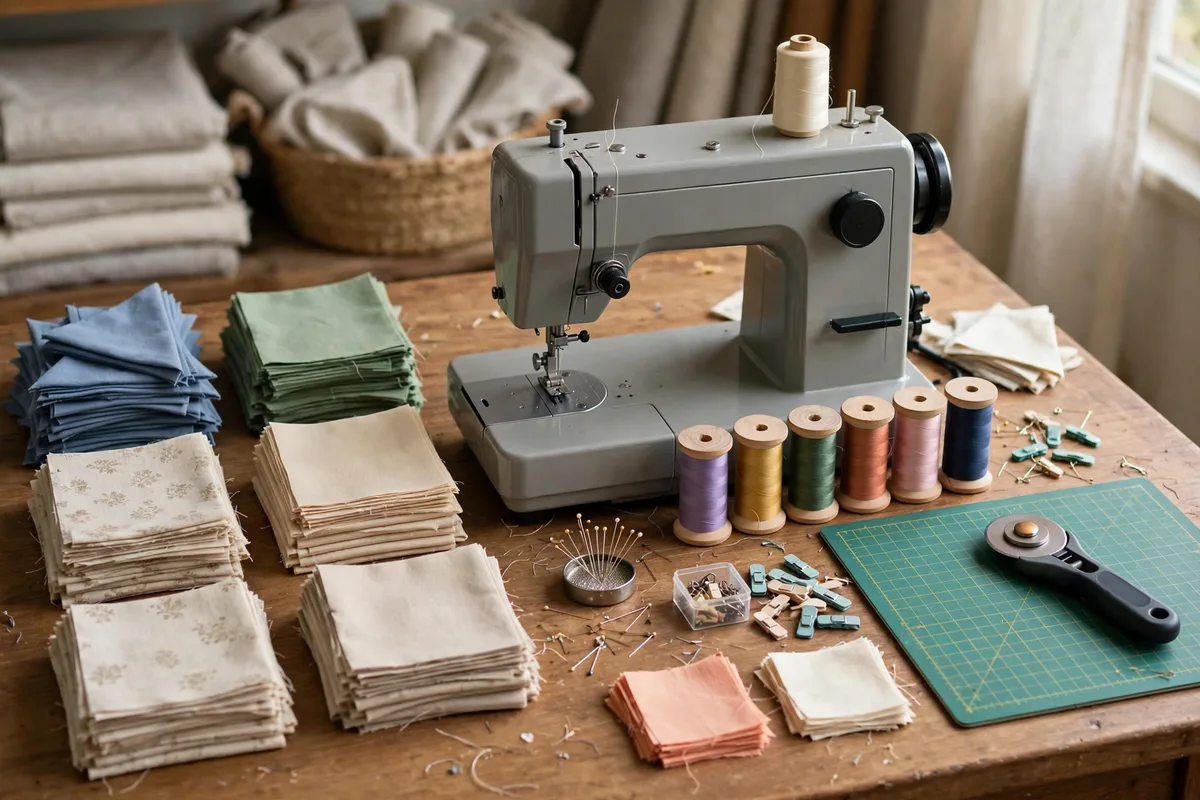
Batch sewing means making many of the same item in one session, assembly-line style, instead of finishing one item completely before starting the next. It is the single biggest time saver for a small sewing shop, and it works for almost every project on this list.
Cut first, all at once. Lay out your fabric, cut ten pouches or ten scrunchies in one go, and stack the pieces in piles: fronts, linings, elastics, zippers. Cutting is a different kind of work from sewing, and switching between the two slows you down. A rotary cutter and a clear ruler help, but even with scissors, cutting in a batch is faster than cutting one at a time.
Then sew in steps, not in items. Sew all ten outer seams, then all ten linings, then all ten zippers, then all ten turnings. Chain piecing — sewing one piece straight after another without cutting the thread between them — saves time and thread. Press as you go in batches too: press all ten seams, then move on. Keep a small basket beside your machine for finished pieces, so you can see progress and stay motivated.
Keep your workspace honest. A batch of ten should fit on one table. If you are drowning in fabric, the batch is too big. Ten is a good batch size for most small items; five is a good batch size for bags and aprons. Take a short break between steps, stretch, and check your seam allowance on a scrap before you start the next step. A batch of ten with a wrong seam is ten items to unpick, so check early and check often.
Label as you finish. A small tag with the fabric, the size, and the care instructions, written while the item is still in your hand, saves a sorting job later. Pack finished items in sets where you sell them in sets, so a buyer who orders a set of four napkins gets four that match, not four pulled from different piles.
Fabric, Patterns, and Supplies: Buying Smart
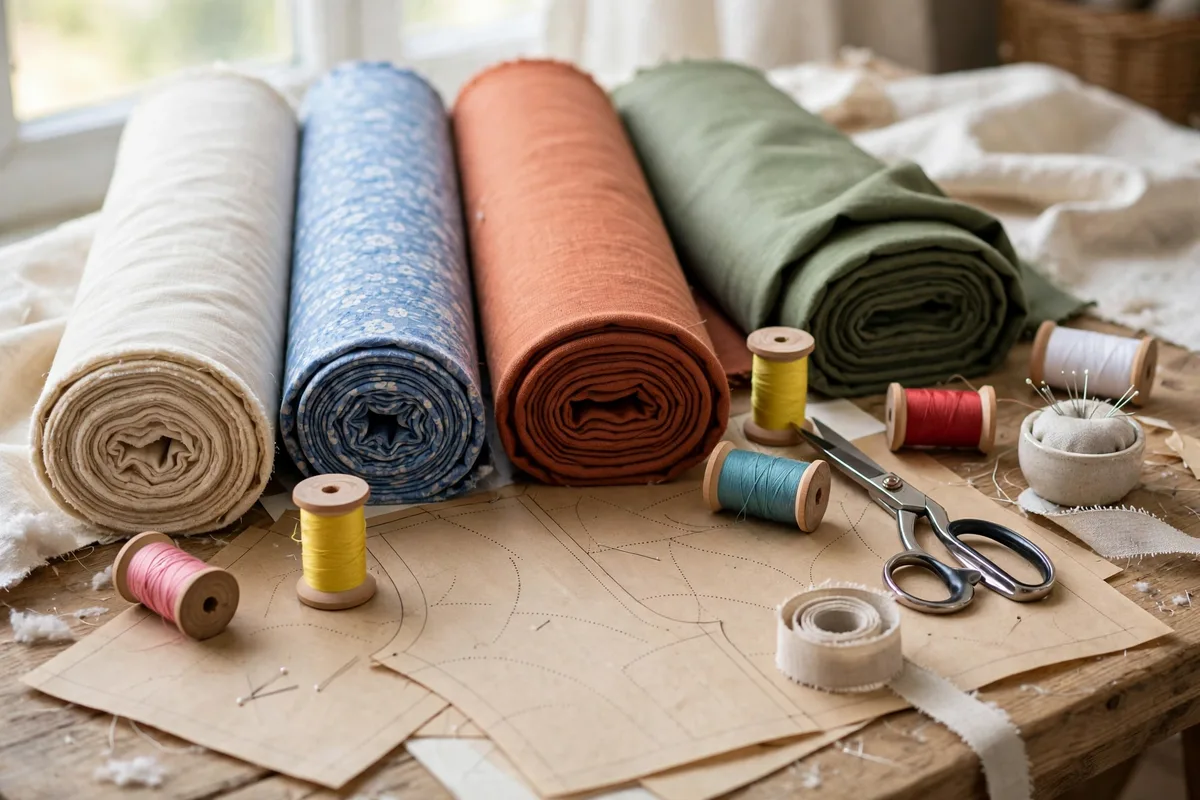
Fabric is your biggest material cost, so buying it well matters more than buying a lot of it. Start with fabrics you already own. Many sellers begin by sewing from a stash, and scrap projects — scrunchies, coasters, sachets, key fobs — exist precisely to use up pieces too small for a larger make. Sewing from your stash also tells you which fabrics you enjoy working with before you spend money on more.
When you buy, buy for a product, not for a feeling. Choose a fabric because it suits a pouch lining, a napkin, or a tote bag, and buy enough for a batch of ten, not a single item. Cotton and cotton blends suit most projects on this list: they wash well, press well, and come in endless prints. Canvas and heavier cotton suit tote bags and baskets. Knits suit headbands and baby hats, but they need a ballpoint needle and a stretch stitch, so practise on scraps first. Flannel suits burp cloths and blankets. Wipeable coated cotton suits makeup bag linings.
Check the pattern licence before you sell anything made from a pattern. Some patterns are for personal use only, and some allow selling finished items, sometimes with a limit on how many, or with a credit to the designer. The licence is usually printed on the pattern or on the designer's website. If you cannot find it, ask the designer before you list. The same care applies to fabric prints with characters or logos: a licensed character print is usually for personal use, not for items you sell. When in doubt, choose a plain or independent-designer print and keep the receipt and the licence note with your records.
Buy notions in small bulk for the items you repeat: zippers in the sizes you use most, elastic by the roll, thread in neutral colours, and interfacing by the yard. A tidy notions box saves more time than a fancy machine. And keep a swatch card — a small piece of each fabric with its name, its cost per yard, and what you made from it — so you can reorder the right fabric when a product sells well.
Safety and Rules to Know Before You Sell
Handmade does not mean unregulated, and three areas deserve care before you list anything: microwave items, children's items, and pattern licences.
Microwave items. Popcorn bags, potato bags, bowl cozies, and heating pads are heated in a microwave, so the materials matter more than the stitching. Never assume ordinary cotton fabric or everyday thread is microwave-safe. Use only fabric, batting, thread, and trims that the maker clearly rates as suitable for microwave use, follow each maker's instructions, and test your design yourself before you list it. Add clear written instructions covering heating, handling hot items, washing, and when to retire the item. If you cannot confirm that every part is suitable, leave the project off your list. A buyer who heats food in your product is trusting you with more than a purchase.
Baby and children's items. Bibs, hats, blankets, pacifier clips, and bean bags are used by babies and young children, so safety comes first. Use hardware made for the purpose, stitch every attachment very firmly, keep straps short, and skip beads, buttons, and loose decorations on items for babies. Wash fabric before sewing where parents would expect it, and say so in your listing. Look up the safety rules for children's products where you sell — in the United States, that includes the CPSIA rules for children's products — and follow them. If a rule is unclear, choose a simpler design or a different product. A beautiful baby item that is not safe is not a product.
Patterns, prints, and honesty. Check the commercial-use licence for every pattern you use, as noted above, and do not sell items made from licensed character fabric unless the licence allows it. Be honest in your listings about what an item is made from, what size it fits, and how to wash it. If a pot holder is decorative rather than heat-proof, say so. If a bag is not machine washable, say so. Clear, honest listings build the reviews and repeat buyers that a small shop depends on.
Photos and Listings That Help People Buy

A buyer online cannot touch your work, so your photos and words have to do the touching for them. You do not need a studio. You need daylight, a plain background, and photos that answer the buyer's questions.
Take at least four photos of each product: the item on its own against a plain background, the item in use — a pouch holding real things, a napkin on a table, a bandana on a dog — a close-up of the stitching, lining, or closure, and a photo that shows the size, such as the item beside a common object or held in a hand. Natural daylight near a window is kinder than a flash, and a plain sheet or a piece of card makes a better background than a busy table. Photograph sets as a set, and photograph the packaging if you wrap gifts nicely, because buyers notice presentation.
Write the listing the way a buyer thinks. Start with what the item is and who it is for, then the size, the fabric, the lining, and how to wash it. Say what is included — one pouch, or a set of four napkins — and say what fits inside a bag or pouch. Mention the colours honestly, and note that handmade items can vary slightly in print placement. Answer the question the buyer is already asking: will this fit my phone, my table, my dog, my baby? If you offer personalisation, say how it works and how long it takes.
Keep the title simple and searchable, using the words a buyer would type, such as "cotton zipper pouch" or "reversible cloth napkins set of 4". Avoid stuffing the title with every possible keyword; a clear title that a person can read is better than a long string of search terms. And keep the price visible and the postage clear, so a buyer does not have to guess the total cost.
Gift Sets and Seasonal Selling
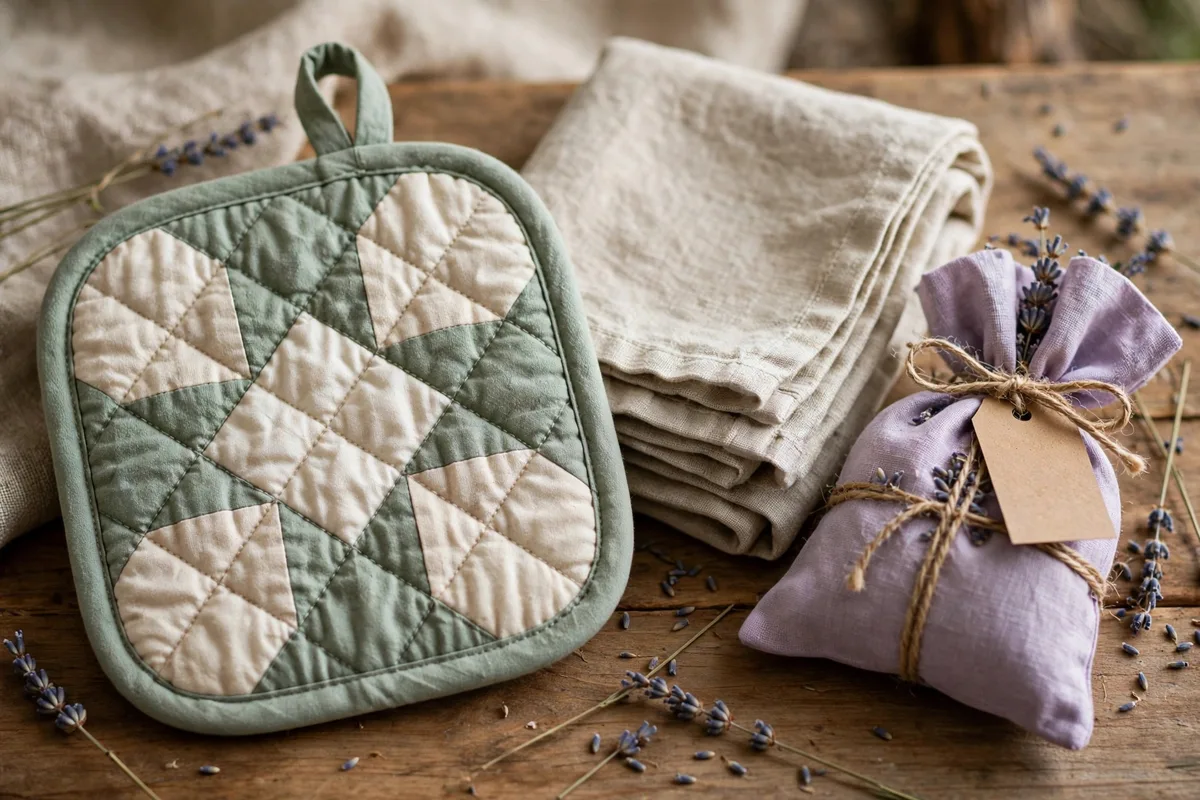
Gift sets turn single items into ready-made presents, and they are one of the easiest ways to raise the value of an order. The formula is simple: one main item, one small item, and one finishing touch, all in coordinating fabrics.
Try a kitchen gift set: a pot holder, a tea towel, and a lavender sachet, tied with twine. Or a baby gift set: a bib, a burp cloth, and a small blanket, folded in a clear bag with a ribbon. Or a self-care set: a sleep mask, a lavender sachet, and a small zipper pouch. Or a pet gift set: a bandana and a small treat pouch in the same print. Each set should look intentional, with fabrics that match and a tag that says what is inside. Price the set as a bundle — a little less than buying each piece separately, but more than a single item — and photograph it as a set, because the photo is what sells the gift.
A handmade gift also deserves a thoughtful note, and that is where a few kind words matter as much as the sewing. If you are giving a sewn gift to someone you love, pairing it with a short handwritten message makes it feel personal rather than merely bought. For a partner, a few sincere lines can carry the gift further than any wrapping — you can borrow ideas from heart-touching love messages for him or good morning love messages for him and rewrite them in your own words for the card. Keep the note short, specific, and in your own voice; a borrowed line is a starting point, not a script.
Seasonal selling rewards planning. Make Christmas stock in late autumn, Valentine's and Mother's Day stock weeks ahead, and baby shower gifts all year round. Watch which prints sell in which season, and keep a note of it for next year. A seller who remembers that autumn plaids sold well in October will not be guessing in September. And after a busy season, rest: a tired sewer makes mistakes, and a short break is part of running a small shop well.
What Not to Sew First (and What to Sew Instead)
Not every sewing project makes a good first product, and knowing what to skip saves fabric, time, and disappointment.
Do not start with fitted clothing. A dress or a shirt needs accurate sizing, fitting, and finishing, and a buyer who orders the wrong size will return it. Sew a simple elastic-waist skirt or a loose top for yourself first, and sell accessories and home items while your garment skills grow. If clothing is your dream, start with items that are forgiving on size, such as a simple apron or a loose scarf, and add fitted pieces later.
Do not start with microwave items unless you have verified every material. As noted above, the safety homework is real, and a mistake here is not a small one. Start with a bowl cozy that you describe honestly as a table cozy rather than a microwave item, or choose a different kitchen project, such as napkins or pot holders made with heat-resistant batting you can name.
Do not start with baby items that need hardware or small parts. A pacifier clip with a weak clip, or a bean bag with a burst seam, is a safety problem. Start with soft, simple baby items — a blanket, a burp cloth, a bib with a snap you have tested many times — and add hardware items only when you are confident in your stitching and your supplier.
Do not start with a product that needs a fabric you have never sewn. Minky slides, velvet marks, and knits stretch, and each one needs practice. Start with cotton, which is forgiving, and add one new fabric at a time, practising on scraps first.
Instead, start with the projects in the first three groups of this list: a pouch, a scrunchie, a coaster set, a napkin set. They are forgiving, they teach the skills you need, and they let you learn selling while the stakes are low. When those sell, add one bigger piece. That is how a small shop grows without burning out its maker.
Your First Month: A Simple Plan
A plan turns a list of ideas into a shop. Here is a simple first month, in four weeks, that you can adapt to your own time.
Week 1: Choose and test. Pick three products from one group. Make one of each, use it, wash it, and fix what needs fixing. Work out the materials cost and the time for each one, and decide on a price using the formula above. Check the pattern licence for each product, and check the safety rules if any product is for babies or for the microwave.
Week 2: Make a small batch. Sew five of your best product and three each of the other two. Photograph them in daylight, write the listings, and set up your selling channel, whether that is an online shop, a market stall, or a local shop. Keep the listings simple and honest, and ask a friend to read one listing and tell you what is unclear.
Week 3: List and share. List your products, share a photo with friends and on any social account you use, and tell people what you sell and who it is for. Answer messages promptly and politely, pack orders carefully, and include a small thank-you note and care instructions with each order. Note what sells first and what questions buyers ask.
Week 4: Review and repeat. Look at your records: what sold, what did not, what took longer than expected, and what buyers asked for. Make more of what sold, fix or drop what did not, and plan your next batch. If a fabric sold out, reorder it. If a size was wrong, adjust the pattern. Then repeat the month, adding one new product only when the first three are running smoothly.
That is the whole approach: start small, make well, price honestly, and learn from each batch. Sewing projects to make and sell do not need to be complicated to be worth buying. They need to be useful, giftable, repeatable, and made with care. Pick your three, sew your first batch, and let your buyers tell you what to make next.
Frequently Asked Questions
What sewing projects sell best for beginners?
Small, useful items sell best for beginners: scrunchies, zipper pouches, fabric coasters, cloth napkins, key fob wristlets, and mug cozies. They use little fabric, sew up quickly, are easy to photograph and post, and let you practise selling without much cost if a design does not work. Start with three or four, not twenty.
What is the easiest thing to sew and sell?
A scrunchie is often the easiest thing to sew and sell, because it needs a strip of fabric, a piece of elastic, and a straight seam. Cloth napkins and fabric coasters are close behind, because they are flat rectangles with neat edges. Easy does not mean careless, though: neat seams, even topstitching, and a clean finish are what turn an easy project into a product someone will pay for.
How do I price my sewing projects?
Add up the materials for one item, add your time at an hourly rate you are happy with, add selling costs such as platform fees and postage, then compare the total with similar handmade items. Offer sets and bundles where you can, and charge a little more for personalisation. Do not copy another seller's price without doing your own sums, and do not leave your time out of the calculation.
Where is the best place to sell sewing projects?
It depends on what you make and how you like to work. Online marketplaces suit small, light items that post easily. Craft fairs suit colourful, touchable items and gift buyers. Local shops suit sellers who prefer not to manage an online shop. Your own website suits sellers who already have an audience. Many sellers use two channels, such as an online shop plus a monthly market, and let each one bring in different buyers.
Do I need a pattern licence to sell what I sew?
Check the licence for every pattern you use. Some patterns allow you to sell finished items, some allow it with a limit or with credit to the designer, and some are for personal use only. The same care applies to licensed character fabric, which is usually for personal use. If you cannot find the licence, ask the designer before you list the item.
What should I avoid sewing to sell as a beginner?
Avoid fitted clothing, microwave items made with unverified materials, and baby items with hardware or small parts until you are confident in your sizing, your materials, and your stitching. Start with forgiving cotton projects such as pouches, napkins, coasters, and scrunchies, and add more demanding projects one at a time as your skills grow.