Living in a small space doesn’t mean living with visual chaos. In fact, some of the calmest, most beautiful interiors are found in compact rooms. The key isn’t size it’s how the space is designed, styled, and experienced. A crowded feeling often comes from too many visual interruptions, poor lighting, or heavy furniture choices rather than lack of square footage.
This guide will show you how to transform a small room into a calm, breathable, and visually open space using smart design principles that actually work.
1. Start With Visual Quiet, Not Minimalism
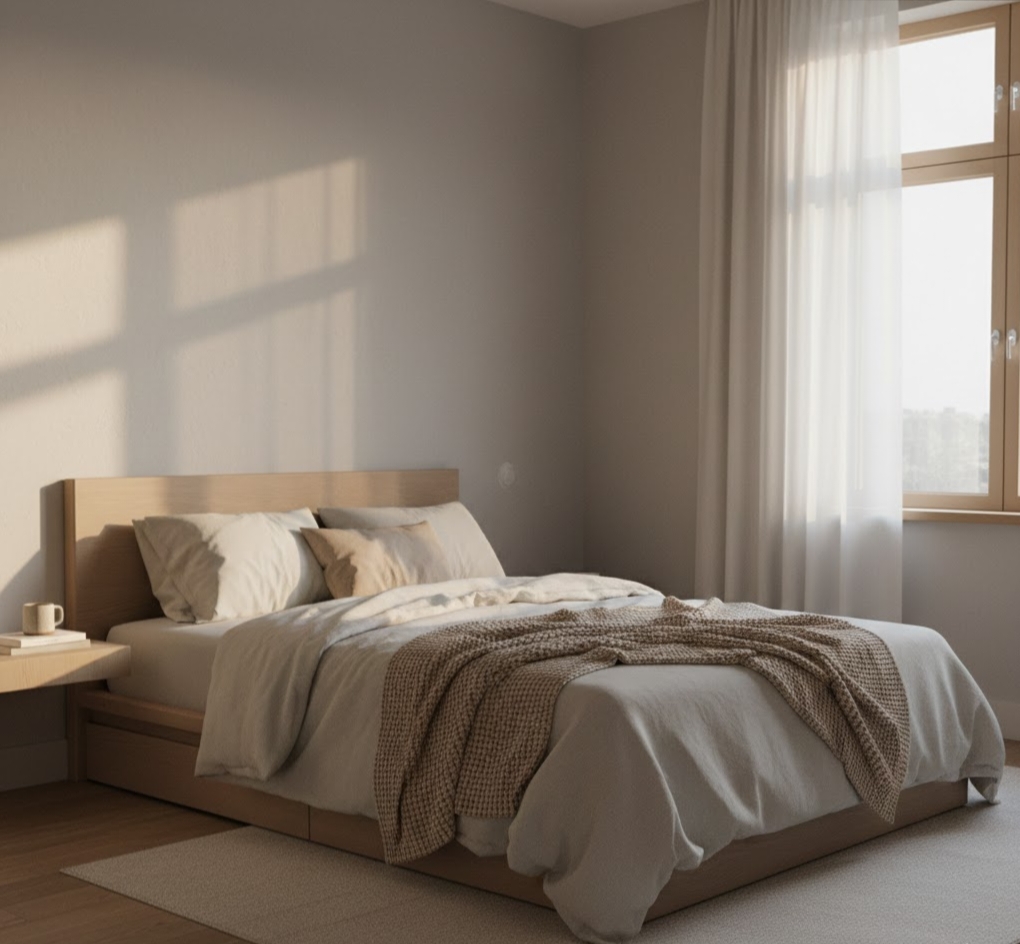
Calm rooms aren’t empty they’re visually quiet. This means reducing sharp contrasts, busy patterns, and unnecessary decor.
Instead of filling every wall or corner, allow certain areas to stay intentionally empty. Negative space gives the eye a place to rest, making the room feel instantly more spacious.
Tip:
Choose decor with soft shapes, subtle textures, and gentle finishes rather than bold prints or high-contrast designs. If you’re sharing your interior ideas online, tools like an AI Ad Generator can help turn these calming design concepts into clean, minimal promotional visuals that match the same peaceful aesthetic.

2. Choose a Soft, Unified Color Palette
Color has the strongest psychological impact in small spaces. Too many colors create visual noise, while a unified palette creates flow.
Best colors for calm small rooms:
- Warm whites
- Soft beige
- Light greige
- Muted sage
- Pale clay or blush
Stick to one main color and two supporting tones. Use them across walls, furniture, textiles, and decor to avoid visual breaks.
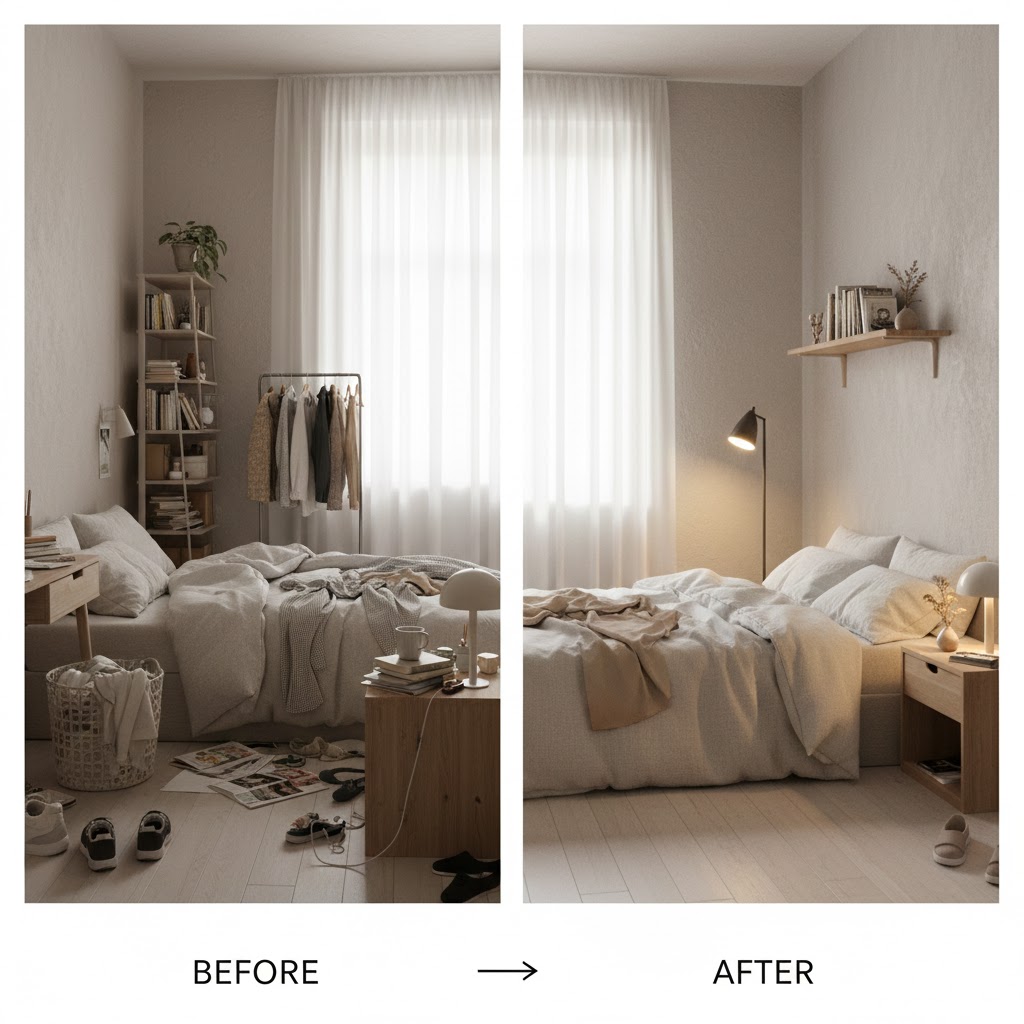
3. Let Light Do the Heavy Lifting
Poor lighting makes small rooms feel boxed in. Layered lighting, on the other hand, creates depth and softness.
Use:
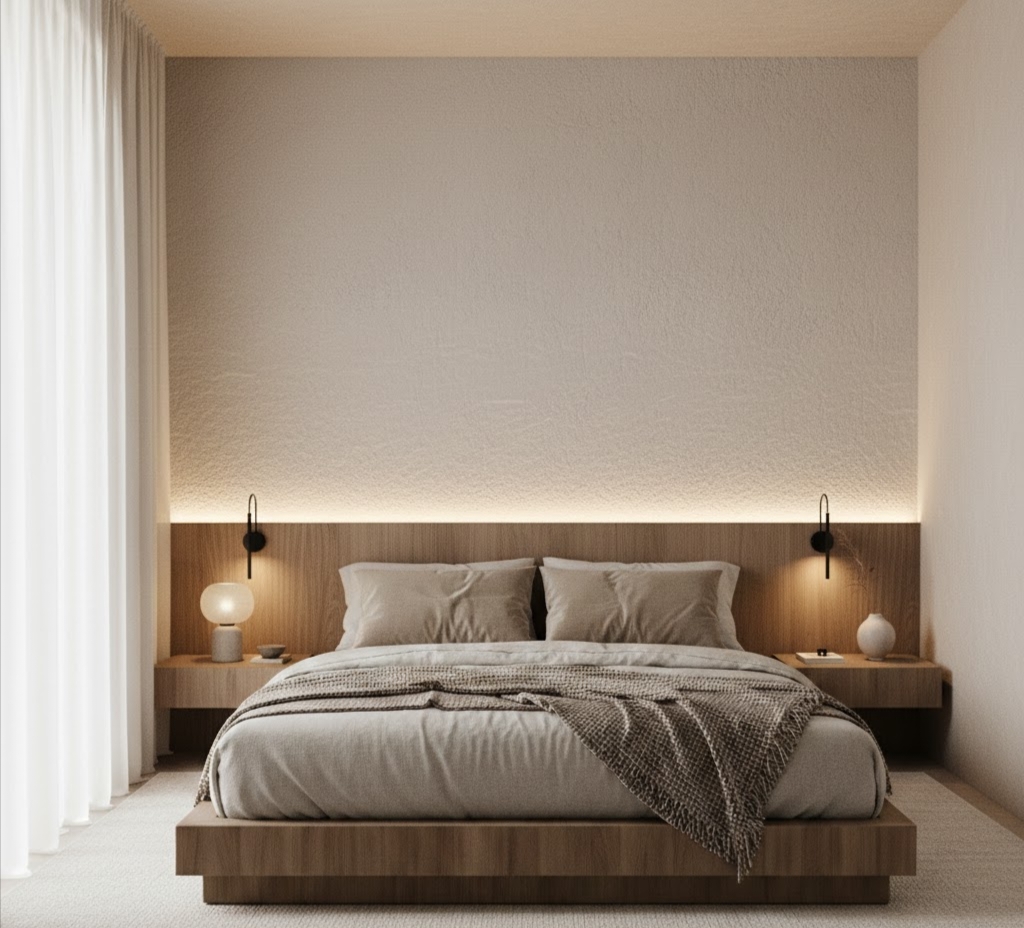
- Warm ambient lighting (not harsh white)
- Wall sconces instead of bulky lamps
- LED strips behind beds, shelves, or mirrors
- Sheer curtains to maximize natural daylight
Avoid a single overhead light it flattens the room and exaggerates shadows.
4. Scale Furniture to the Room (Not the Trend)
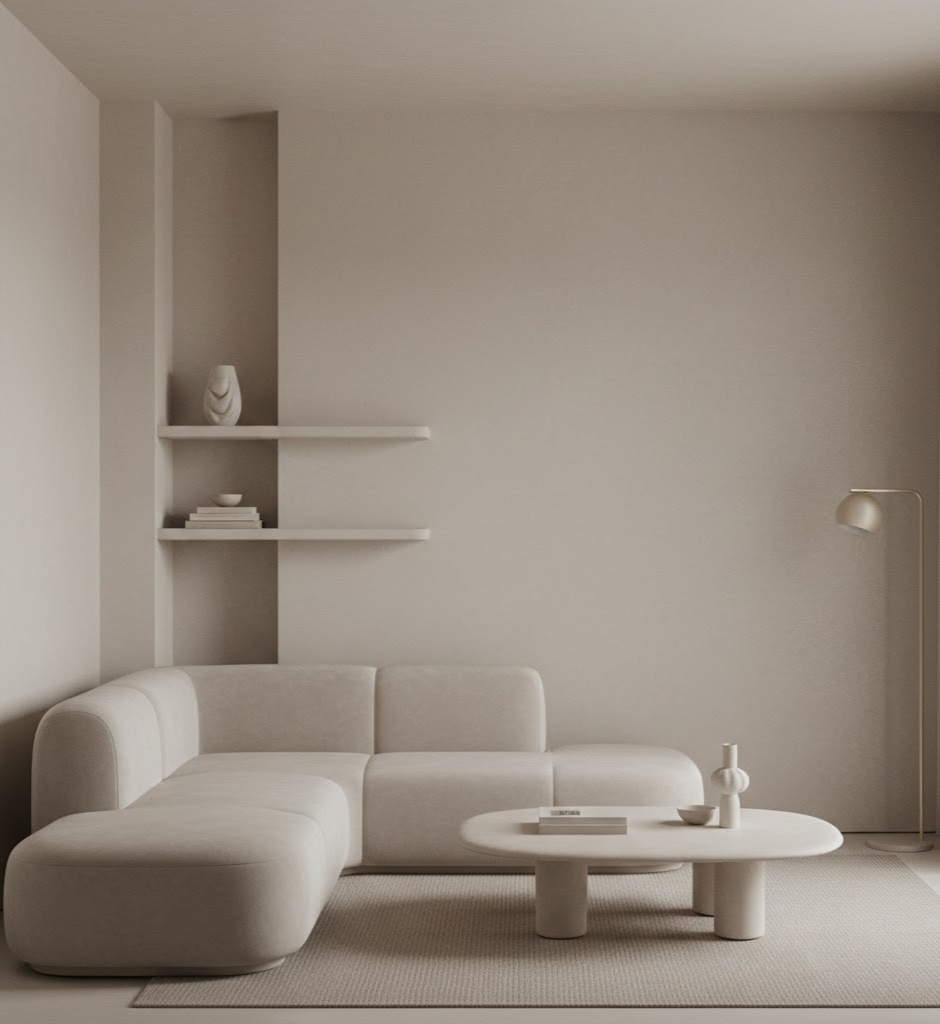
Oversized furniture is the fastest way to make a small room feel crowded. Instead of following trends, choose pieces that visually “float.”
Look for:
- Slim legs
- Open bases
- Low-profile designs
- Furniture that doesn’t touch every wall
A smaller sofa or bed with space around it will feel calmer than a large one squeezed tightly into corners.
5. Use Vertical Space Wisely
When floor space is limited, vertical space becomes your ally but only if used thoughtfully.
Instead of cluttered shelves:
- Use one long floating shelf
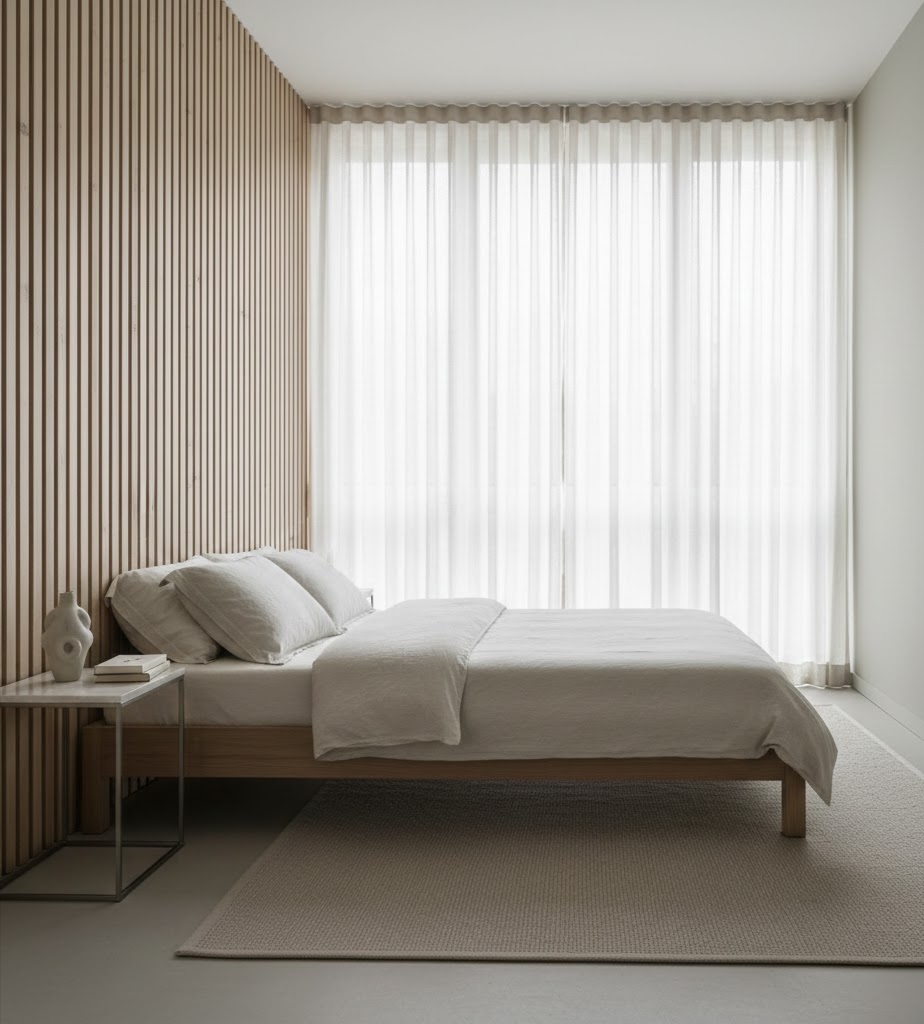
- Install vertical wooden slats behind the bed
- Hang tall curtains from ceiling to floor
- Add a single vertical artwork instead of a gallery wall
Vertical lines guide the eye upward, making the room feel taller and more open.
6. Texture Over Decoration
Calm rooms rely on texture, not accessories. Too many decorative items create visual clutter.
Swap:
- Multiple decor items → one textured statement piece
- Loud artwork → textured wall finishes
- Patterned cushions → layered neutral fabrics
Think linen, wood, plaster, boucle, rattan, or microcement finishes. These add depth without chaos.
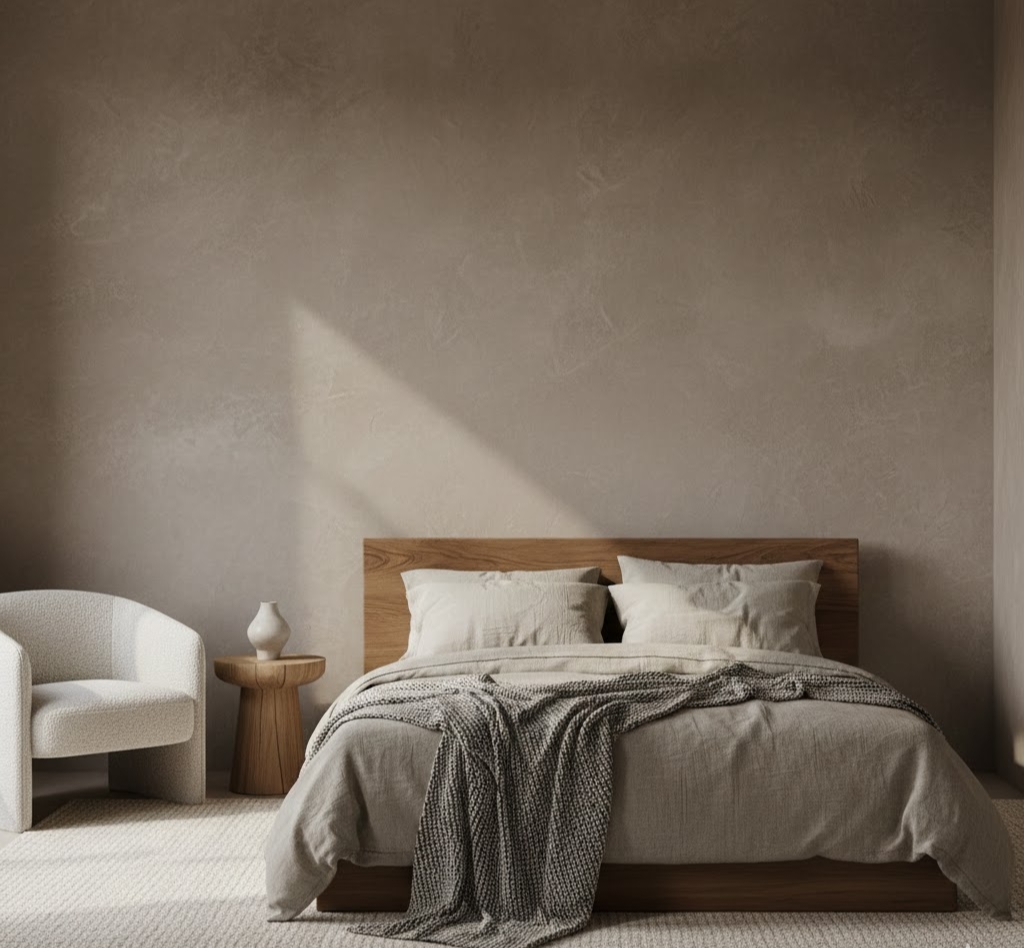
7. Create One Clear Focal Point
A room without a focal point feels messy. Choose one intentional anchor and let everything else support it.
Examples:
- Bed back wall design
- Statement mirror
- Softly lit console
- Textured accent wall
Once the focal point is clear, the rest of the room can stay simple.and that simplicity creates calm.
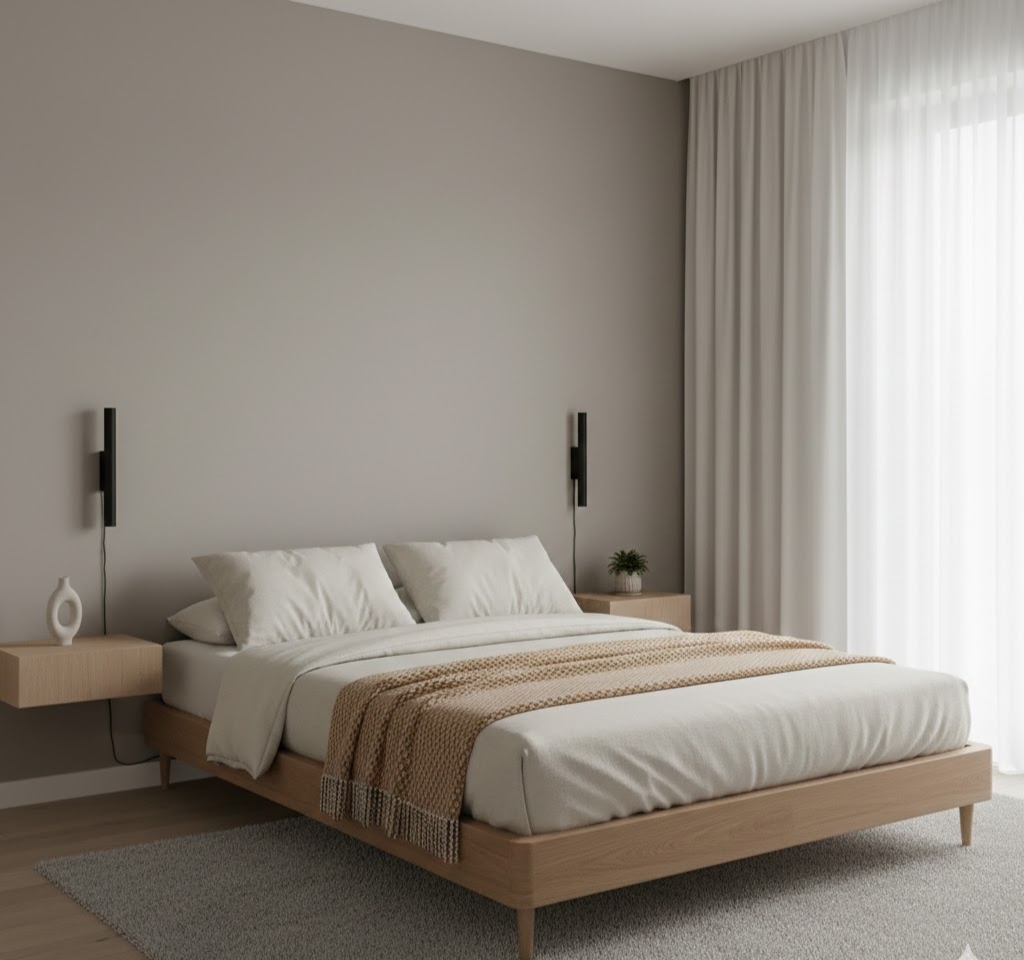
8. Keep Surfaces Clean and Intentional
Crowded rooms often suffer from “surface overload.” Every visible surface attracts attention.
Follow this rule:
- Nightstands: max 2–3 items
- Shelves: leave breathing space between objects
- Floors: keep clear wherever possible
Storage should be hidden or visually light. Closed storage always feels calmer than open clutter.
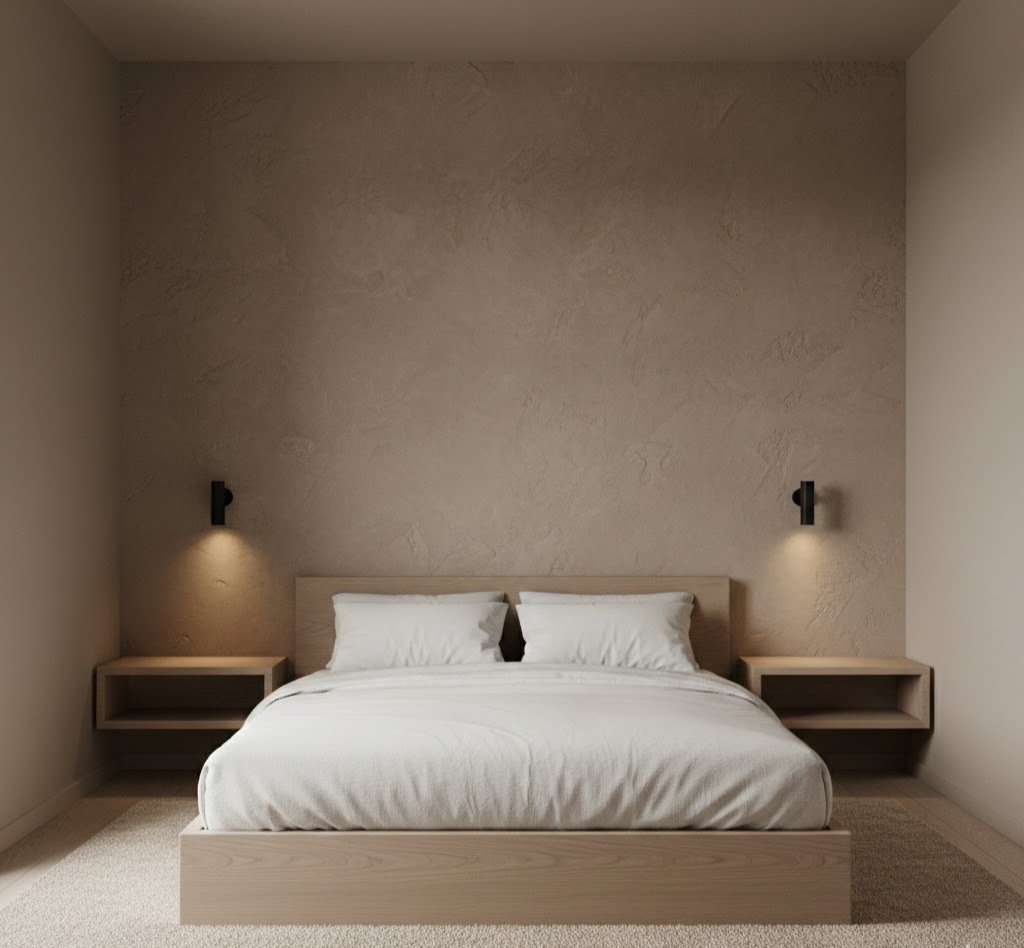
9. Use Mirrors Strategically
Mirrors don’t just reflect light they expand perception.
Best placements:
- Opposite a window
- Behind a light source
- Full-height mirror leaning against a wall
Avoid small decorative mirrors scattered around they fragment the space.
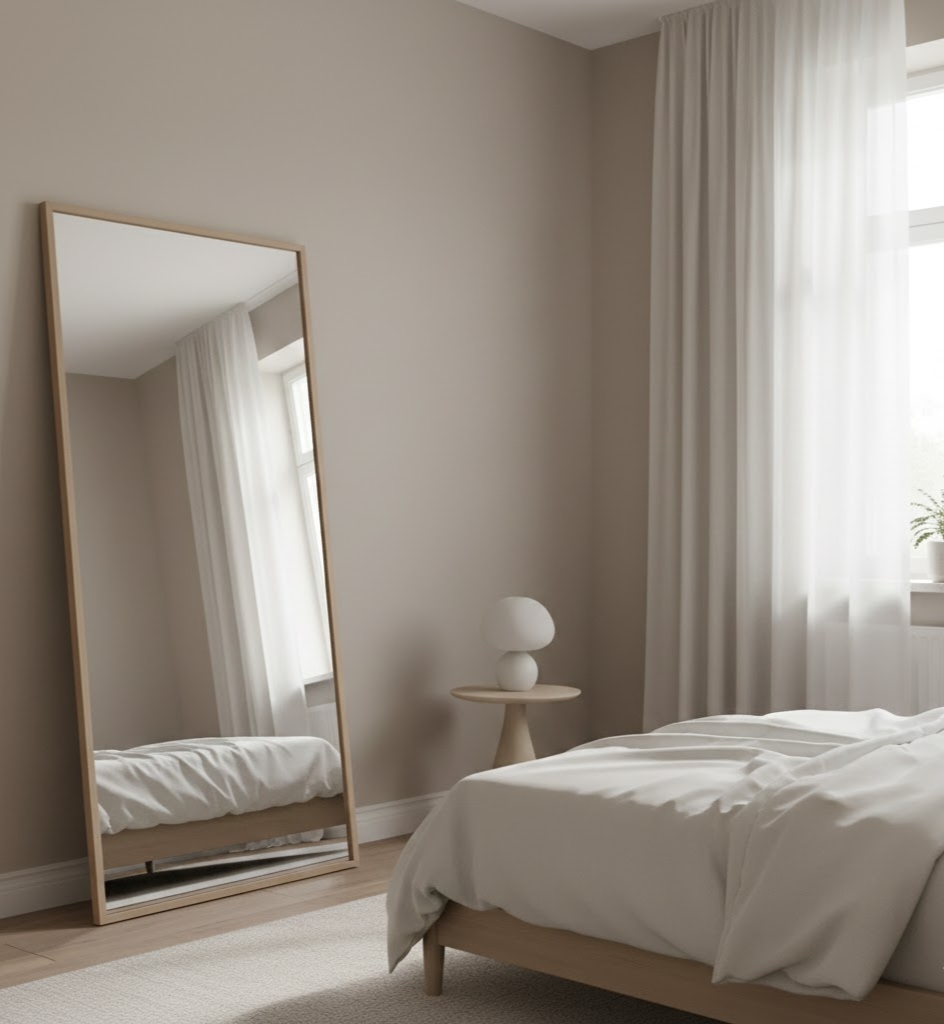
10. Design for Feeling, Not Just Function
The calmest small rooms are designed around how you want to feel rested, grounded, and at ease.
Ask yourself:
Does this item add peace or pressure?
Does the room feel balanced from every angle?
Is there flow, or does everything compete for attention?
When every element has a purpose, the room naturally feels calm instead of crowded.
Final Thought
A small room doesn’t need more space it needs clarity, softness, and intention. By simplifying visually, layering light, choosing the right scale, and prioritizing texture over clutter, you can transform even the tiniest room into a peaceful retreat.
Calm isn’t created by removing everything it’s created by choosing wisely.